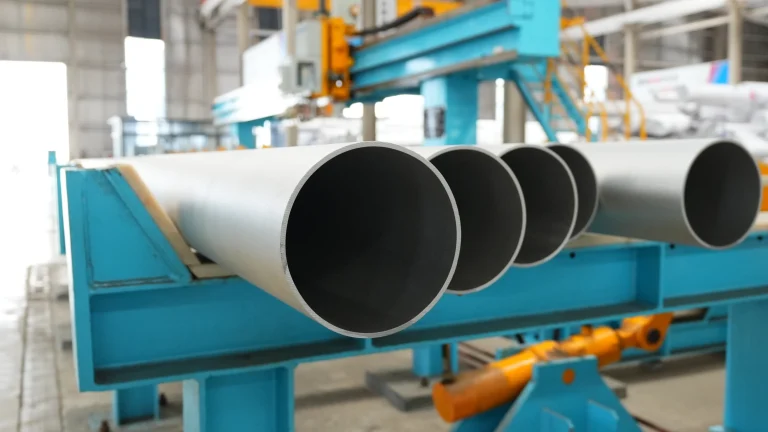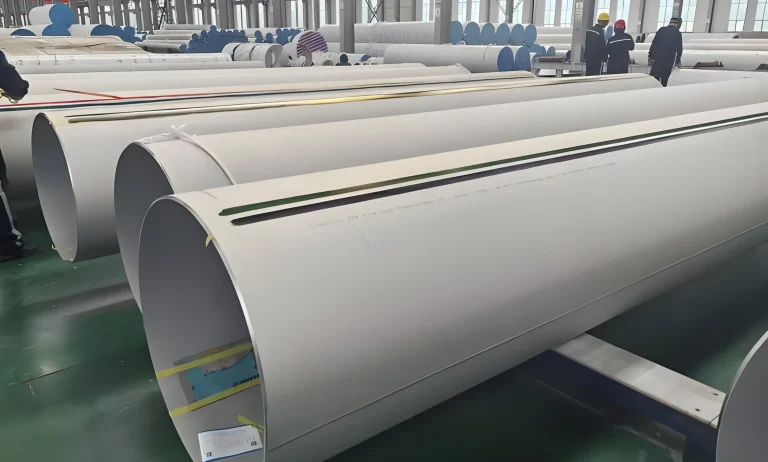
Seamless 253MA Pipe
Seamless 253MA pipe is a high-temperature,nitrogen-strengthened austenitic stainless steel engineered for superior creep strength and oxidation resistance at temperatures up to 1150°C (2102°F).
It is known for its lean alloy composition combined with rare earth metals,which provides cost-effective performance equivalent to 310 stainless steel.
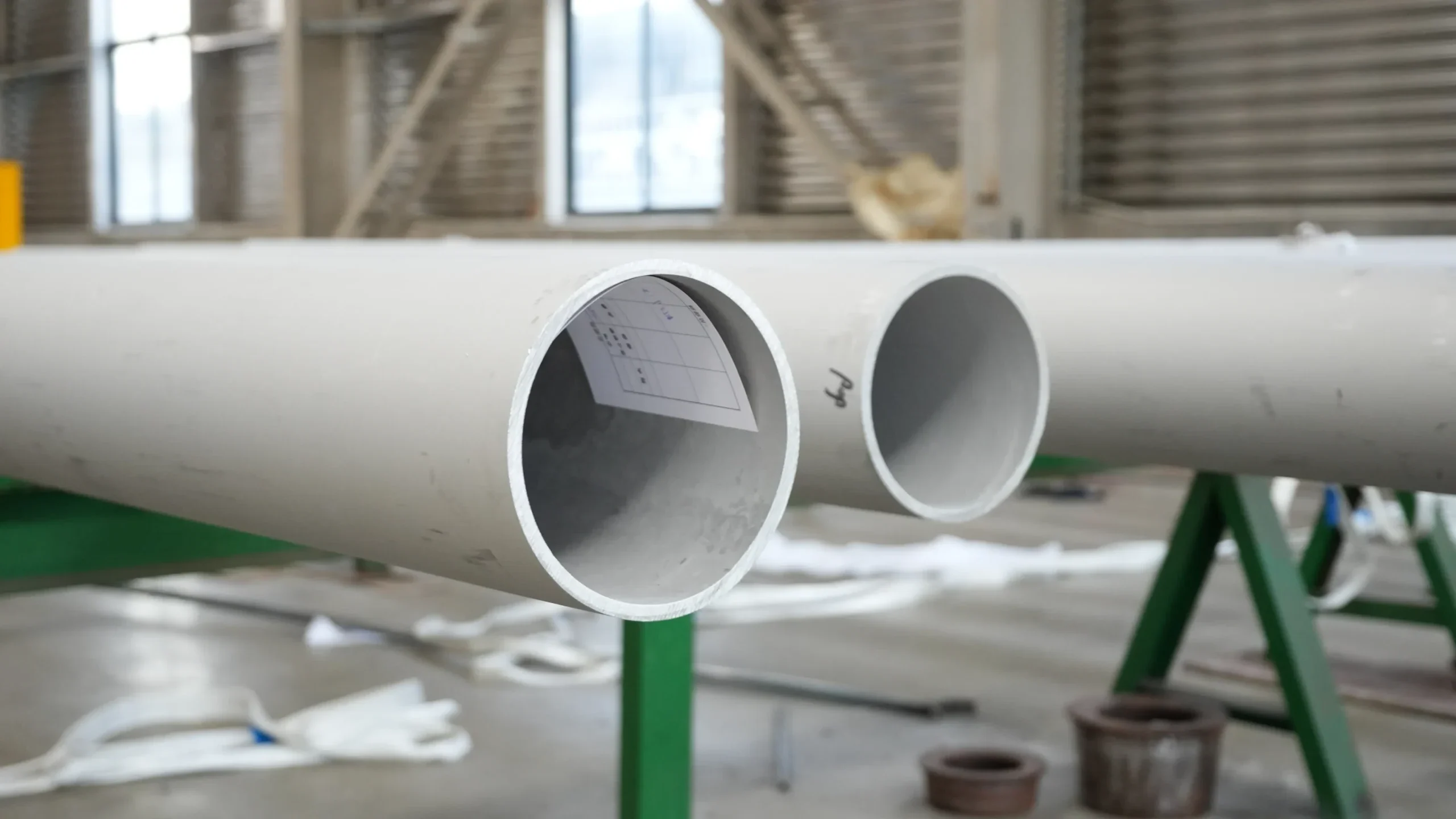
Specification of Seamless 253MA Pipe
| Product | Seamless 253MA Pipe |
| Working Temperature | up to 1150℃(2100℉) |
| Dimension Range | Outside Diameter (OD): 6 – 200 mm Wall Thickness (THK): 0.35 – 6 mm Length (L): 0.5 – 12 m The size can be customized according to ASME B36.10 / ASME B36.19 |
| Schedules | SCH 5, 10, 40, 80, 160, XXS, XXH |
| Materials | 253MA | UNS S30815 | W.Nr. 1.4835 | DIN X9CrNiSiNCe21-11-2 |
| Standards | ASTM A312 / ASTM A213 / ASME SA312 / SA213 |
| Surface Finish |
Pickled / White Pickled Bright Annealed Hot Rolled Annealed Satin / Brushed Mirror Finish Electro-Polishing |
| Corrosion Resistance Specifications |
Excellent Resistance To: Oxidation Resistance Creep Strength High-Temperature Corrosion Intergranular Corrosion |
| Applications | Furnace & Heat Treatment Equipment Energy & Power Generation Petrochemical & Chemical Processing Cement & Glass Industries Environmental & Exhaust Systems Metallurgical Industry |
| Our Strength | Over 10 Years Experience Exporting Pipes & Tubings Stock Available In Common Sizes Customized Fabrication Available Package Supplying of Piping Materials Strict QC With PMI Testing For Every Batch Experience in Exporting to the US,Germany,UAE,etc. Third Party Inspection Available |
For more information on stainless tubings and other products, please contact us.
Seamless 253MA Pipe Chemical Composition (%)
| Cr | Ni | Si | N | Ce |
| 20.0 – 22.0 | 10.0 – 12.0/td> | 1.40 – 2.00 | 0.14 – 0.20 | 0.03 – 0.08 |
| C | Mn | P | S | Fe |
| 0.05 – 0.10 | ≤ 0.80 | ≤ 0.040 | ≤ 0.030 | Balance |
What is the most important element in the 253MA material?
Cerium (Ce):
As a rare earth metal,it causes the oxide scale on the surface of steel to adhere extremely firmly to the substrate at high temperatures,preventing the protective layer from peeling off due to thermal expansion and contraction.
Nitrogen (N):
It imparts extremely high creep strength to the material,making it resistant to deformation under high temperatures and pressures.
Why does 253MA have a lower nickel (Ni) content than 310S, yet perform better?
This is a common misconception.Although 310S contains 20% nickel,while 253MA contains only about 11%,253MA forms a double protective layer by utilizing 1.4%–2.0% silicon (Si) in combination with chromium.
Additionally,Nitrogen (N) is used to partially replace nickel,thereby stabilizing the austenitic structure.As a result,253MA often outperforms 310S in terms of maximum operating temperature and strength,and its lower nickel content makes it more cost-effective.
Seamless 253MA Pipe Mechanical Properties
| Tensile Strength | Yield strength | Elongation | Hardness |
| 600 – 760 MPa (87 – 110 ksi) | ≥ 310 MPa (45 ksi) | ≥ 40% | ≤ 210 HB (95 HRB) |
Does the mechanical strength of 253MA decrease rapidly at high temperatures?
No.Compared to standard 300 series stainless steel,the most notable feature of 253MA is its high-temperature strength stability.
Due to its nitrogen content of 0.14–0.20%,nitrogen atoms act as strengthening agents within the crystal lattice,maintaining high levels of yield strength and creep strength across the 600°C–1000°C range—and even outperforming 310S at certain temperature points.
Will the pipes become brittle after prolonged exposure to high temperatures?
Compared to 310S,253MA exhibits greater resistance to Σ-phase embrittlement.Many high-temperature alloys precipitate brittle phases after prolonged service at temperatures between 600°C and 850°C,causing the material to shatter like glass when subjected to impact.The chemical composition of 253MA is exceptionally well-balanced,which significantly delays this embrittlement process and ensures safety during long-term operation.
Physical Properties of Seamless 253MA Pipe
Density:7.8 g/cm³ (0.282 lb/in³)
Melting Range:1370 – 1430°C (2500 – 2605°F)
Specific Heat:500 J/kg·°C
Poisson’s Ratio:0.30
Magnetic Permeability:1.003,non-magnetic
Thermal Properties of Seamless 253MA Pipe
Mean CTE of Seamless 253MA Pipe
| Temperature Range | 10⁻⁶ / °C | 10⁻⁶ / °F |
| 20 – 200°C | 16.5 | 9.2 |
| 20 – 400°C | 17.0 | 9.4 |
| 20 – 600°C | 18.0 | 10.0 |
| 20 – 800°C | 18.5 | 10.3 |
| 20 – 1000°C | 19.0 | 10.6 |
Thermal Conductivity
| Temperature(°C) | W / m·°C | BTU / (ft·h·°F) |
| 20 | 15.0 | 8.7 |
| 200 | 18.0 | 10.4 |
| 400 | 20.5 | 11.8 |
| 600 | 23.5 | 13.6 |
| 800 | 26.5 | 15.3 |
| 1000 | 29.5 | 17.0 |
Manufacturing Process for Seamless 253MA Pipe
The manufacturing process for seamless 253MA pipe is more rigorous than standard stainless steel due to the precise control required for its micro-alloying elements-Cerium and Nitrogen.
Melting and Casting
The process begins with precise melting (often via Electric Arc Furnace or AOD refining) to ensure the correct chemical balance.The addition of nitrogen and cerium must be strictly controlled,as these elements provide the alloy’s signature creep strength and scale adhesion at temperatures up to 1150°C.
Billet Preparation & Piercing
First, the solid cylindrical billet is heated to a specific forging temperature.The hot billet is then pushed through a piercing die to form a hollow shell.253MA is a “tough” austenitic steel,so precise temperature control during piercing is critical to prevent internal tearing.
Hot Elongation
Hollow shells require further processing to reduce their diameter and wall thickness.This is typically achieved through hot rolling or extrusion.
Cold Working
To achieve precise dimensional tolerances and high-quality surface finishes,the tubing must undergo cold working.Cold drawing involves pulling the tubing through a die.
Cold compression,on the other hand,is a more thorough reduction process that improves the grain structure and mechanical properties of the 253MA alloy.
Solution Annealing
Heat the 253MA pipe to approximately 1050°C to 1100°C,then perform rapid quenching.This treatment dissolves precipitates,restores corrosion resistance,and optimizes the microstructure to suit high-temperature operating conditions.
Finishing and Quality Control
Pickling & Passivation:
Removing scale and oxide films to ensure a clean,corrosion-resistant surface.
Non-Destructive Testing (NDT):
Includes Ultrasonic Testing (UT),Eddy Current Testing (ET),or Hydrostatic testing to check for internal flaws.
Mechanical Testing:
Verifying tensile strength, yield strength, and elongation to meet standards like ASTM A312 or A213.
Can 253MA be used in reducing or carburizing atmospheres?
Carburization:
Under oxidizing conditions,it performs well.However,in reducing atmospheres (where oxygen is low),alloys with higher nickel content (like 310 or nickel alloys) are generally preferred because 253MA’s protective oxide layer cannot form properly.
Sulphidation:
253MA has a slight advantage in reducing sulfide atmospheres compared to Grade 310 because of its lower nickel content.
What are the recommended welding procedures?
253MA has excellent weldability using standard fusion methods like GTAW (TIG) or SMAW.It is critical to use matching filler metals (often designated as 22.12HT) to maintain the creep strength and oxidation resistance in the weld zone.
Does 253MA have good “wet” corrosion resistance?
No.253MA is not intended for aqueous (wet) corrosion resistance.Its high carbon content makes it susceptible to sensitization during welding or high-temp service,which can lead to intergranular corrosion if exposed to corrosive liquids later.Its pitting resistance is only roughly equivalent to Grade 316.
write to us
Have a Question?
Contact Us!
Should you have any questions regarding stainless steel pipes, including manufacturing processes, chemical composition or other unfamiliar matters, our staff will be happy to assist you.