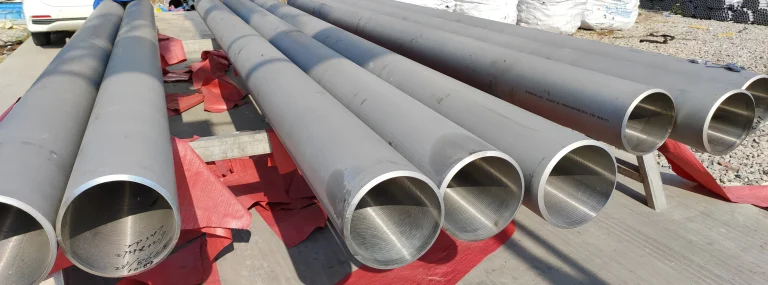
What is A Rockwell Hardness Tester?
A rockwell hardness tester is a specialized precision instrument used to measure the indentation resistance of materials—predominantly metals and alloys—by calculating the permanent depth of penetration caused by a standardized indenter under a specific force.
Invented in 1919 by Hugh and Stanley Rockwell,it is widely regarded as one of the fastest,most reliable,and non-destructive testing methods across global manufacturing,aerospace,and metallurgy industries.
How the Testing Process Works
Unlike methods that require measuring the surface area of an indent optically,a Rockwell tester relies on a mechanical or electronic depth differential mechanism.The standardized sequence follows three primary steps:
- Minor Load:
The tester applies a light preliminary force (typically 10 kgf for regular scales) to breakthrough surface finishes and establish a zero-reference baseline depth. - Major Load:
An additional,significantly heavier force is applied for a designated dwell time to drive the indenter to its maximum depth. - Elastic Recovery & Final Reading:
The major load is removed while keeping the minor load active.The material partially springs back elastically,and the machine measures the permanent increase in depth,instantly converting it into a numeric hardness value.
Common Scales and Indenters for a Rockwell Hardness Tester
Different combinations of test forces and indenters create specific “scales” optimized for various material thicknesses and hardness brackets.The most universally utilized scales include:
| Scale | Indenter Type | Major Load | Typical Applications |
| HRC | 120° Diamond Cone | 150 kgf | Hardened steels,titanium,and knife blades. |
| HRB | 1/16-inch Carbide Ball | 100 kgf | Softer metals like brass and aluminum. |
| HRA | 120° Diamond Cone | 60 kgf | Thin sheet metals and cemented carbides. |
For exceptionally fragile,paper-thin coatings,or brittle components,technicians utilize a Superficial Rockwell Scale, which reduces the minor load to 3 kgf to ensure the forces do not deform the underlying support anvil.
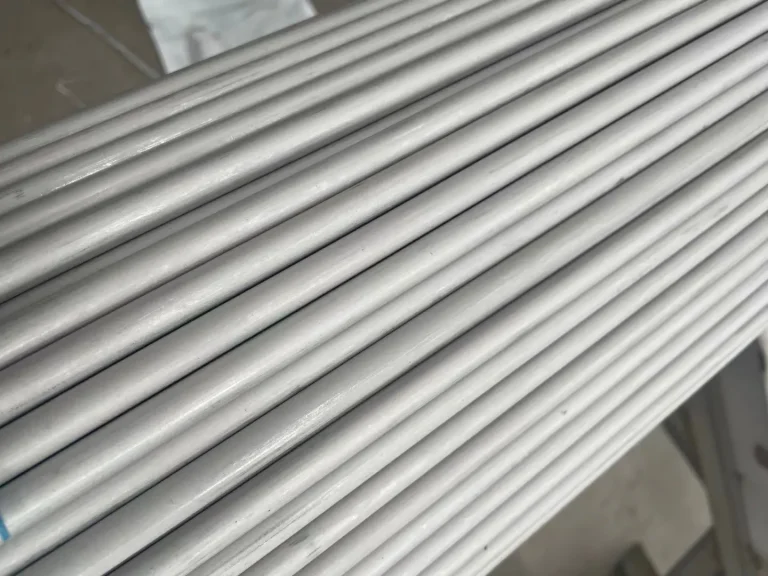
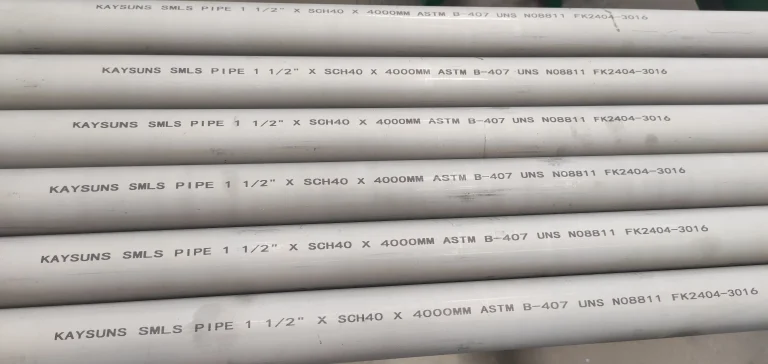
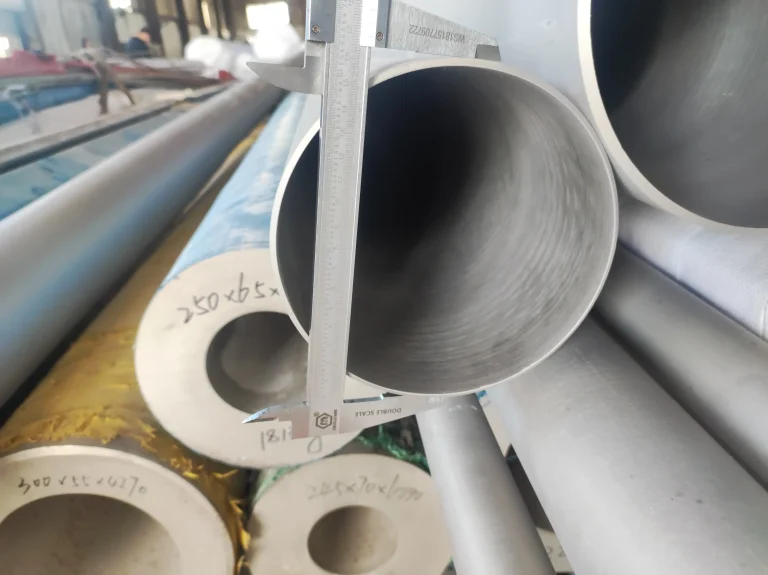
Stainless Tubings Supplier in china
Primary Types of Rockwell Hardness Tester
- Benchtop Models:
The standard fixture in laboratories and workshops,available in Analog layouts (using mechanical dials) or Digital variants (incorporating interactive LCD touchscreens and data export functions). - Portable Models:
Compact,handheld systems optimized for evaluating giant structural beams or heavy,static components that cannot easily be mounted onto a traditional machine.
Core Advantages of the Rockwell Hardness Tester
Core Disadvantages of the Rockwell Hardness Tester
The relationship between Rockwell hardness testers and pipes
There is a very close relationship between Rockwell hardness testers and high-performance alloy pipes such as superalloys,pure nickel,and super duplex stainless steel in terms of quality control,process inspection,and failure prevention.
Validation of Heat Treatment Processes and Elimination of “Work Hardening”
These types of nickel-based and specialty stainless steel tubes are extremely sensitive to processing methods,and a Rockwell hardness tester is the most direct way to assess their microstructure:
- Verifying the Thoroughness Of Solution Annealing:
Materials such as Monel 400 pipe, Hastelloy C276 pipe, and Incoloy 825 pipe develop significant internal stresses and work hardening after cold drawing or welding.If measurements taken with a Rockwell hardness tester indicate that the hardness exceeds the specified limit,this indicates that the annealing was incomplete,and the tubes are highly susceptible to cracking when subsequently exposed to corrosive media. - Verifying The Effectiveness Of Age Hardening:
Precipitation-hardening alloy tubes,such as Incoloy 925 and Inconel 718 tubes,require age-hardening treatment to precipitate strengthening phases.Engineers use the HRC scale to accurately assess whether the tubes have achieved the designed high-strength specifications.
Predicting and Preventing SCC in Extreme Environments
- Balancing Hardness and Toughness:
If the hardness of super duplex or Inconel 625 pipe is too high,it results in reduced toughness,which can lead to severe hydrogen embrittlement or SCC in deep-sea,high-pressure,and hydrogen sulfide environments. - Strict Adherence to International Hardness Thresholds:
According to the NACE MR0175 / ISO 15156 standards established by the NACE,the Rockwell hardness of many nickel-based alloy pipes used in acidic environments is strictly limited to 35 HRC or 100 HRB or below.The Rockwell hardness tester is a mandatory tool used during factory and on-site acceptance inspections,serving as a deal-breaker for compliance.
Detection of “harmful phase precipitation” in super duplex stainless steel
Super duplex pipe consists of 50% austenite and 50% ferrite.If the cooling rate is too slow during welding or heat treatment,a detrimental σ phase will precipitate within the pipe.The σ phase is extremely hard and brittle,causing a drastic decline in the pipe’s corrosion resistance.When process parameters deviate,a Rockwell hardness tester can sensitively detect localized spikes in hardness,alerting quality control personnel that the batch of pipes may have failed.
To obtain reliable readings, how many indentations should you make on each sample?
We follow standard procedures (such as ASTM E18) and typically take an average of 3 to 5 distinct indentations per specimen to account for local material variations.
Are you testing round bars or steel pipes directly?
If tests are performed directly on steel pipes or bars,the curved surface will reduce the lateral support force of the indenter,resulting in lower readings.A V-groove anvil must be used to keep the specimen perfectly centered,and a cylindrical correction factor must be applied to the final reading.
Can I convert a Rockwell C (HRC) value directly to a Brinell (HB) or Vickers (HV) value using a math formula?
No,there is no direct mathematical formula because different scales rely on completely different indentation mechanics.Conversions are empirical approximations derived from real-world laboratory testing data.Technicians use industry-standard lookup tables like ASTM E140 or ISO 18265 for safe approximations.
When should I switch from a Regular Rockwell scale to a Superficial Rockwell scale?
Switch to Superficial scales (e.g., HR15N, HR30T) whenever your sample is too thin to meet the 10x thickness rule,or when you are evaluating delicate surface layers like nitrided steel layers,case-hardened skins,or electroplated coatings.
write to us
Have a Question?
Contact Us!
Should you have any questions regarding stainless steel pipes, including manufacturing processes, chemical composition or other unfamiliar matters, our staff will be happy to assist you.