2507 Super Duplex Pipe
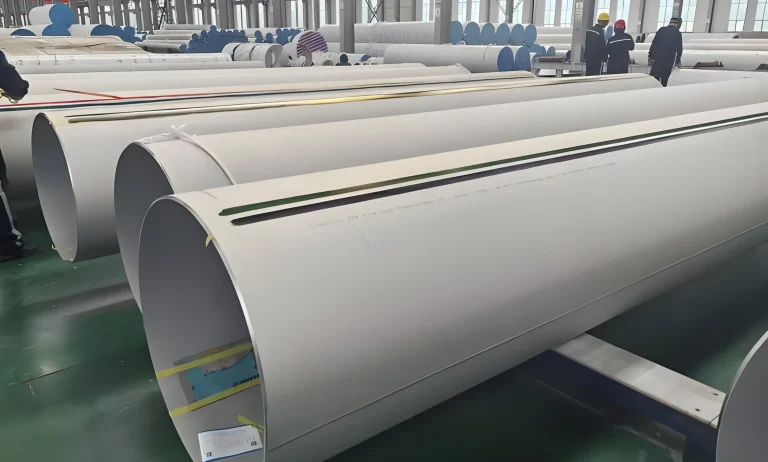
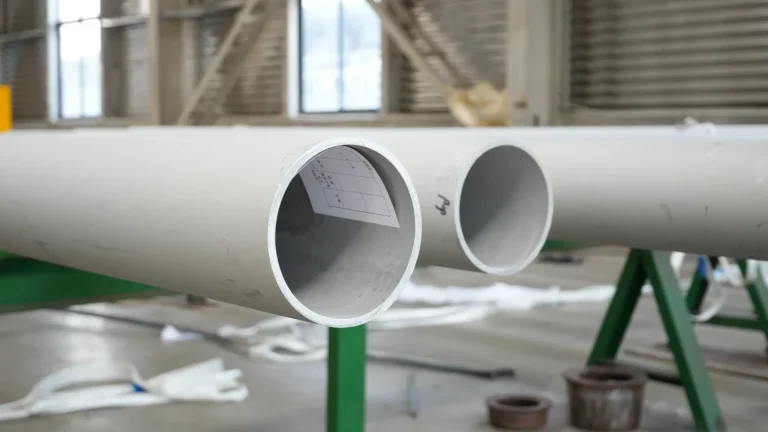
2507 Super Duplex Pipe is a high-performance piping product made from a specialized stainless steel alloy (UNS S32750) designed for extreme environments.It belongs to the “Super Duplex” family,meaning it has a dual-phase microstructure consisting of approximately 50% austenite and 50% ferrite.
Specification of 2507 Super Duplex Pipe
| Product | 2507 Super Duplex Pipe |
| Working Temperature | -50°C to 300°C (-58°F to 572°F) |
| Dimension Range | Outside Diameter (OD): 6 – 200 mm Wall Thickness (THK): 0.35 – 6 mm Length (L): 0.5 – 12 m The size can be customized according to ASME B36.10 / ASME B36.19 |
| Schedules | SCH 5, 10, 40, 80, 160, XXS, XXH |
| Materials | Super Duplex 2507 | UNS S32750 | W.Nr. 1.4410 | DIN X2CrNiMoN25-7-4 |
| Standards | ASTM A790 / ASME SA790 / ASTM A789 / ASME SA789 |
| Surface Finish |
Annealed & Pickled Bright Annealed Mechanical Polishing Electropolishing Shot Blasting / Bead Blasting |
| Corrosion Resistance Specifications |
Excellent Resistance To: Chloride Pitting Crevice Corrosion Stress Corrosion Cracking General/Uniform Corrosion Erosion & Abrasion |
| Applications | Offshore Oil & Gas Desalination Chemical Processing Pollution Control |
| Our Strength | Over 10 Years Experience Exporting Pipes & Tubings Stock Available In Common Sizes Customized Fabrication Available Package Supplying of Piping Materials Strict QC With PMI Testing For Every Batch Experience in Exporting to the US,Germany,UAE,etc. Third Party Inspection Available |
For more information on super duplex pipe and other products, please contact us.
2507 Super Duplex Pipe Chemical Composition (%)
The chemical composition of 2507 Super Duplex Steel is designed to balance the ratio of ferrite to austenite through high levels of chromium,molybdenum,and nitrogen,thereby achieving exceptional corrosion resistance.Our 2507 super duplex pipe complies with ASTM A790 and EN 10088 standards,and its chemical composition is as follows:| Cr | Ni | Mo | N | Mn | Si |
| 24.0 – 26.0 | 6.0 – 8.0 | 3.0 – 5.0 | 0.24 – 0.32 | ≤ 1.20 | ≤ 0.80 |
| Cu | C | P | S | Fe | |
| ≤ 0.50 | ≤ 0.030 | ≤ 0.035 | ≤ 0.020 | Balance |
What is the difference in composition between 2507 (S32750) and 2507 Cu (S32760)?
S32750 (2507) is a standard super duplex steel that contains no copper or only trace amounts of copper.
S32760 (Zeron 100) is specifically alloyed with 0.5%–1.0% copper (Cu) and 0.5%–1.0% tungsten (W).These elements further enhance its corrosion resistance in strong acid environments,such as those containing sulfuric or hydrochloric acid.
Why must the carbon content of 2507 be kept below 0.030%?
This is to ensure excellent resistance to intergranular corrosion.The extremely low carbon content (ultra-low carbon) prevents chromium from combining with carbon during welding or heat treatment to form chromium carbides that precipitate at grain boundaries,thereby avoiding corrosion caused by “chromium-depleted zones.”
What are the limits for the impurity elements phosphorus (P) and sulfur (S)?
To ensure the weld quality and ductility of the pipes,the phosphorus content is typically limited to 0.035% or less,and the sulfur content to 0.020% or less.Excessively high sulfur content can lead to hot cracks.
2507 Super Duplex Pipe Mechanical Properties(Typical value range)
2507 super duplex stainless steel is characterized by a combination of ultra-high strength and good toughness.Its yield strength is approximately twice that of standard austenitic stainless steel.| Tensile Strength | Yield strength | Elongation | Hardness |
| 800 – 1000 MPa (116 – 145 ksi) | 550 – 750 MPa (80 – 109 ksi) | 25% – 35% | 250 – 310 HBW (28 – 32 HRC) |
Impact Toughness
At Room Temp (20°C):150 – 250 Joules (Charpy V-Notch).
At -40°C / -50°C:100 – 180 Joules.
Transition:While it performs well at -50°C,it is not recommended for cryogenic temperatures (below -50°C) due to the ductile-to-brittle transition of the ferrite phase.
Does high strength mean the pipe is brittle?
No.While it is much harder than standard stainless steel,2507 maintains excellent ductility and toughness.It typically offers an elongation of 25–35%,which is more than enough for most industrial forming and bending requirements.
How does 2507 perform at sub-zero temperatures?
2507 has excellent impact toughness down to -50°C (-58°F).However,because it contains a large amount of ferrite,it undergoes a ductile-to-brittle transition at very low temperatures.Therefore,it is not suitable for cryogenic applications (e.g., Liquid Natural Gas at -162°C).
Can 2507 pipe be used in high-temperature steam systems?
No.2507 is restricted to a maximum service temperature of 315°C (600°F).Prolonged exposure to temperatures between 350°C and 525°C causes a phenomenon called “475°C embrittlement,” where the material loses its toughness and becomes extremely brittle.
Physical Properties of 2507 Super Duplex Pipe
Density:7.8 g/cm³ (0.28 lb/in³)
Melting Range:1325 – 1350°C (2420 – 2460°F)
Specific Heat:456 J/kg · ℃
Poisson’s Ratio:0.31
Magnetic Permeability:Ferromagnetic
Thermal Properties of 2507 Super Duplex Pipe
| Temperature(℃) | Thermal Conductivity (W/m · K) | CTE (μm/m · ℃) | Specific Heat (J/kg · K) |
| 20 | 14 | – | 480 |
| 100 | 15 | 13.0 | 500 |
| 200 | 17 | 13.5 | 530 |
| 300 | 18 | 14.0 | 560 |
How does the thermal conductivity of 2507 compare to 316L stainless steel?
The thermal conductivity of 2507 is significantly higher than that of standard austenitic steels such as 316L.This is because it contains 50% ferrite,and the ferrite phase has a much higher thermal conductivity than the austenite phase.
In heat exchanger design,2507 enables higher heat transfer rates,thereby allowing for a more compact equipment footprint.
Why is the low CTE an advantage?
A low CTE reduces thermal stress in systems subjected to temperature cycling.Furthermore,because the mismatch in expansion coefficients is minimal,2507 is easier to integrate into mixed-material piping systems,thereby reducing the risk of fatigue at joints and flanges.
Does 2507 require post-weld heat treatment?
Generally speaking,the answer is no.In fact,the standard stress-relief heat treatment used for carbon steel can actually cause 2507 steel to become brittle,thereby damaging it.If heat treatment is necessary,the material must first undergo full solution annealing at approximately 1040°C to 1120°C,followed by rapid water quenching,to restore its thermal and mechanical properties.
Manufacturing Process for 2507 Super Duplex Pipe
The manufacturing process for 2507 super duplex pipe is much more complex than that for ordinary stainless steel,as it requires strict control of the 50/50 phase balance and prevention of the precipitation of harmful phases.
Seamless Pipe Process
Seamless pipes are primarily used in high-pressure applications;since they have no welds,they offer greater overall strength.
Melting:
The steel is melted in an EAF and subsequently refined using the AOD process.This step is critical for precisely controlling the chromium,nickel,and molybdenum content and for accurately introducing nitrogen.
Billet Preparation:
The molten steel is cast into round billets and heated to a temperature between 1100°C and 1250°C.
Hot Extrusion/Piercing:
The billet is pierced through a press at high temperature to form the initial tube blank.
Cold Drawing/Rolling:
To achieve precise dimensions and surface finish,the pipe undergoes multiple cold-working processes. This is particularly challenging for 2507 due to its high yield strength,which requires significant deformation force.
Solution Annealing:
The pipe is heated to 1040°C–1120°C and then water-quenched.This ensures that the alloying elements are fully dissolved and locks in the ideal duplex ratio.
Welded Pipe Process
Welded pipes are commonly used in large-diameter pipelines.
Sheet/Coil Forming:
Bending 2507 steel sheets or strips into tubular shapes using a cold-forming machine.
Welding:
Typically performed using TIG (GTAW),plasma arc welding (PAW),or submerged arc welding (SAW).
Key Points:Over-alloyed welding consumables must be used to compensate for the delayed formation of austenite during welding cooling and to ensure the weld’s corrosion resistance.
Post-weld Heat Treatment:
Full-pipe solution annealing is typically required after welding to relieve welding stresses and restore the duplex balance in the weld zone.
Inspection & Testing
2507 pipes must pass a series of rigorous tests before leaving the factory:
Eddy Current/Ultrasonic Testing (ET/UT):Detects internal defects in the pipe wall.
Hydrostatic Test:Verifies integrity under high pressure.
Pitting Corrosion Test (ASTM G48):Immerses samples in a ferric chloride solution to determine their corrosion resistance limits at specific temperatures.
Metallographic Analysis:Examines ferrite content and confirms the absence of sigma phases.
2507 Can pipes be used for desalination?
Highly suitable.It is the standard material for high-pressure pipelines in desalination systems because it offers excellent resistance to pitting and crevice corrosion caused by highly concentrated brine.
2507 Is filler metal required when welding pipes?
This is strongly recommended.To ensure that the weld restores a sufficient proportion of austenite after cooling,over-alloyed filler metals are typically used (such as 2509 filler metal containing 9% nickel).Self-fusion welding without filler metal is highly likely to result in excessive ferrite in the weld.
Why is it necessary to control the interpass temperature when welding 2507?
The temperature must be kept below 150°C.If heat builds up and causes the cooling process to proceed too slowly,harmful sigma phases will precipitate in the microstructure,causing the pipe to become brittle like glass and lose its corrosion resistance.
How can I verify that the quality of the 2507 pipes we received meets the required standards?
In addition to dimensions and appearance,carefully check the following three parameters in the MTR (Material Test Report):
Is the PREN value greater than or equal to 42.5?
Is the ferrite content between 35% and 55%?
Has the material passed the ASTM G48 Method A test (typically requiring no pitting after 24 hours at 50°C)?
2507 is much more expensive than 316L, so why choose it?
Although the unit price per ton is higher,its high strength allows for thinner walls (reducing weight by 30%–50%),which in turn reduces material consumption and welding costs.
Furthermore,in seawater environments,2507 has a significantly longer service life than 316L,thereby lowering total lifecycle maintenance costs.
How To Order Your 2507 Super Duplex Pipe?
To order 2507 Super Duplex Pipe,please provide precise dimensions, including Nominal Pipe Size (NPS),Schedule wall thickness,and required length.
Please specify whether you require seamless pipe for high-pressure/corrosive applications or welded pipe for larger diameters,and confirm if compliance with ASTM A790 or NACE MR0175 is needed.
Please clearly specify the surface finish you require and any critical testing requirements,such as ASTM G48 pitting corrosion tests or ferrite content limits.
Finally,please confirm your quantity requirements, delivery schedule,and any required documentation,such as EN 10204 3.1/3.2 material test certificates to ensure phase balance and quality.
write to us
Have a Question?
Contact Us!
Should you have any questions regarding stainless steel pipes, including manufacturing processes, chemical composition or other unfamiliar matters, our staff will be happy to assist you.