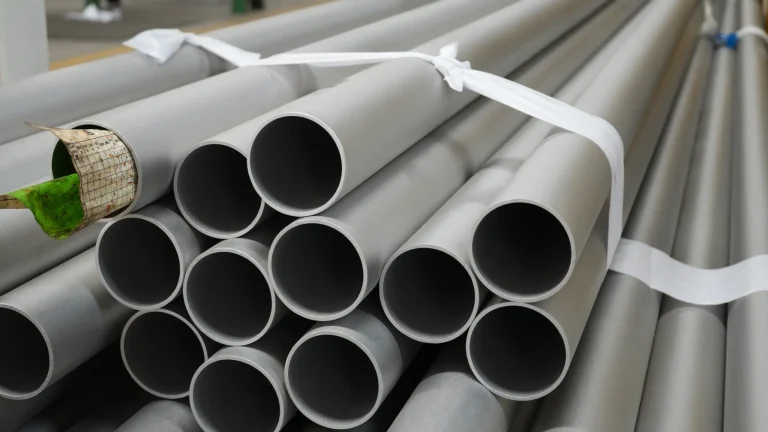
Square Nickel 200/201 Tube
A Square Nickel 200/201 Tube is a high-purity nickel structural component known for its exceptional corrosion resistance and high thermal and electrical conductivity.While round tubing is more common,square and rectangular forms are used in specialized structural or equipment-handling applications where the physical profile of a square shape is required.
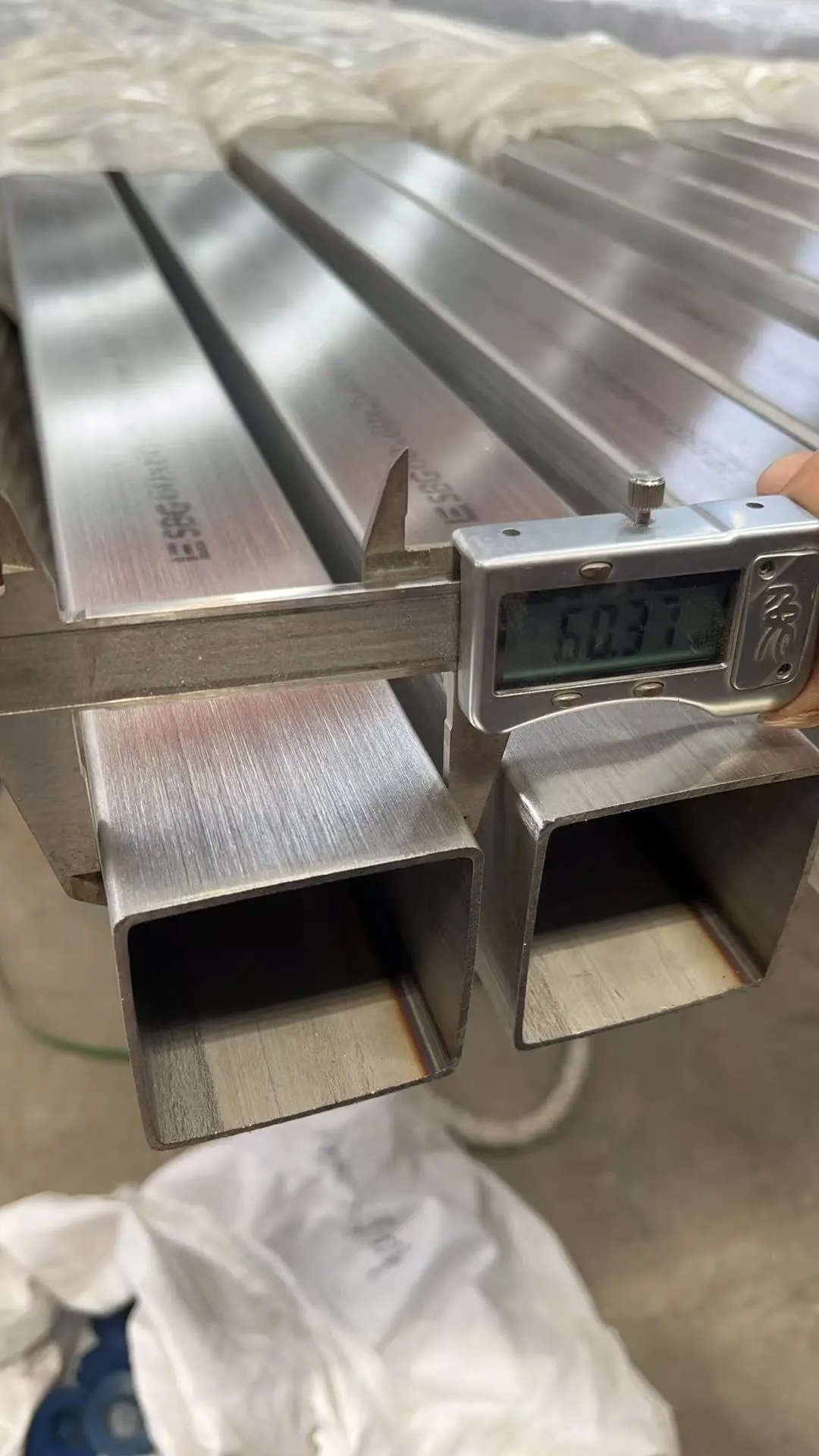
Specification of Square Nickel 200/201 Tube
| Product | Square Nickel 200/201 Tube |
| Working Temperature | Nickel 200:below 315°C (600°F) Nickel 201:Up to 665 – 677°C (1230 – 1250°F) Nickel 200/201 Dual-certified:Up to 677°C (1250°F) |
| Dimension Range | Outside Diameter (OD): 6 – 200 mm Wall Thickness (THK): 0.35 – 6 mm Length (L): 0.5 – 12 m The size can be customized according to ASME B36.10 / ASME B36.19 |
| Schedules | SCH 5, 10, 40, 80, 160, XXS, XXH |
| Materials | Nickel 200 | UNS N02200 | W.Nr. 2.4060 2.4066 | DIN Ni 99.2 Nickel 201 | UNS N02201 | W.Nr. 2.4061 2.4068 | DIN LC-Ni 99.2 |
| Standards | ASTM B161 / ASME SB161 / ASTM B730 / ASME SB730 / ASTM B163 / ASME SB163 |
| Surface Finish |
Annealed & Pickled Bright Annealed Brushed/Satin Finish Mirror Polished, 600# – 800# Sand Blasting/Shot Peening Passivation |
| Corrosion Resistance Specifications |
Excellent Resistance To: Caustic Alkalis Acidic Media Dry Gases & Halogens Stress Corrosion Cracking Intergranular Corrosion |
| Applications | Chemical Processing Food & Synthetic Fibers Electronics & Electrical Laboratory & Medical Aerospace & Defense |
| Our Strength | Over 10 Years Experience Exporting Pipes & Tubings Stock Available In Common Sizes Customized Fabrication Available Package Supplying of Piping Materials Strict QC With PMI Testing For Every Batch Experience in Exporting to the US,Germany,UAE,etc. Third Party Inspection Available |
For more information on nickel 200/201 tube and other products, please contact us.
Square Nickel 200/201 Tube Chemical Composition (%)
Regarding the chemical composition of Square Nickel 200/201 (pure nickel/low-carbon pure nickel) square tubes,the key requirement is that the nickel content must be at least 99%.| Element | Ni(+ Co) | C | Mn | S | Si | Fe | Cu |
| Nickel 200 | ≥ 99.0 | ≤ 0.15 | ≤ 0.35 | ≤ 0.01 | ≤ 0.35 | ≤ 0.40 | ≤ 0.25 |
| Nickel 201 | ≥ 99.0 | ≤ 0.02 | ≤ 0.35 | ≤ 0.01 | ≤ 0.35 | ≤ 0.40 | ≤ 0.25 |
Why is carbon content so important?
This is the only substantive difference between 200 and 201.
When Nickel 200 is heated above 315°C (600°F),excess carbon within the material precipitates as graphite,causing the material to become brittle (graphitization) and lose its mechanical properties.
Nickel 201 addresses the graphitization issue by limiting carbon to less than 0.02%,enabling it to operate continuously at high temperatures up to 677°C (1250°F).
Why does the ingredient list include cobalt (Co)?
In standards for nickel alloys, nickel and cobalt are typically combined (Ni + Co).This is because cobalt is chemically very similar to nickel and is often found in nature alongside nickel.For most industrial applications, a small amount of cobalt does not affect the corrosion resistance of square tubes.
What are the consequences of excessive levels of impurity elements (such as sulfur and manganese)?
Even trace amounts of sulfur (S) can cause “heat brittleness,” leading to cracks in the tubing during welding or hot working.
Iron (Fe) and copper (Cu) are primarily residual elements.If their concentrations are too high,they can reduce the corrosion resistance of nickel in certain chemical media,such as high-purity alkaline solutions.
Square Nickel 200/201 Tube Mechanical Properties(Typical value range)
The mechanical properties of Square Nickel 200/201 tubes primarily depend on whether they are in the annealed or cold-drawn condition.Since square tubes are typically produced by cold-drawing or bending round tubes,their strength is generally slightly higher than that of ordinary round tubes.| Performance Metrics | Tensile Strength | Yield strength | Elongation | Hardness |
| Nickel 200 | 380 – 550 MPa | 100 – 300 MPa | 35% – 55% | 90 – 120 HB |
| Nickel 201 | 350 – 500 MPa | 80 – 250 MPa | 40% – 60% | 75 – 110 HB |
Analysis of Performance Characteristics
Strength Differences:
Due to its slightly higher carbon content,Nickel 200 typically has tensile and yield strengths that are approximately 10%–15% higher than those of Nickel 201.
Ductility:
Both grades exhibit excellent ductility,making the square tubes easy to cold-bend and form during installation.Nickel 201 has slightly better ductility and is more suitable for complex deep drawing operations.
High-Temperature Performance:
Below 315°C,the mechanical properties of Nickel 200 remain highly stable.
Above 315°C,Nickel 200 experiences a sharp drop in ductility due to graphitization;in contrast,Nickel 201 maintains good structural strength even at temperatures as high as 677°C.
Factors Affecting Performance
Manufacturing Method:
Seamless square tubes typically exhibit more uniform mechanical properties than welded square tubes,particularly when subjected to internal pressure or torque.
Condition:
Annealed:Softest,most corrosion-resistant,and easiest to machine.
As Drawn:Higher strength but with greater internal stress;stress relief is required if used in high-temperature environments.
Cross-sectional Geometry:
Due to significant processing deformation,the corners (R-radius) of square tubes typically exhibit slightly higher hardness and strength than the flat surfaces.
Physical Properties of Square Nickel 200/201 Tube
Density:8.89 g/cm³ (0.321 lb/in³)
Melting Range:1435°C – 1446°C (2615°F – 2635°F)
Specific Heat:456 J/kg · ℃
Poisson’s Ratio:0.31
Magnetic Permeability:Ferromagnetic
Thermal Properties of Square Nickel 200/201 Tube
| Temperature(℃) | Thermal Conductivity (W/m · K) | CTE (μm/m · ℃) | Specific Heat (J/kg · K) |
| 20 | 70.2 | – | 456 |
| 100 | 67.1 | 13.3 | 480 |
| 200 | 61.3 | 13.9 | 510 |
| 300 | 56.2 | 14.3 | 550 |
| 400 | 52.1 | 14.8 | 510 |
| 500 | 52.3 | 15.2 | 530 |
| 600 | 53.6 | 15.6 | 550 |
Can this square tube be used as a material for heat exchangers?
It is highly suitable.
Its thermal conductivity (approximately 70 W/m·K) is 4.6 times that of stainless steel (approximately 15 W/m·K).In chemical reactors requiring rapid heat dissipation or highly efficient heat exchange,using nickel square tubes as heating/cooling supports can significantly increase the heat transfer rate.
Does a square structure affect thermal performance?
Physical constants (such as thermal conductivity and coefficient of thermal expansion) are independent of shape.
However,in practical applications,the flat surface of a square tube allows for a tighter fit with electric heating elements or heat sinks than a round tube,thereby reducing contact thermal resistance.Stress concentrations are likely to occur at the corners of square tubes during severe thermal cycling,so the size of the fillet radius must be considered during design.
Is there a risk of heat softening?
Its melting point ranges from 1435 to 1446°C.Although it has a high melting point,its mechanical strength decreases significantly at temperatures above 600°C.If your application involves both high temperatures and high pressure,you should consult the allowable stress values for those conditions.
Of course,you are welcome to contact us at any time;our experts will help you select the appropriate material based on your specific operating conditions.
Manufacturing Process for Square Nickel 200/201 Tube
The manufacturing process for Square Nickel 200/201 square tubes is a precision process that typically begins with the smelting of high-purity nickel,followed by forming, machining, and heat treatment, ultimately resulting in the desired square cross-section.
The manufacturing process is primarily divided into two main categories: seamless and welded.
Melting & Refining
Whether seamless or welded,the first step is to produce high-purity nickel.Through vacuum induction melting (VIM) or electric arc melting,the nickel content is ensured to be 99% or higher.For Nickel 201,the carbon content must be strictly controlled to 0.02% or less.
Forming Process
Seamless Square Tubing – Optimal Performance
Seamless tubes have no welds and offer the best structural uniformity,making them suitable for high-pressure or highly corrosive environments.
A round nickel ingot is heated and pierced to form a large round tube blank.
Cold drawing is a critical step in the manufacture of square tubes.The round tube blank undergoes multiple cold drawing passes using a specially designed square die and an internal mandrel.
The round tube is then gradually “drawn” into a square tube by progressively changing the shape of the die.
Welded Square Tubing – Wide Range of Sizes
Suitable for large dimensions or applications with slightly lower pressure requirements.
First,high-purity nickel sheets or strips are cut to precise widths.
Then,the flattened nickel strips are continuously bent into square or rectangular shapes using multiple sets of rollers.
Finally,longitudinal seams are typically welded using tungsten inert gas (TIG) welding or plasma welding. Since no filler wire is added,the weld composition is identical to that of the base material.
Heat Treatment
Annealing:
The tubing is annealed at a temperature of approximately 700°C to 900°C to restore ductility and relieve internal stresses.
Bright Annealing:
This process is performed in a hydrogen-protected atmosphere to prevent the formation of scale on the surface of the square tubing and preserve its metallic luster.
Finishing
Straightening:
Ensures the straightness of the square tube and the flatness of its four sides.
Cutting:
Precision cutting to the length specified by the customer.
Surface Finishing:
Acid washing,sandblasting,or mechanical polishing (such as 180-grit, 320-grit,or mirror finish) as required.
Testing
Before shipping,we conduct quality inspections on our square nickel 200/201 tubes.We measure the diagonal length,wall thickness,and R-radius (fillet radius).We use eddy current and ultrasonic testing to inspect the tube walls for cracks or defects that are not visible to the naked eye.In particular,welded tubes must undergo high-pressure hydrostatic testing to prevent leaks.Additionally,we ensure that the tube composition complies with ASTM B161 and ASTM B730 standards,guaranteeing that the nickel purity meets the required specifications.
Why is this type of square tube the preferred choice for handling caustic soda (sodium hydroxide)?
Because pure nickel is virtually immune to corrosion in caustic soda solutions of various concentrations and at various temperatures,it performs exceptionally well even in molten alkali and does not introduce iron ion contamination.
Which is better: seamless square tubing or welded square tubing?
It depends on the application.Seamless pipes are suitable for high-pressure applications and those requiring extremely high purity;welded pipes have more uniform wall thickness and lower costs,making them suitable for structural support or low-pressure fluid transport.
Why is it so much more expensive than stainless steel?
This is because it contains more than 99% pure nickel.Nickel is an expensive,rare metal whose price fluctuates significantly,but its exceptional corrosion resistance typically reduces long-term maintenance costs.
How do I clean surface dirt?
Use standard organic solvents or mild alkaline cleaning agents.Avoid using acid washes containing strong oxidizing agents (such as nitric acid),unless they are intended for specific surface passivation treatments.
How To Order Your Square Nickel 200/201 Tubes?
To order square nickel 200/201 tubing,please provide precise dimensions,including side length,wall thickness,and required length.
Please specify whether you require seamless tubing for high-pressure applications or welded tubing for structural purposes.
Please clearly specify the surface finish you require.
Finally,please confirm your quantity requirements,delivery schedule,and any required documentation, such as material test certificates.
write to us
Have a Question?
Contact Us!
Should you have any questions regarding stainless steel pipes, including manufacturing processes, chemical composition or other unfamiliar matters, our staff will be happy to assist you.