What Are The Corrosion Resistance Tests For Steel Pipes?
Hydrostatic testing is the most reliable method to verify the structural integrity of steel pipes before operations begin.We use this critical procedure to detect hidden leaks,material defects,and structural weaknesses under extreme pressure.We conduct specialized testing to ensure that the piping products we deliver are safe over the long term and comply with international industry standards.
Key Steps in Hydrostatic Testing
Why Steel Pipe Mills Rely on Pressure Tests
A reliable steel pipe manufacturer must guarantee that their products can withstand harsh environments.For instance, oil, gas, and chemical industries require pipes that handle extreme internal forces daily.Engineers use hydrostatic testing to validate material strength.
The test reveals manufacturing errors.Minor cracks or faulty welds might pass simple visual checks.However,high-pressure water forces these hidden flaws to show immediately.This proactive testing prevents catastrophic field failures,environmental disasters,and expensive repair shutdowns.
Hydrostatic Testing vs Pneumatic Testing
| Aspect | Hydrostatic Testing Details |
| Test Medium | Uses liquid,primarily water. |
| Safety Level | Highly safe because water does not expand. |
| Flaw Detection | Excellent for finding small structural leaks. |
| Energy Level | Stores low energy during high-pressure states. |
Stainless Tubings Supplier in china
Industry Standards Governing Pipeline Integrity
Regulatory bodies around the world have established strict guidelines for pipeline safety.For example,the American Society of Mechanical Engineers (ASME) has set clear pressure limits,such as those specified in ASME B31.3.
The American Petroleum Institute (API) regulates oil and gas pipelines;its API 5L standard requires rigorous hydrostatic testing during the manufacturing phase.
Essential Equipment for a Successful Hydrostatic Testing Process
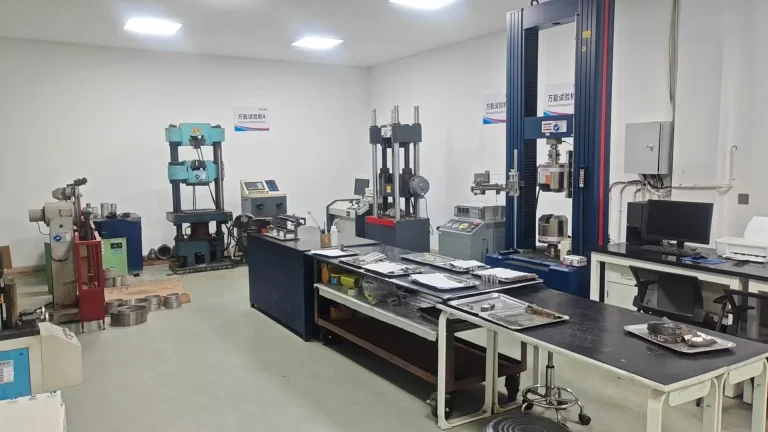
Executing this hydrostatic testing evaluation accurately requires specialized,calibrated equipment.First,technicians need heavy-duty high-pressure pumps to inject water into the steel line.These pumps must deliver smooth, controlled pressure increases without sudden spikes.
Second,precise digital pressure gauges are mandatory.Operators must calibrate these tools regularly to ensure data accuracy.Moreover,automated data loggers record the pressure levels continuously throughout the test duration.This reliable documentation serves as official proof of compliance for safety inspectors.
Pressure Recommendations Across Different Steel Pipe Grades
| Pipe Grade | Wall Thickness | Minimum Test Pressure | Recommended Hold Time |
| ASTM A53 Grade B | Schedule 40 | 2500 PSI | 15 Minutes |
| API 5L X52 | Schedule 80 | 3200 PSI | 30 Minutes |
| ASTM A312 TP316 | Schedule 10S | 1800 PSI | 20 Minutes |
| ASTM A106 Grade B | Schedule 160 | 4500 PSI | 60 Minutes |
Critical Safety Protocols During High-Pressure Evaluations
Safety remains the top priority during any hydrostatic testing operation.Because water is nearly incompressible,it stores less energy than gas.Nonetheless,a sudden component failure can still cause severe injuries or equipment damage.
Supervisors must establish a clear exclusion zone around the test area.Only authorized,trained personnel can enter this designated perimeter.Technicians must wear full personal protective equipment (PPE),including safety glasses and heavy shields.They must also check all fittings and connections before raising the pressure.
How to Address Failures in Your Hydrostatic Testing Routine
What happens if a steel pipe fails the pressure evaluation?First,the operator must isolate the system immediately.
Next,they must depressurize the pipe slowly and safely before anyone approaches the leakage site.
Once the area is safe,technicians locate the source of the pressure drop.Common causes include faulty welds,porous metal,or worn-out end seals.After identifying the defect,welders repair the specific area using approved procedures.
Finally,the team must repeat the complete hydrostatic testing cycle to verify the repair work.
Troubleshooting Guide for Pressure Loss Flaws
| Observed Symptom | Potential Root Cause | Recommended Practical Solution |
| Sudden Pressure Drop | Leaking End-cap Seal | Replace old gaskets and tighten bolts. |
| Slow,Continuous Drop | Micro-cracks in Weld Seam | Grind out defect and re-weld seam. |
| Pin Hole Moisture | Material Porosity Defect | Cut out damaged pipe section entirely. |
| Inconsistent Readings | Air Trapped Inside Pipe | Vent system fully and restart test. |
How often should I perform hydrostatic testing on existing steel pipelines?
Safety regulations require re-testing every five to ten years.However,major modifications or structural repairs also trigger an immediate mandatory evaluation to ensure safety.
Can you use fluids other than fresh water for this evaluation?
Yes,engineers sometimes mix water with glycol or inhibitors to prevent freezing in cold climates.Industries use lightweight oils for specific oilfield applications.But fresh water remains the standard choice due to low costs and environmental safety.
What is the main difference between hydrostatic testing & pneumatic testing?
The primary difference lies in the test medium used.Hydrostatic testing relies on incompressible liquids like water,making it incredibly safe.Conversely,pneumatic testing utilizes compressed gases like air or nitrogen,which carry a higher risk of explosive decompression.
write to us
Have a Question?
Contact Us!
Should you have any questions regarding stainless steel pipes, including manufacturing processes, chemical composition or other unfamiliar matters, our staff will be happy to assist you.