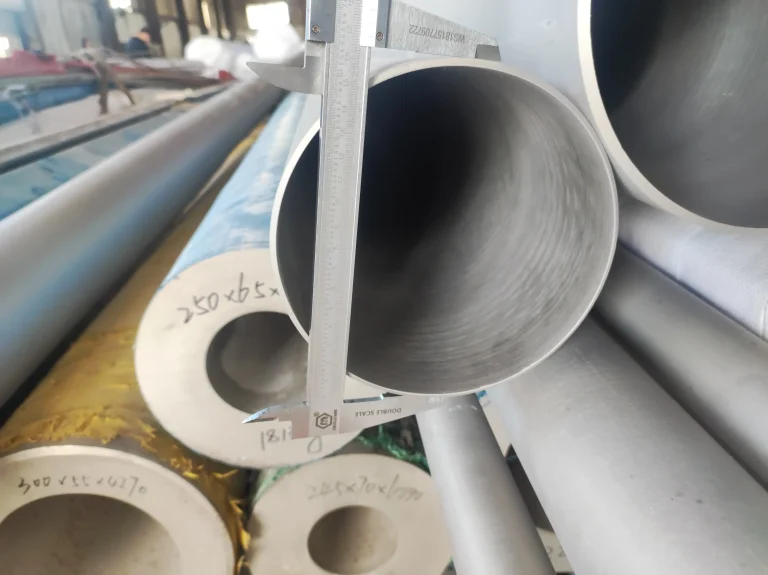
Inconel VS Incoloy VS Monel,What Are The Main Differences?The primary difference between Inconel,Incoloy,and Monel lies in their chemical composition,temperature resistance,and cost.Inconel is a premium nickel-chromium superalloy designed for extreme high-temperature strength,Incoloy is a cost-effective nickel-iron-chromium alternative optimized for moderate high-temperatures,and Monel is a nickel-copper alloy specialized for ambient-temperature marine and acid corrosion resistance.
Inconel VS Incoloy VS Monel:Key Properties Overview
| Feature | Inconel | Incoloy | Monel |
| Primary Composition | Nickel + Chromium (>50% Ni) | Iron + Nickel + Chromium (<50% Ni) | Nickel + Copper (no Chromium) |
| Max Service Temp | Very High (Up to 1000°C+) | High (Up to 800°C+) | Moderate (Up to 480°C – 540°C) |
| Oxidation Resistance | Exceptional | Good | Poor at high temperatures |
| Seawater Resistance | Excellent (but highly expensive) | Good (localized corrosion protection) | Exceptional (highly cost-effective for sea) |
| Relative Cost | Highest | Moderate | High (Lower than Inconel) |
| Common Grades | Inconel 600, 625, 718 | Incoloy 800, 800H, 825 | Monel 400, Monel K-500 |
Inconel:The High-Temp Superalloy
Inconel contains a massive nickel fraction paired with chromium.When exposed to extreme heat,it creates a stable,passivating oxide layer that shields the underlying metal from severe degradation.It maintains high mechanical tensile and creep strength under conditions where standard steel would soften or melt.
- Best Used For:
Gas turbine blades,jet engine exhaust systems,rocket motors,nuclear reactor components,and heavy industrial furnaces. - Drawbacks:
Extremely expensive,and notoriously difficult to machine due to rapid work-hardening.
Incoloy:The Structural Cost-Saver
Incoloy reduces the nickel footprint to under 50% and replaces it with iron.This chemical adjustment significantly drops the raw material expense while preserving a high degree of processing capabilities.It offers excellent structural integrity,uniform resistance to oxidation,and guards effectively against carburization or chloride stress cracking.
- Best Used For:
Process piping,chemical heat exchangers,heating element sheathing, and oil recovery equipment. - Drawbacks:
Cannot match Inconel’s mechanical performance or aggressive corrosion armor in ultra-extreme, maximum-temperature conditions.
Monel:The Marine Master
Monel strips away the chromium entirely and replaces it with copper.The copper-nickel synthesis yields legendary resistance against fast-flowing seawater,salt spray,hydrofluoric acid,and strong alkalines.
- Best Used For:
Propeller shafts,marine valves,subsea communication sheathing,water pumps,and volatile chemical storage tanks. - Drawbacks:
Subject to intense oxidation and massive drop-offs in structural strength if pushed past ~500°C.
Stainless Tubings Supplier in china
Inconel VS Incoloy VS Monel:Strengthening Mechanisms
Inconel (Solid Solution + Precipitation Hardening)
- Advanced alloy tube like alloy 718 tube add Niobium,Aluminum,and Titanium.
- Through aging heat treatments,these elements form nanoscale precipitates called gamma-prime (γ’) or gamma-double-prime (γ”) phases.These precipitates lock the crystal lattice,preventing atomic slippage even when the metal is glowing red-hot.
Incoloy (Primarily Solid Solution Hardening)
- Pipes like Incoloy 800 pipe rely on the blending of chromium,nickel,and iron atoms within the matrix.
- They are usually processed with a high-temperature solution anneal to produce a coarse grain size.Large grains are a deliberate design choice to maximize creep-rupture strength over long periods at high temperatures.
Monel (Work Hardening or Age Hardening)
- Monel 400 pipe cannot be hardened by heat treatment;it relies entirely on cold working to increase strength.
- Monel K-500 adds Aluminum and Titanium,allowing it to undergo age hardening.This thermal process triples the yield strength compared to standard Monel 400.
Inconel VS Incoloy VS Monel:Welding & Fabrication Challenges
- Inconel:
Highly susceptible to hot cracking during welding.It requires strict control of the interpass temperature and high-purity shielding gases.After welding precipitation-hardened grades like 718,a full post-weld heat treatment is required to restore properties. - Incoloy:
Easier to weld than Inconel.However,because of its high iron content,prolonged exposure to high welding temperatures can cause the precipitation of the σ phase,a brittle intermetallic compound that causes the weld joint to crack under stress. - Monel:
The primary enemy during Monel welding is porosity.Molten Monel absorbs oxygen and nitrogen from the air like a sponge.Welders must use specialized filler metals (e.g., Filler Metal 60) containing titanium as a deoxidizer to “trap” the gas before it creates a porous,weakened weld.
Inconel VS Incoloy VS Monel:Applications
Inconel
Incoloy
Monel
Inconel VS Incoloy VS Monel:Cost & Budget Allocation
Which alloy is the best for high-temperature applications?
Winner:Inconel is the absolute best choice.
Temperature:It maintains structural strength above 1000°C (1832°F).
Behavior:It creates a thick protective oxide layer under extreme heat.
Incoloy Limit:Incoloy handles moderate high temperatures up to 800°C (1472°F).
Monel Limit:Monel degrades rapidly and softens above 480°C (900°F).
Which alloy should I choose for Hydrofluoric (HF) Acid?
Winner:Monel is the undisputed industry standard for hydrofluoric acid.
Uniqueness:Monel resists HF acid at all concentrations up to boiling points.
Competitor Failure:This aggressive acid rapidly destroys titanium,tantalum,and SS.
Application:Heavily utilized in oil refinery alkylation units and uranium enrichment.
Why are Inconel and Monel so difficult to machine?
Work Hardening:Both metals harden instantly ahead of a cutting tool’s edge.
Heat Generation:High nickel content generates immense friction and heat during cutting.
Tool Wear:They destroy standard drill bits and require heavy,rigid machinery.
Solution:Machinists must use slow speeds, positive feeds, and specialized carbide tooling.
Why is Incoloy cheaper than Inconel?
Iron Substitution:Incoloy replaces a large portion of expensive nickel with iron.
Nickel Content:Inconel is over 50% nickel;Incoloy is under 50% nickel.
Cost Savings:This chemical shift reduces raw material costs significantly.
Trade-off:Incoloy loses ultra-high temperature strength but remains affordable for large-scale piping.
write to us
Have a Question?
Contact Us!
Should you have any questions regarding stainless steel pipes, including manufacturing processes, chemical composition or other unfamiliar matters, our staff will be happy to assist you.