What is NACE MR0103?
NACE MR 0103 is an international materials standard that defines requirements for metallic materials resistant to sulfide stress cracking in corrosive downstream petroleum refining and gas processing environments.
Officially titled “Materials Resistant to Sulfide Stress Cracking in Corrosive Petroleum Refining Environments,” it has been globally harmonized under the standard designation ISO 17945.
It specifically protects refinery infrastructure-such as pressure vessels,piping,heat exchangers,and valves-from catastrophic failures caused by wet hydrogen sulfide,commonly known as sour service.
Core Requirements of NACE MR0103
The primary goal of the standard is to manage material hardness and microstructure,as harder metals are highly susceptible to brittle cracking in the presence of H₂S.
NACE MR0103 VS. NACE MR0175
Before MR0103 was introduced in 2003,the industry relied on NACE MR0175 for sour service.
However,there is a distinct environmental split between the two:
| Feature | NACE MR0103 (ISO 17945) | NACE MR0175 (ISO 15156) |
| Industry Sector | Downstream (Refineries, chemical processing) | Upstream (Oil & gas exploration, drilling, wellheads) |
| Chlorides & CO₂ | Typically low chloride levels;lower CO₂ concentrations. | High naturally occurring chlorides (saltwater) and CO₂. |
| pH Environment | Generally high pH aqueous environments. | Generally low pH (acidic) environments. |
| Environmental Limits | Does not place strict limits on H₂S partial pressure;relies on fluid composition. | Restricts material use based on exact H₂S partial pressure,temperature,and chloride levels. |
| Welding Rigor | Incorporates highly rigorous welding standards (e.g., matching NACE SP0472 controls). | Focuses more heavily on raw environmental boundaries than downstream welding specifics. |
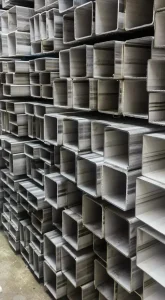
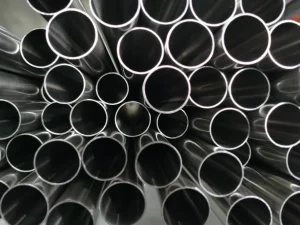
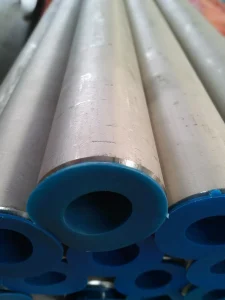
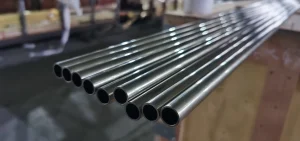
Stainless Tubings Supplier in china
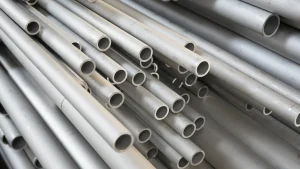
Beyond the fundamental hardness limits and industry scope,NACE MR0103 / ISO 17945 contains explicit engineering requirements,chemical thresholds,and processing rules designed for refinery downstream piping and equipment.
Quantitative Environmental Criteria for “Sour Service”
The standard does not leave the definition of a “sour environment” to guesswork.
In Section 6.6,it defines specific chemical thresholds for free water that mandate compliance.
If free water is present,the standard applies if any of the following are met:
- High H₂S Concentration:
Dissolved H₂S in the water exceeds 50 ppmw. - Low pH (Acidic):
The water pH is under 4.0,regardless of the H₂S concentration. - High pH with Cyanides:
The water pH is over 7.6 AND contains dissolved H₂S along with more than 20 ppmw of hydrocyanic acid.
Cyanides disrupt the protective iron sulfide film on steel,accelerating hydrogen absorption into the metal. - Gas Phase Partial Pressure:
The absolute partial pressure of H₂S in the gas phase is greater than 0.3 kPa (0.05 psia).
Strictly Prohibited Materials and Processes
To eliminate microstructural vulnerabilities where atomic hydrogen can gather and cause cracking,the standard enforces several manufacturing bans:
Specific Component Regulations
Mandatory Companion Standards
- NACE SP0472:
This standard specifically governs the welding of carbon steels for downstream sour service.
It mandates that production weld deposits must not exceed a maximum hardness of 200 HBW (which is more stringent than the parent metal’s 237 HBW / 22 HRC limit). - NACE TM0177:
Used if a project utilizes a proprietary or non-listed alloy.The material must undergo laboratory laboratory qualification via tensile or bent-beam stress-corrosion cracking tests in an H₂S environment.
Does NACE MR0103 apply to stainless steel and nickel alloys?
Yes.Although it is most commonly discussed in the context of carbon steel,the standard includes specific sections detailing the heat treatment,chemical composition,and hardness limits for austenitic stainless steels,martensitic and ferritic stainless steels,duplex stainless steels,and nickel,cobalt,and titanium alloys.
Are NACE MR0103 and ISO 17945 the exact same thing?
Yes.In 2015,NACE MR0103 was globally harmonized with the International Organization for Standardization.The official current designation of the standard is NACE MR0103 / ISO 17945.They share identical technical requirements.
Can I use a NACE MR0175 certified material for a NACE MR0103 project?
Not automatically.While a material might meet MR0175,MR0103 has different welding controls (such as mandatory adherence to NACE SP0472 for carbon steel welds) and strict rules regarding cold-working and plating.You must review the material’s mill test certificate and welding procedures to verify it satisfies MR0103 specific clauses.
What materials are strictly banned by NACE MR0103?
Free-machining steels (steels with added sulfur, lead, or selenium) are completely prohibited.
Materials that have been severely cold-worked without subsequent stress-relief heat treatment are also banned,as internal stresses make them highly vulnerable to sulfide stress cracking.
write to us
Have a Question?
Contact Us!
Should you have any questions regarding stainless steel pipes, including manufacturing processes, chemical composition or other unfamiliar matters, our staff will be happy to assist you.