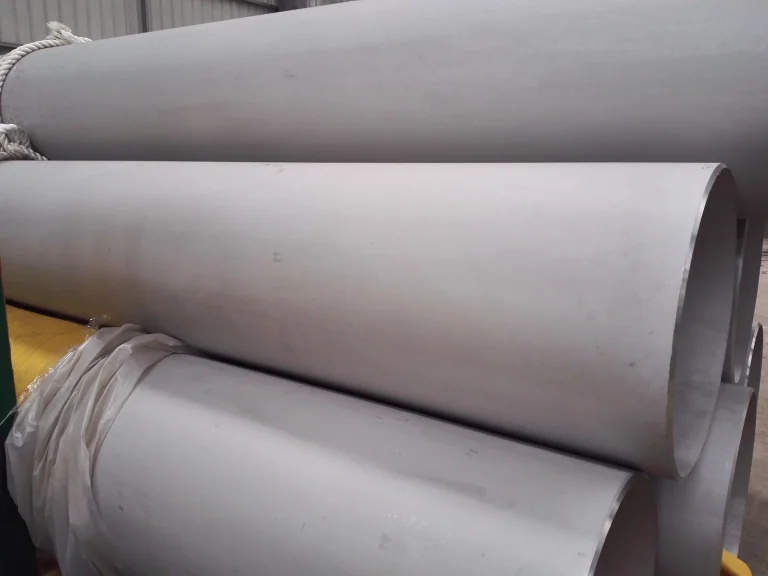
Welded Monel 400 Pipe
Welded Monel 400 pipe is a high-strength, corrosion-resistant piping product made from a nickel-copper alloy.Unlike seamless pipes which are drawn from a single piece of metal,welded pipes are manufactured by rolling Monel 400 strip or plate into a tube and then joining the edges with a longitudinal weld.
Specification of Welded Monel 400 Pipe
| Product | Welded Monel 400 Pipe |
| Working Temperature | up to 538°C (1,000°F) |
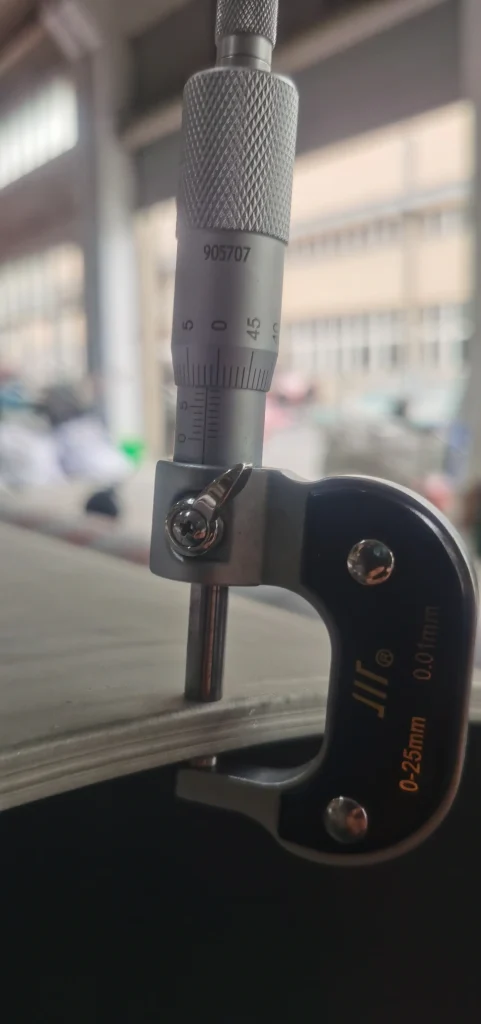
| Dimension Range | Outside Diameter (OD): 6 – 200 mm Wall Thickness (THK): 0.35 – 6 mm Length (L): 0.5 – 12 m The size can be customized according to ASME B36.10 / ASME B36.19 |
| Schedules | SCH 5, 10, 40, 80, 160, XXS, XXH |
| Materials | Monel 400 | UNS N04400 | W.Nr. 2.4360 2.4361 | DIN NiCu30Fe |
| Standards | ASTM B725 / ASME SB725 / ASTM B829 / ASTM B775 / ASME B36.19 / ASME B36.10 |
| Surface Finish |
Mill Finish Annealed and Pickled Bright Annealed Polished Finish Electropolished |
| Corrosion Resistance Specifications |
Excellent Resistance To: Marine & Seawater Environments Hydrofluoric Acid Reducing Acids & Alkalis Stress-Corrosion Cracking Non-Oxidizing Salts |
| Applications | Marine Engineering Chemical Processing Oil & Gas Industry Power Generation Salt Production Aerospace & Defense |
| Our Strength | Over 10 Years Experience Exporting Pipes & Tubings Stock Available In Common Sizes Customized Fabrication Available Package Supplying of Piping Materials Strict QC With PMI Testing For Every Batch Experience in Exporting to the US,Germany,UAE,etc. Third Party Inspection Available |
For more information on monel 400 pipe and other products, please contact us.
Welded Monel 400 Pipe Chemical Composition (%)
| Ni | Cu | Fe | Mn | Si | P | S |
| 63.0 Min | 28.0 – 34.0 | 2.5 Max | 2.0 Max | 0.5 Max | 0.3 Max | 0.024 Max |
How does chemical composition affect weldability?
Because Monel 400 contains a high percentage of nickel,it has poor fluidity and shallow penetration when molten.The silicon (Si) and titanium (Ti) in its composition—sometimes added in trace amounts—help improve the fluidity of the molten pool and prevent porosity in the weld.
Welded Monel 400 Pipe Mechanical Properties(Typical value range)
| Tensile Strength | Yield strength | Elongation | Hardness |
| 480 – 590 MPa (70 – 85 ksi) | 170 – 310 MPa (25 – 45 ksi) | 35% – 50% | 110 – 140 HB(60 – 75 HRB) |
Is the strength of the weld lower than that of the rest of the pipe?
No.According to the ASTM B725 standard,the weld must meet the same minimum tensile strength as the base material (70 ksi / 480 MPa).When the correct filler metal (typically ERNiCu-7) is used,the strength of the welded joint is usually comparable to or even higher than that of the base material.
Physical Properties of Welded Monel 400 Pipe
Density:8.80 g/cm³ (0.318 lb/in³)
Melting Range:1300°C – 1350°C (2370°F – 2460°F)
Specific Heat:0.102 Btu/lb · ℉(70℉)
Poisson’s Ratio:0.32 (Annealed condition)
Magnetic Permeability:1.002 (at 70°F/21°C)
Thermal Properties of Welded Monel 400 Pipe
| Temperature | Mean CTE | Thermal Conductivity | Modulus |
| 70°F (21°C) | – | 151 Btu·in/ft²·h·°F 21.8 W/m·°C | 179 GPa |
| 200°F (93°C) | 7.7 µin/in·°F 13.9 µm/m·°C | 162 Btu·in/ft²·h·°F 23.4 W/m·°C | 175 GPa |
| 400°F (204°C) | 8.1 µin/in·°F 14.6 µm/m·°C | 179 Btu·in/ft²·h·°F 25.8 W/m·°C | 170 GPa |
| 600°F (316°C) | 8.4 µin/in·°F 15.1 µm/m·°C | 196 Btu·in/ft²·h·°F 28.3 W/m·°C | 164 GPa |
| 800°F (427°C) | 8.7 µin/in·°F 15.7 µm/m·°C | 214 Btu·in/ft²·h·°F 30.9 W/m·°C | 158 GPa |
| 1000°F (538°C) | 9.1 µin/in·°F 16.4 µm/m·°C | 233 Btu·in/ft²·h·°F 33.6 W/m·°C | 152 GPa |
Manufacturing Process for Welded Monel 400 Pipe
The manufacturing process for welded monel 400 pipe is a specialized procedure governed by standards like ASTM B725.Because monel 400 is sensitive to impurities like sulfur and lead,cleanliness and precise heat control are vital.
Material Preparation
Coil Selection:
High-quality Monel 400 strips or plates are selected based on the required wall thickness.
Slitting:
The wide coils are slit into precise widths corresponding to the circumference of the target pipe size.
Surface Cleaning:
The edges and surfaces are rigorously cleaned of oils and oxides.Any residual sulfur or lead can cause hot cracking during the welding stage.
Forming
Continuous Roll Forming:
For smaller diameters,the strip passes through a series of rollers that gradually bend it into a cylindrical shape.
J-C-O Forming:
For large-diameter or heavy-wall pipes,a hydraulic press bends the plate into a “J” shape,then a “C” shape,and finally an “O” shape.
Welding
GTAW (TIG Welding):
The most common method.It uses a non-consumable tungsten electrode and an inert gas shield (Argon).It provides high-quality,clean welds.
PAW (Plasma Arc Welding):
Used for faster production and deeper penetration on thicker walls.
Filler Metal:
If needed,ERNiCu-7 (Monel 60) filler wire is used to ensure the weld chemistry matches the base metal’s corrosion resistance.
Bead Reduction
Weld Smoothing:
The internal and external weld beads (the raised “seam”) are rolled or hammered while cold.
Recrystallization:
This cold working of the weld area is crucial;it allows the weld grain structure to re-align and match the base metal during the subsequent annealing process.
Heat Treatment
Temperature Range:
The pipe is heated to 1400°F – 1800°F (760°C – 980°C).
Purpose:
This relieves the internal stresses caused by forming and welding.It ensures the mechanical properties are uniform and restores maximum corrosion resistance.
Sizing and Straightening
Sizing:
The pipe passes through sizing rolls to ensure the outside diameter (OD) and roundness meet ASTM B829 tolerances.
Straightening:
Mechanical straighteners ensure the pipe meets industry “straightness” requirements for installation.
Finishing & Pickling
Pickling:
The pipe is immersed in a nitric/hydrofluoric acid bath to remove the dark oxide scale formed during heat treatment,resulting in a clean,silver-white matte finish.
Passivation:
This further enhances the protective oxide layer on the surface.
Quality Testing
NDT (Non-Destructive Testing):
Eddy Current (ET):For detecting surface defects.
Radiography (X-Ray):Often performed on 100% of the weld seam for high-pressure applications to ensure a “Joint Efficiency” of 1.0.
Hydrostatic Test:
The pipe is filled with water at high pressure to check for leaks.
MTC Issue:
A Material Test Certificate is generated, documenting the chemical and mechanical compliance.
write to us
Have a Question?
Contact Us!
Should you have any questions regarding stainless steel pipes, including manufacturing processes, chemical composition or other unfamiliar matters, our staff will be happy to assist you.