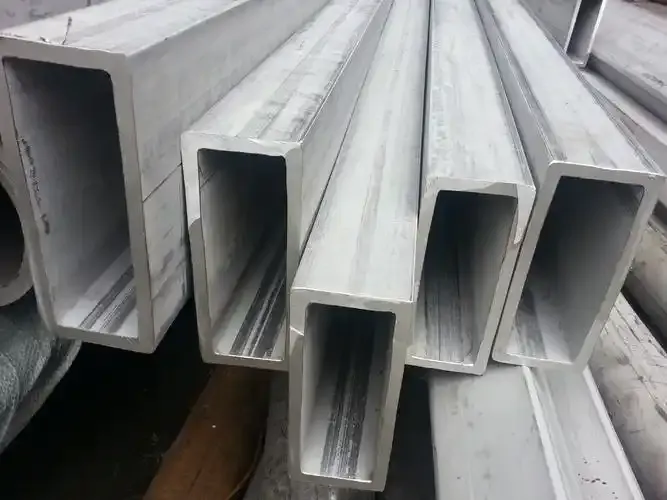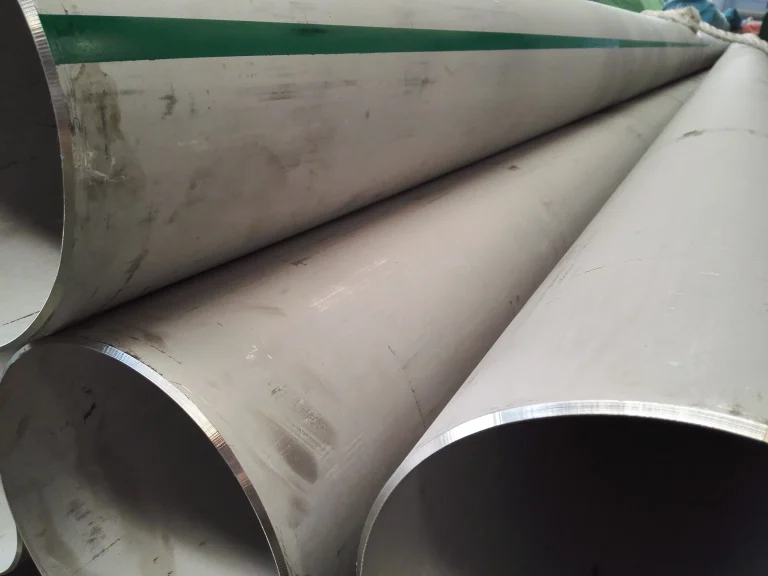
Seamless Inconel 625 Pipe
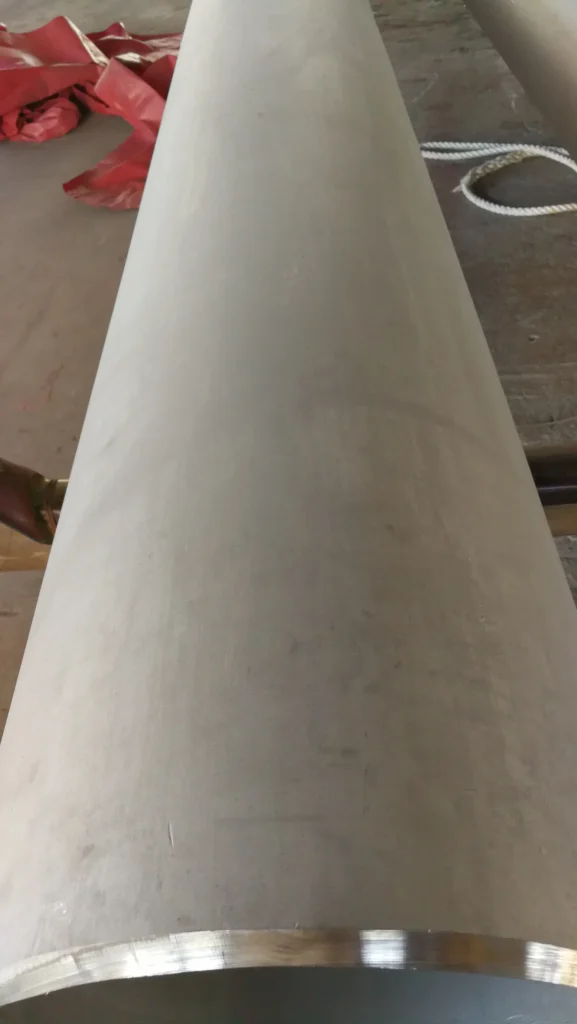
Seamless Inconel 625 Pipe is a high-performance nickel-based alloy tubing manufactured by piercing and extruding solid round billets,resulting in a seamless structure throughout the entire pipe.
By eliminating the weld seam as a potential structural weak point,this pipe is specifically engineered for critical applications involving extreme pressures,high temperatures (up to 1093°C),and highly corrosive environments.
Specification of Seamless Inconel 625 Pipe
| Product | Seamless Inconel 625 Pipe |
| Working Temperature | Annealed:≤ 593℃(1100℉) Solution Annealed:≥ 593℃(1100℉) |
| Dimension Range | Outside Diameter (OD): 6 – 200 mm Wall Thickness (THK): 0.35 – 6 mm Length (L): 0.5 – 12 m The size can be customized according to ASME B36.10 / ASME B36.19 |
| Schedules | SCH 5, 10, 40, 80, 160, XXS, XXH |
| Materials | Inconel 625 | UNS N06625 | W.Nr. 2.4856 | DIN/EN NiCr22Mo9Nb |
| Standards | ASTM B444 / ASME SB444 / ASTM B704 / ASME SB704 / ASTM B705 / ASME SB705 |
| Surface Finish |
Pickled / Descaled Polished Bright Annealed Electropolished |
| Corrosion Resistance Specifications |
Excellent Resistance To: Pitting Corrosion Crevice Corrosion Stress Corrosion Cracking |
| Applications | Pharmaceuticals and Biotechnology Chemical and Petrochemical Industry Environmental Protection and Pollution Control Energy and Marine Engineering |
| Our Strength | Over 10 Years Experience Exporting Pipes & Tubings Stock Available In Common Sizes Customized Fabrication Available Package Supplying of Piping Materials Strict QC With PMI Testing For Every Batch Experience in Exporting to the US,Germany,UAE,etc. Third Party Inspection Available |
For more information on inconel 625 pipe and other products, please contact us.
Seamless Inconel 625 Pipe Chemical Composition (%)
| Ni | Cr | Mo | Nb + Ta | Fe | Co |
| 58.0 Min | 20.0 – 23.0 | 8.0 – 10.0 | 3.15 – 4.15 | 5.0 Max | 1.0 Max |
| Mn | Si | P | S | C | Al / Ti |
| 0.50 Max | 0.50 Max | 0.015 Max | 0.015 Max | 0.10 Max | 0.40 / 0.40 Max |
Why does Inconel 625 not require age hardening like Inconel 718?
This is due to the presence of 3.15% to 4.15% niobium (Nb) in the composition.Niobium interacts with molybdenum (Mo) within the nickel-chromium matrix to produce a “solid solution strengthening” effect.This enables the seamless pipe to achieve exceptionally high strength even in the annealed condition while maintaining excellent ductility,thereby simplifying both manufacturing and installation processes.
Why is the iron (Fe) content limited to below 5%?
Inconel 625 is a nickel-based alloy rather than an iron-based alloy.Restricting iron content to less than 5% ensures the alloy’s stability in extreme corrosive environments,such as strong acids.If iron content is too high,the material’s corrosion resistance and high-temperature oxidation resistance will significantly deteriorate.
Seamless Inconel 625 Pipe Mechanical Properties(Typical value range)
| Performance Metrics | Tensile Strength | Yield strength | Elongation | Hardness |
| Grade 1 Annealed | ≥ 827 MPa (120 ksi) | ≥ 414 MPa (60 ksi) | ≥ 30% | ≤ 22 HRC (243 HB) |
| Grade 2 Solution Annealed | ≥ 690 MPa (100 ksi) | ≥ 276 MPa (40 ksi) | ≥ 30% | ≤ 22 HRC (243 HB) |
Why is the strength of Grade 1 higher than that of Grade 2?
Grade 1 undergoes lower heat treatment temperatures,preserving finer grain structures and thus exhibiting higher tensile strength at room temperature.
Grade 2 undergoes higher heat treatment temperatures,resulting in coarser grains.Although its room-temperature strength is slightly lower,this coarse-grained structure significantly enhances the material’s creep resistance at elevated temperatures.
Can this pipe be cold-bent? Will it affect its performance?
Yes.However,note that cold working (such as bending) induces work hardening,resulting in increased local hardness and strength while reducing ductility.If significant deformation occurs or the material is used in highly corrosive environments,stress relief annealing is typically recommended after cold bending to restore its original mechanical properties and corrosion resistance.
Physical Properties of Seamless Inconel 625 Pipe
Density:8.44 g/cm³ (0.305 lb/in³)
Melting Range:1290 – 1350 ℃(2350 – 2460 ℉)
Magnetic Permeability:1.0006(20℃ / 68℉).It remains non-magnetic even at cryogenic temperatures.
Specific Heat:410 J/kg · ℃ (at 20 ℃)
Thermal Properties of Seamless Inconel 625 Pipe
| Temperature | Thermal Conductivity(W/m·℃) | Mean Coeff. of Thermal Expansion(μm/m·℃) |
| 20 ℃ | 9.8 | – |
| 200 ℃ | 12.1 | 13.1 |
| 400 ℃ | 14.9 | 14.1 |
| 600 ℃ | 17.8 | 14.8 |
| 800 ℃ | 20.8 | 15.8 |
Manufacturing Process for Seamless Inconel 625 Pipe
The manufacturing process for Inconel 625 seamless pipes is significantly more complex than that for ordinary stainless steel due to its extremely high work hardening rate and substantial deformation resistance.To ensure the tubes are seamless and possess a highly uniform microstructure,the following core process steps are typically employed.
Billet Preparation
Manufacturing begins with high-quality VIM (Vacuum Induction Melting) or VAR (Vacuum Arc Remelting) steel ingots.The ingots are forged into round bars (pipe billets).The billets undergo surface grinding and non-destructive testing to ensure no surface defects are present.
Hot Working
Heating:
The billet is heated to a specific temperature between 1100°C and 1250°C.Temperature control is critical—excessive heat causes grain boundary melting,while insufficient heat impedes deformation.
Hot Piercing:
Using a slant rolling piercing machine or hot extrusion press,the solid billet is pierced through its center while red-hot to form a hollow blank (Mother Hollow).
Hot Extrusion:
For difficult-to-deform alloys like Inconel 625,hot extrusion is the most common method as it provides strong triaxial compressive stress,reducing the risk of cracking.
Cold Working
Further reduction in tube diameter and wall thickness is achieved through cold drawing or cold pilgering.Pilgering is more commonly used for alloy 625 because it enables a greater reduction ratio and produces superior surface quality and a more uniform grain structure.
Based on our experience,due to the extreme work-hardening tendency of 625,multiple cold drawing/cold rolling passes are typically required, necessitating intermediate annealing between each pass.
Heat Treatment
Annealing:
Approximately 925°C–1040°C, designed to relieve stress and refine grain size.
Solution Annealing:
Above 1100°C,enabling complete dissolution of carbides to achieve coarse grain structure and enhance high-temperature creep strength.
Bright Annealing:
Performed under hydrogen atmosphere to maintain surface brightness and prevent oxidation.
Finishing
Pickling:Removes scale formed during heat treatment (for normal annealing).
Straightening:Ensures the straightness of the tubing meets specifications.
Cutting:Cuts to the length specified in the order.
Testing & Inspection
All seamless tubes we produce must undergo a series of rigorous inspections,including but not limited to non-destructive testing (eddy current testing (ET),ultrasonic testing (UT),or X-ray inspection),hydrostatic pressure testing,mechanical property testing (tensile,hardness,flattening,and flaring tests),and measurement of outer diameter (OD) and wall thickness (WT) using high-precision instruments.
write to us
Have a Question?
Contact Us!
Should you have any questions regarding stainless steel pipes, including manufacturing processes, chemical composition or other unfamiliar matters, our staff will be happy to assist you.