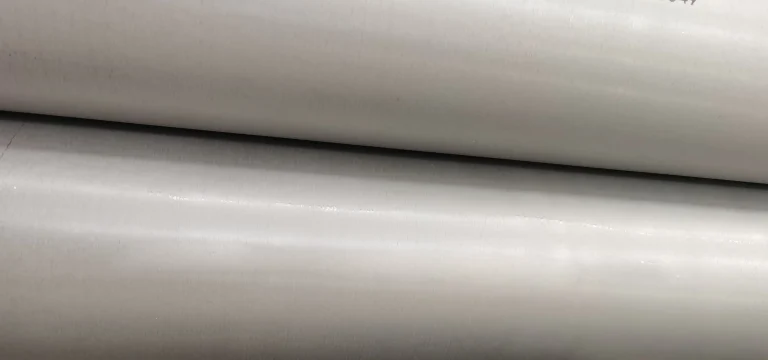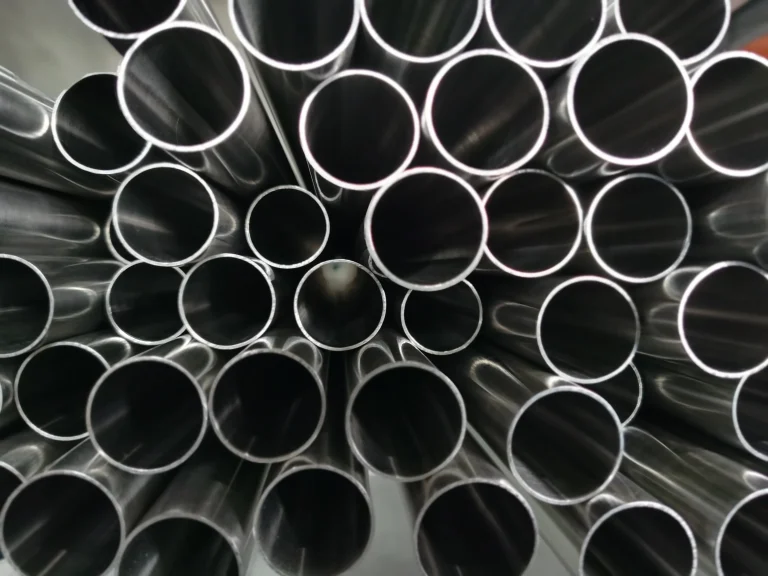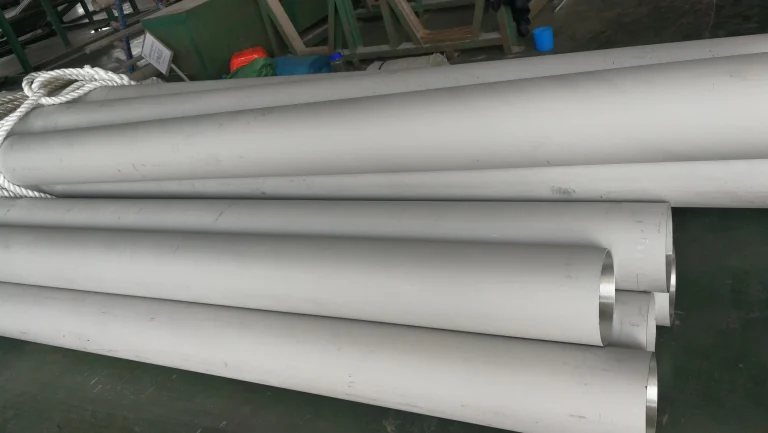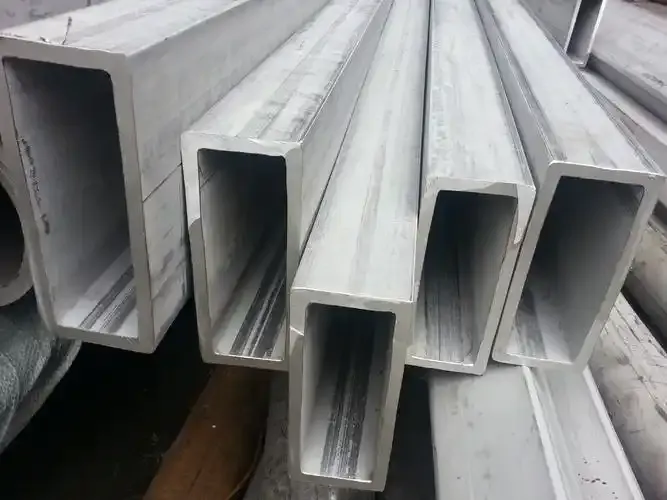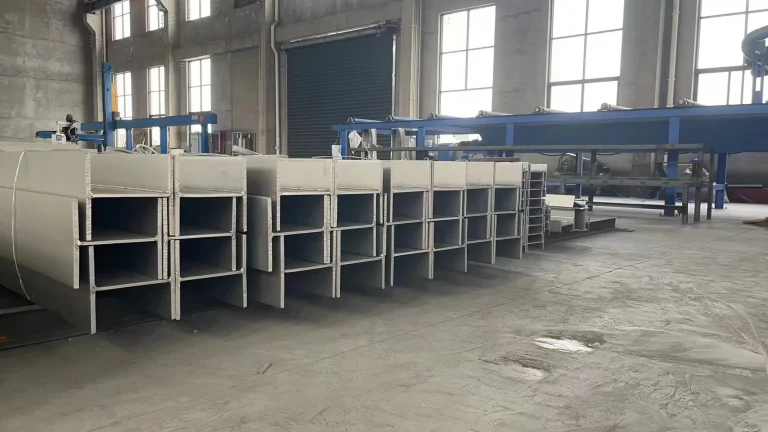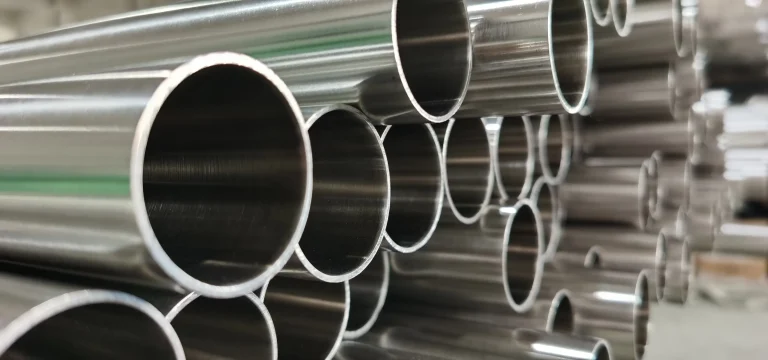
Welded Inconel 601 Pipe
Welded Inconel 601 Pipe (UNS N06601) is a high-performance, nickel-chromium-iron alloy pipe manufactured by rolling alloy sheets into a cylindrical shape and welding the seam. It is primarily chosen for its exceptional resistance to high-temperature oxidation (up to 2200°F or 1200°C) and its ability to maintain high mechanical strength in extreme environments.
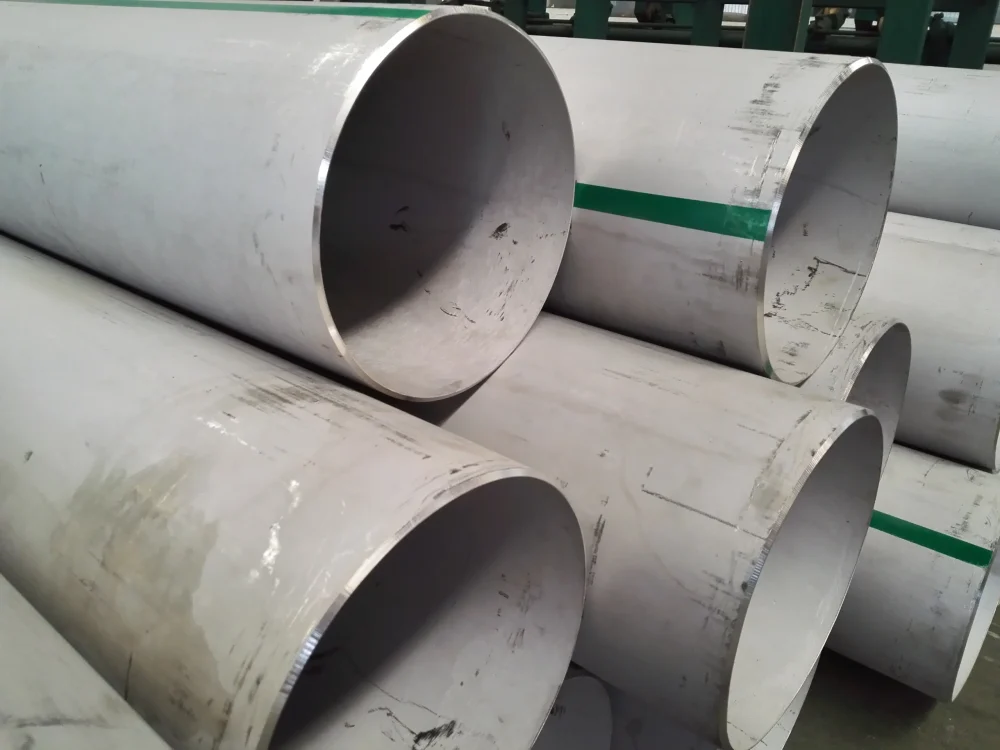
Specification of Welded Inconel 601 Pipe
| Product | Welded Inconel 601 Pipe |
| Working Temperature | Up to 1200°C (2200°F) |
| Dimension Range | Outside Diameter (OD): 6 – 200 mm Wall Thickness (THK): 0.35 – 6 mm Length (L): 0.5 – 12 m The size can be customized according to ASME B36.10 / ASME B36.19 |
| Schedules | SCH 5, 10, 40, 80, 160, XXS, XXH |
| Materials | Inconel 601 | UNS N06601 | W.Nr. 2.4851 | DIN 17742,DIN 17750–17754,EN 10095 |
| Standards | ASTM B517 / ASME SB517 / ASTM B516 / ASME SB516 /ASTM B775 / ASTM B751 |
| Surface Finish |
Annealed & Pickled Bright Annealed Polished Finish Sandblasting / Bead Blasting Electropolishing |
| Corrosion Resistance Specifications |
Excellent Resistance To: Oxidation Carburization Nitridation Thermal Fatigue Aqueous Corrosion Stress-Corrosion Cracking |
| Applications | Thermal Processing Chemical & Petrochemical Power Generation Environmental Engineering Aerospace |
| Our Strength | Over 10 Years Experience Exporting Pipes & Tubings Stock Available In Common Sizes Customized Fabrication Available Package Supplying of Piping Materials Strict QC With PMI Testing For Every Batch Experience in Exporting to the US,Germany,UAE,etc. Third Party Inspection Available |
For more information on inconel 601 pipe and other products, please contact us.
Welded Inconel 601 Pipe Chemical Composition (%)
| Ni | Cr | Al | Fe | |
| 58.0 – 63.0 | 21.0 – 25.0 | 1.0 – 1.7 | Remainder | |
| Mn | Si | C | Cu | S |
| 1.5 Max | 0.5 Max | 0.10 Max | 1.0 Max | 0.015 Max |
What are the main differences in composition between 601 and 600?
600 (UNS N06600):
Contains no aluminum or only trace amounts,relying primarily on chromium for oxidation resistance.
601 (UNS N06601):
Contains 1.0%–1.7% aluminum,providing an oxidation resistance limit approximately 100°C higher than 600.
Welded Inconel 601 Pipe Mechanical Properties(Typical value range)
| Property | Tensile Strength | Yield strength | Elongation | Hardness |
| Annealed | 550 – 760 MPa (80,000 – 110,000 psi) | 205 – 415 MPa (30,000 – 60,000 psi) | 30% – 50% | 70 – 95 HRB |
Is the pipe brittle at cryogenic temperatures?
Quite the opposite.Like most nickel alloys, Inconel 601 has an austenite structure that does not undergo a “ductile-to-brittle” transition.It remains extremely tough and impact-resistant down to -320°F (-196°C),making it safe for systems that experience massive temperature swings (e.g., from liquid nitrogen temperatures to furnace heat).
Does the weld seam weaken the pipe at high temperatures?
No,provided proper welding procedures are followed.When welded using matching filler metals (like ERNiCrFe-11),the joint efficiency is typically rated at 1.0 (100% strength of the base metal) if the pipe undergoes full radiography (RT) or ultrasonic testing (UT).The high nickel content ensures the weld remains ductile and resistant to thermal fatigue.
Physical Properties of Welded Inconel 601 Pipe
Density:8.11 g/cm³ (0.293 lb/in³)
Melting Range:1360°C – 1411°C (2480°F – 2571°F)
Specific Heat:448 J/kg · ℃ (at 20 ℃)
Poisson’s Ratio:0.31 to 0.32
Magnetic Permeability:Non-magnetic
Thermal Properties of Welded Inconel 601 Pipe
| Temperature | Mean CTE,μm/m · ℃ | Specific Heat,J/kg · ℃ | Thermal Conductivity,W/m · ℃ |
| 20°C | – | 448 | 11.2 |
| 200°C | 14.3 | 482 | 13.8 |
| 600°C | 15.5 | 565 | 20.0 |
| 1000°C | 17.8 | 666 | 26.4 |
Manufacturing Process for Welded Inconel 601 Pipe
The manufacturing process for welded inconel 601 pipe (UNS N06601) is a precision-heavy sequence designed to maintain the alloy’s structural integrity and high-temperature resistance while ensuring a high-quality weld.
Material Preparation
The process begins with high-quality Inconel 601 hot-rolled or cold-rolled strips/plates.
Inspection:
The raw material is checked for chemical composition (specifically the 1.0–1.7% Aluminum content) to ensure it meets ASTM B168 standards.
Slitting:
The wide plates are slit into precise widths (skelp) corresponding to the desired circumference of the pipe.
Cold Forming (The “Rolling” Stage)
The slit strips are fed through a series of progressive forming rollers.These rollers gradually bend the flat strip into a cylindrical shape.
Unlike stainless steel,inconel 601 is stiffer and work-hardens quickly,requiring high-torque rollers and careful tension control to avoid surface cracking.
Welding Process
Once the edges meet,they are joined using high-energy welding techniques.According to ASTM B517,no filler metal is required for standard welded pipes,but for heavy-wall pipes,filler may be added.Common methods include:
Tungsten Inert Gas:
Most common for high-purity pipes;provides a clean,high-quality bead.
Plasma Arc Welding:
Used for thicker walls to achieve deeper penetration in a single pass.
Laser Welding:
Gaining popularity for its narrow Heat Affected Zone (HAZ).
Gas Protection:
Crucial for Inconel 601.High-purity Argon or Helium shielding is used to prevent the aluminum from oxidizing into slag during the melt.
Weld Bead Treatment
Bead Removal:
The internal and external weld beads (the “bumps”) are usually mechanically removed (scarfed or ground) to create a smooth surface,improving flow and preventing stress concentration.
Heat Treatment (Solution Annealing)
Temperature:
The pipe is heated to 2100°F–2250°F (1150°C–1230°C) and rapidly cooled (quenched).
Purpose:
This relieves internal stresses from the forming/welding process and ensures all carbides are dissolved back into the matrix,maximizing corrosion resistance and ductility.
Sizing and Straightening
The annealed pipe is passed through sizing rolls to ensure it meets the strict dimensional tolerances of ANSI B36.19 and is straightened to meet industrial linearity requirements.
Finishing & Testing
Non-Destructive Testing (NDT):
100% Radiography (X-ray) or Hydrostatic testing to ensure the weld is leak-proof.
Pickling/Cleaning:
Removing any oxide scale formed during annealing to leave a “Scale-Free” finish.
Visual Inspection:
Checking for surface defects like pits or scratches.
write to us
Have a Question?
Contact Us!
Should you have any questions regarding stainless steel pipes, including manufacturing processes, chemical composition or other unfamiliar matters, our staff will be happy to assist you.