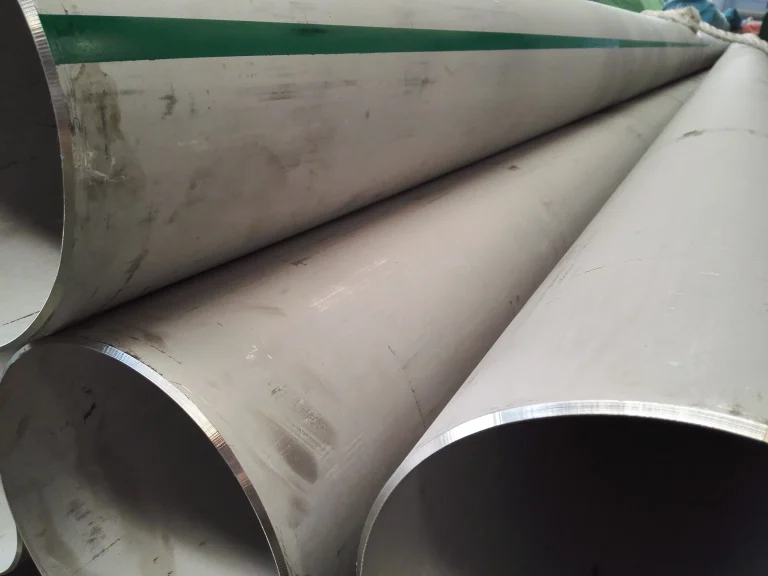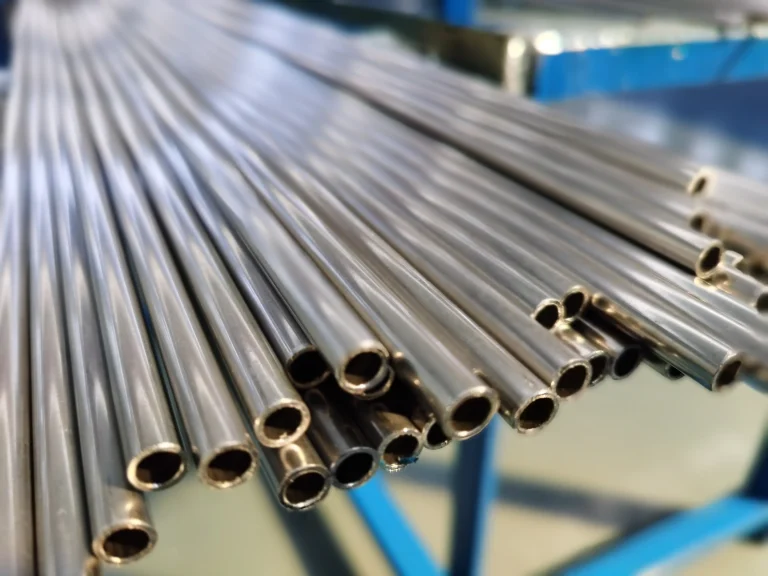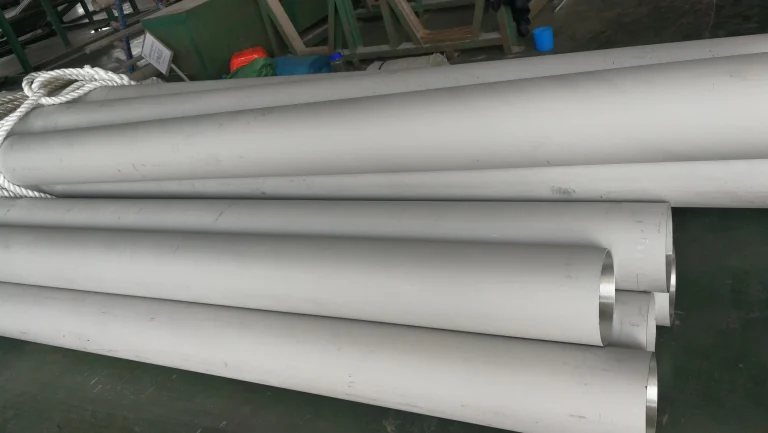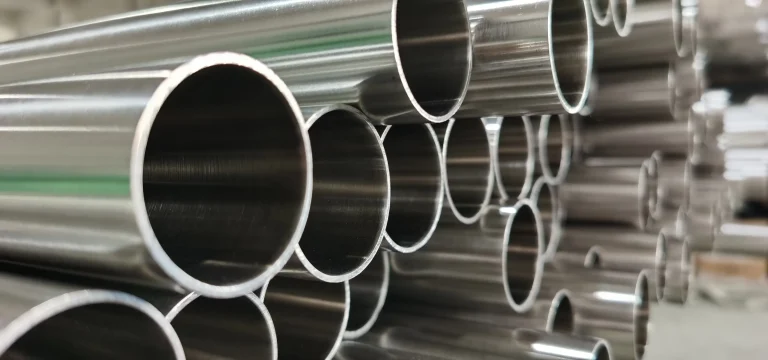
Seamless Inconel 600 Pipe
Seamless Inconel 600 Pipe is a high-performance,nickel-chromium alloy pipe manufactured without a welded seam,typically through processes like hot extrusion and cold drawing.It is designed for use in extreme environments ranging from cryogenic temperatures up to 2000°F (1093°C).
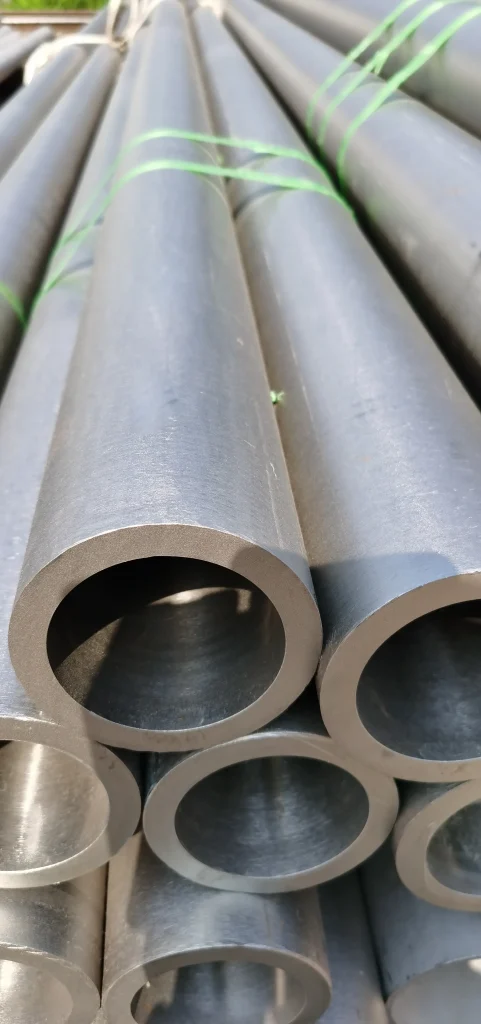
Specification of Seamless Inconel 600 Pipe
| Product | Seamless Inconel 600 Pipe |
| Working Temperature | Up to 1093°C (2000°F) |
| Dimension Range | Outside Diameter (OD): 6 – 200 mm Wall Thickness (THK): 0.35 – 6 mm Length (L): 0.5 – 12 m The size can be customized according to ASME B36.10 / ASME B36.19 |
| Schedules | SCH 5, 10, 40, 80, 160, XXS, XXH |
| Materials | Inconel 600 | UNS N06600 | W.Nr. 2.4816 | DIN/EN NiCr15Fe |
| Standards | ASTM B517 / ASTM B516 / ASTM B775 / ASTM B474 |
| Surface Finish |
Annealed & Pickled Bright Annealed Cold Drawn/Finished Polished/Sandblasted |
| Corrosion Resistance Specifications |
Excellent Resistance To: High-Temperature Corrosion & Oxidation Corrosion in Chemical Environments Stress-Corrosion Cracking Carburization and Nitridation Reducing Agents |
| Applications | Chemical and Petrochemical Processing Nuclear Power Generation High-Temperature Industrial Applications Aerospace Engineering Oil and Gas Industry Food Processing |
| Our Strength | Over 10 Years Experience Exporting Pipes & Tubings Stock Available In Common Sizes Customized Fabrication Available Package Supplying of Piping Materials Strict QC With PMI Testing For Every Batch Experience in Exporting to the US,Germany,UAE,etc. Third Party Inspection Available |
For more information on inconel 600 pipe and other products, please contact us.
Seamless Inconel 600 Pipe Chemical Composition (%)
| Ni | Cr | Fe | C |
| 72.0 Min | 14.0 – 17.0 | 6.0 – 10.0 | 0.15 Max |
| Mn | Si | Cu | S |
| 1.00 Max | 0.50 Max | 0.50 Max | 0.015 Max |
What is the function of high nickel content?
The high nickel content (at least 72%) provides the alloy with excellent corrosion resistance in reducing environments and enables it to withstand stress corrosion cracking induced by chloride ions.
What is the primary contribution of chromium?
A chromium content of 14%–17% provides excellent oxidation resistance and withstands sulfur compounds and various oxidizing media.
Is there a difference in composition between seamless pipes and welded pipes?
The basic chemical composition (UNS N06600 grade) is identical,but seamless pipe is manufactured from a single billet and typically offers higher pressure resistance (approximately 20% greater) and superior internal consistency compared to welded pipe.
Seamless Inconel 600 Pipe Mechanical Properties(Typical value range)
| Property | Tensile Strength | Yield strength | Elongation | Hardness |
| Annealed | 550 – 690 MPa (80,000 – 100,000 psi) | 172 – 345 MPa (25,000 – 50,000 psi) | 35% – 55% | 65 – 85 HRB |
| Cold-Worked | 860 – 1517 MPa (125,000 – 220,000 psi) | 550 – 1200 MPa (80,000 – 175,000 psi) | 2% – 25% | Up To 30 HRC |
Can it maintain its mechanical properties at low temperatures?
Yes.Inconel 600 does not exhibit a ductile-to-brittle transition temperature.It maintains high impact strength and toughness even at extremely low temperatures (below freezing),making it suitable for cryogenic engineering.
Physical Properties of Seamless Inconel 600 Pipe
Density:8.47 g/cm³ (0.306 lb/in³)
Melting Range:1354°C – 1413°C (2470°F – 2575°F)
Specific Heat:444 J/kg · ℃ (at 20 ℃)
Poisson’s Ratio:0.29
Magnetic Permeability:This alloy exhibits non-magnetic properties and remains non-magnetic even in cryogenic environments.
Mean Coefficient of Thermal Expansion
| Temp. Range | Coefficient of thermal expansion |
| 20 – 100 °C (70 – 200 °F) | 13.3µm/m·°C (7.4µin/in·°F) |
| 20 – 400 °C (70 – 750 °F) | 14.3µm/m·°C (7.9µin/in·°F) |
| 20 – 800 °C (70 – 1470 °F) | 15.8µm/m·°C (8.8µin/in·°F) |
Manufacturing Process for Seamless Inconel 600 Pipe
The manufacturing process for seamless Inconel 600 pipe involves a highly precise combination of thermal and cold working techniques.Due to Inconel 600’s exceptionally high deformation resistance and work hardening rate,its fabrication process is more complex than that of standard stainless steels.
Melting and Casting
Vacuum Induction Melting):
Used to ensure precise chemical control and low impurity levels.
Electroslag Remelting:
Often used as a secondary refining step to produce a high-purity ingot with a dense,uniform grain structure, which is critical for seamless pipe integrity.
Hot Working (Billet Preparation)
Heating:
The solid billet is heated to a temperature range of 2100°F – 2250°F (1150°C – 1230°C).Precise temperature control is vital to prevent “hot shortness” (cracking).
Hot Piercing or Extrusion:
Rotary Piercing:The heated billet is rolled over a piercer point to create a hollow shell.
Hot Extrusion:This is the preferred method for Inconel.The billet is forced through a die and over a mandrel to create a high-quality hollow tube with better dimensional consistency.
Cold Working (The Core Process)
Cold Drawing:
The pipe is pulled through a hardened steel or carbide die and over a mandrel.
Cold Rolling (Pilgering):
A reciprocating process that compresses the pipe over a tapered mandrel.This is highly effective for Inconel 600 as it provides superior surface finish and tight tolerances.
Heat Treatment (Annealing)
Because Inconel 600 work-hardens rapidly,intermediate annealing is required between cold-working stages to restore ductility.
Solution Annealing:
The pipes are heated to 1850°F – 2100°F (1010°C – 1150°C) followed by rapid cooling (water quench or air cooling) to dissolve carbides and stabilize the structure.
Finishing and Surface Treatment
Pickling:
The pipe is immersed in a nitric-hydrofluoric acid bath to remove oxide scales formed during heat treatment.
Straightening:
Rotary straighteners ensure the pipe meets the straightness requirements of ASTM B167.
Cutting:
The ends are cropped or beveled to the customer’s specifications.
Quality Control and Testing
NDT (Non-Destructive Testing):Eddy Current or Ultrasonic testing to find internal flaws.
Hydrostatic Testing:Testing the pipe under high pressure to ensure leak-proof integrity.
Dimensional Check:Verifying OD (Outside Diameter),Wall Thickness (WT), and ovality.
Mechanical Testing:Tensile,yield,and elongation tests on samples from the production batch.
write to us
Have a Question?
Contact Us!
Should you have any questions regarding stainless steel pipes, including manufacturing processes, chemical composition or other unfamiliar matters, our staff will be happy to assist you.