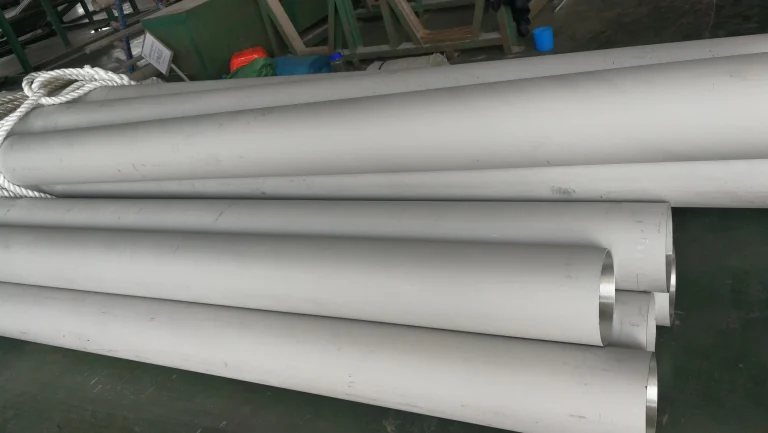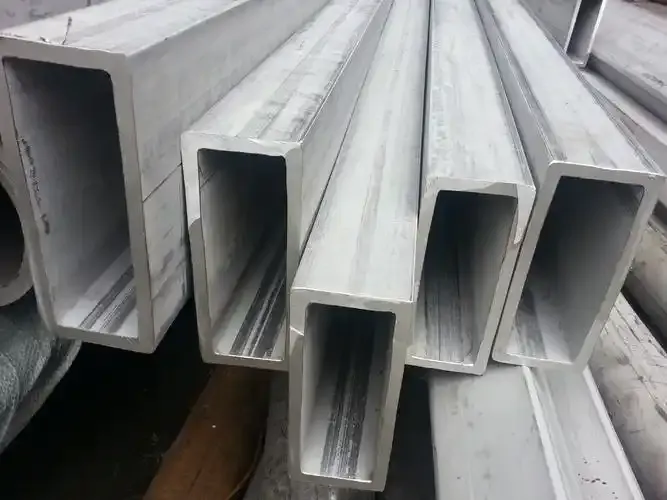
Seamless Inconel 601 Pipe
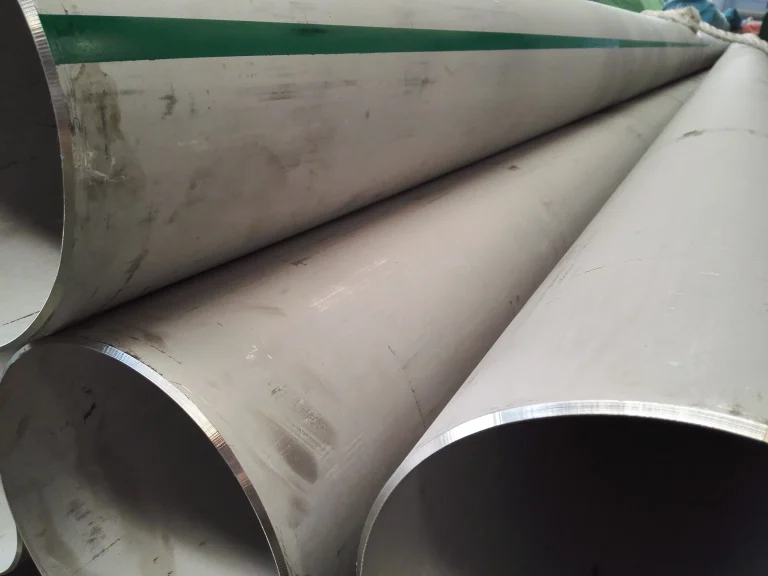
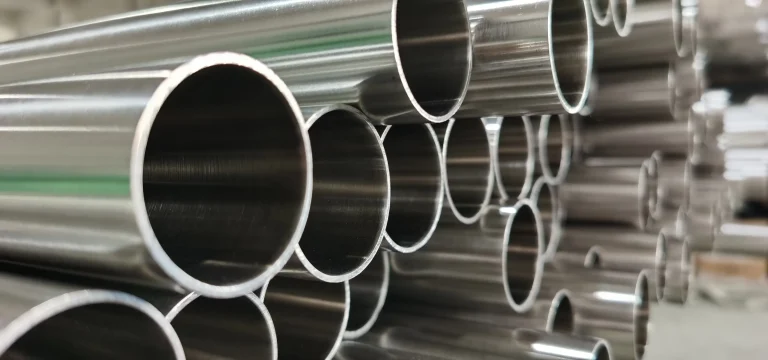
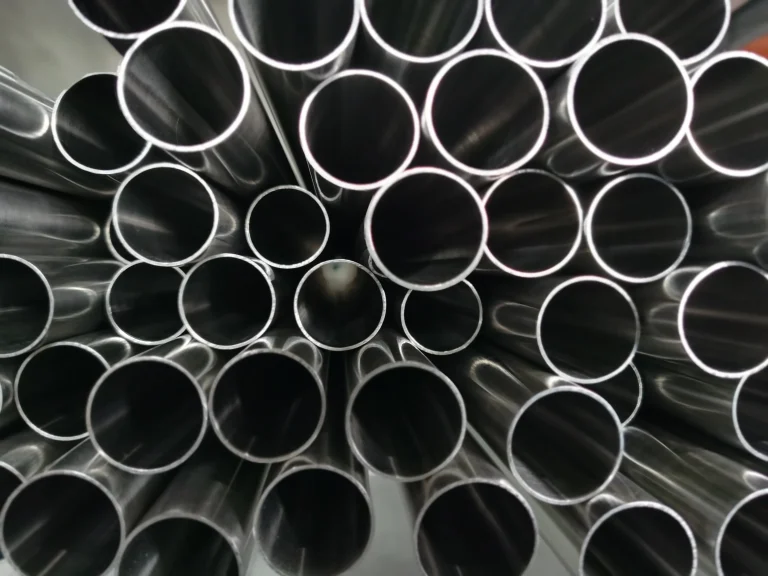
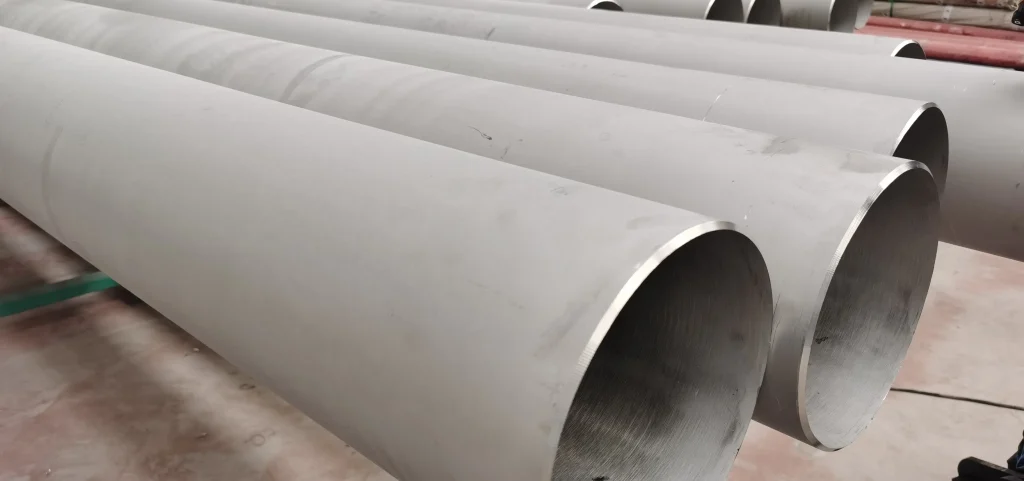
Seamless Inconel 601 Pipe is a high-performance,nickel-chromium-iron alloy tubular product engineered for environments requiring exceptional resistance to heat and corrosion.
The term “Seamless” indicates the pipe is manufactured without a welded seam,typically through hot rolling or cold drawing,which allows it to withstand higher internal pressures and provides better structural integrity compared to welded alternatives.
Specification of Seamless Inconel 601 Pipe
| Product | Seamless Inconel 601 Pipe |
| Working Temperature | Up to 1250°C (2280°F) |
| Dimension Range | Outside Diameter (OD): 6 – 200 mm Wall Thickness (THK): 0.35 – 6 mm Length (L): 0.5 – 12 m The size can be customized according to ASME B36.10 / ASME B36.19 |
| Schedules | SCH 5, 10, 40, 80, 160, XXS, XXH |
| Materials | Inconel 601 | UNS N06601 | W.Nr. 2.4851 | DIN 17742,DIN 17750–17754,EN 10095 |
| Standards | ASTM B167 / ASME SB167 / ASTM B775 / ASTM B829 |
| Surface Finish |
Pickled Bright Annealed Cold Drawn/Finished Polished |
| Corrosion Resistance Specifications |
Excellent Resistance To: High-Temperature Oxidation Carburization/Carbonitriding Thermal Spalling/Cycling Aqueous Corrosion High-Temperature Corrosion Creep and Rupture |
| Applications | Heat Treating Industry Aerospace & Gas Turbines Chemical & Petrochemical Processing Power Generation Pollution Control Components |
| Our Strength | Over 10 Years Experience Exporting Pipes & Tubings Stock Available In Common Sizes Customized Fabrication Available Package Supplying of Piping Materials Strict QC With PMI Testing For Every Batch Experience in Exporting to the US,Germany,UAE,etc. Third Party Inspection Available |
For more information on inconel 601 pipe and other products, please contact us.
Seamless Inconel 601 Pipe Chemical Composition (%)
| Ni | Cr | Al | Fe | |
| 58.0 – 63.0 | 21.0 – 25.0 | 1.0 – 1.7 | Remainder | |
| Mn | Si | C | Cu | S |
| 1.5 Max | 0.5 Max | 0.10 Max | 1.0 Max | 0.015 Max |
Does the presence of aluminum in the chemical composition affect welding?
Yes.Due to its high aluminum content,a thin layer of aluminum oxide readily forms on the molten pool surface during welding.Therefore,it is generally recommended to use GTAW (Gas Tungsten Arc Welding) or GMAW (Gas Metal Arc Welding) with enhanced gas shielding to ensure weld quality.
What does iron (Fe) as a “residual” signify?
Inconel 601 is a nickel-based alloy,but it contains a significant proportion of iron (typically around 14%–17%).The addition of iron primarily serves to balance costs while providing the necessary structural strength and machinability without significantly compromising corrosion resistance.
Seamless Inconel 601 Pipe Mechanical Properties(Typical value range)
| Property | Tensile Strength | Yield strength | Elongation | Hardness |
| Annealed | 550 – 760 MPa (80,000 – 110,000 psi) | 205 – 415 MPa (30,000 – 60,000 psi) | 30% – 50% | 70 – 95 HRB |
Impact of Temperature (High-Temp Strength)
Inconel 601 is specifically valued for retaining its mechanical integrity at extreme temperatures.While strength decreases as temperature rises,it maintains excellent resistance to creep and rupture compared to standard stainless steels.
At 1000°F (540°C):
Tensile strength remains high,typically around 70–80 ksi (480–550 MPa).
At 1800°F (980°C):
The alloy still possesses significant load-carrying capacity,though the design focus usually shifts to creep rupture strength.
Does the pipe become brittle after long-term high-temperature exposure?
No.Unlike some stainless steels that suffer from “sigma phase” embrittlement,Inconel 601 has excellent metallurgical stability.It retains high ductility (30%–50% elongation) even after thousands of hours of service at extreme heat,making it safer for components that undergo thermal cycling.
Can Inconel 601 pipes be used for high-pressure applications?
Yes,because they are seamless.Seamless pipes are rated for roughly 20% higher pressure than welded pipes of the same wall thickness because there is no weld seam (a potential point of weakness).However,pressure ratings must be de-rated as the service temperature increases.
Physical Properties of Seamless Inconel 601 Pipe
Density:8.11 g/cm³ (0.293 lb/in³)
Melting Range:1360°C – 1411°C (2480°F – 2571°F)
Specific Heat:448 J/kg · ℃ (at 20 ℃)
Poisson’s Ratio:0.31 to 0.32
Magnetic Permeability:Non-magnetic
Thermal Conductivity of Seamless Inconel 601 Pipe
| Temperature | Thermal Conductivity |
| 20°C(70°F) | 11.2 W/m·K(78 Btu·in/ft²·h·°F) |
| 100°C(212°F) | 12.4 W/m·K(86 Btu·in/ft²·h·°F) |
| 200°C(392°F) | 13.9 W/m·K(97 Btu·in/ft²·h·°F) |
| 400°C(752°F) | 16.9 W/m·K(117 Btu·in/ft²·h·°F) |
| 600°C(1112°F) | 20.1 W/m·K(140 Btu·in/ft²·h·°F) |
| 800°C(1472°F) | 23.2 W/m·K(161 Btu·in/ft²·h·°F) |
| 1000°C(1832°F) | 26.4 W/m·K(183 Btu·in/ft²·h·°F) |
Mean Coefficient of Thermal Expansion
| Temperature Range | Mean CTE |
| 20 – 100°C(70 – 200°F) | 13.75 μm/m · °C(7.6 μin/in · °F) |
| 20 – 200°C(70 – 400°F) | 14.30 μm/m · °C(8.0 μin/in · °F) |
| 20 – 400°C(70 – 750°F) | 15.20 μm/m · °C(8.4 μin/in · °F) |
| 20 – 600°C(70 – 1100°F) | 16.00 μm/m · °C(8.9 μin/in · °F) |
| 20 – 800°C(70 – 1450°F) | 16.95 μm/m · °C(9.4 μin/in · °F) |
| 20 – 1000°C(70 – 1800°F) | 17.70 μm/m · °C(9.8 μin/in · °F) |
Manufacturing Process for Seamless Inconel 601 Pipe
The manufacturing of seamless inconel 601 pipe (UNS N06601) is a rigorous process due to the alloy’s high work-hardening rate and resistance to deformation.Unlike welded pipes,seamless pipes are created from a solid billet to ensure a homogenous structure without a longitudinal seam.
Melting and Billet Preparation
Melting:
The process begins with VIM (Vacuum Induction Melting) or VAR (Vacuum Arc Remelting).This ensures precise control over the 1.0%–1.7% Aluminum content and minimizes impurities like sulfur.
Billet Casting:
The molten alloy is cast into ingots and then forged or rolled into solid round billets.
Heating and Piercing
Heating:
Billets are heated in a rotary hearth furnace to a specific range (1150°C – 1230°C).Strict temperature control is vital;if too cold,the alloy is too hard to pierce;if too hot,”overburning” occurs.
Rotary Piercing:
The hot billet is forced through a set of rollers and over a piercer point (mandrel) to create a thick-walled hollow shell.
Hot Extrusion
Because Inconel 601 retains high strength even at red-hot temperatures,hot extrusion is the preferred method for forming.
The hollow billet is pushed through a die and over a mandrel under massive hydraulic pressure to achieve the preliminary pipe shape and size.
Cold Working
Cold Pilgering:
A pair of grooved rolls oscillate back and forth over the pipe to reduce the wall thickness and diameter.
Cold Drawing:
The pipe is pulled through a hardened steel die.
Note:
These steps significantly increase the tensile strength but make the metal brittle,requiring intermediate heat treatments.
Solution Annealing (Heat Treatment)
The pipe is heated to 1100°C – 1200°C (2010°F – 2190°F) and rapidly cooled (quenched).
Purpose:
This dissolves carbides and optimizes the grain size,which is essential for maximizing creep resistance and the formation of the protective aluminum oxide layer during service.
Descaling and Finishing
Pickling:
The pipe is immersed in a specialized acid bath (Nitric and Hydrofluoric acid) to remove the tough oxide scale formed during annealing.
Straightening & Cutting:
The pipe is mechanically straightened and cut to the lengths specified in the purchase order.
Inspection and Testing
Non-Destructive Testing:
Ultrasonic (UT) or Eddy Current (ET) testing to find internal flaws.
Hydrostatic Testing:
High-pressure water is pumped into the pipe to ensure leak-proof integrity.
Chemical Analysis:
Verifying the Nickel,Chromium,and Aluminum percentages.
write to us
Have a Question?
Contact Us!
Should you have any questions regarding stainless steel pipes, including manufacturing processes, chemical composition or other unfamiliar matters, our staff will be happy to assist you.