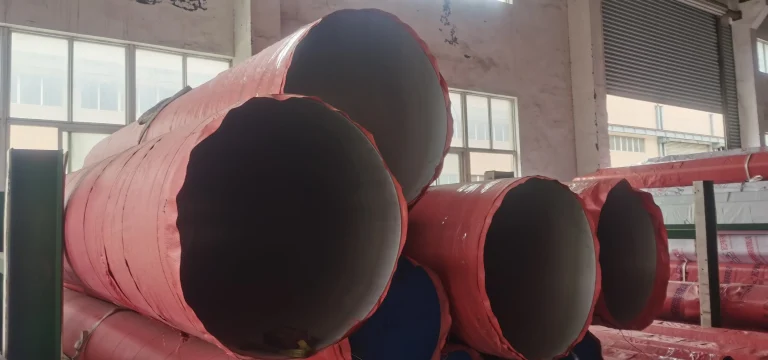
Seamless Monel 400 Pipe
Seamless Monel 400 pipe is a high-performance nickel-copper alloy piping solution manufactured without any welded seams or joints.It is primarily used in extreme environments that require high pressure resistance and exceptional durability against corrosion,particularly in seawater and chemical processing.
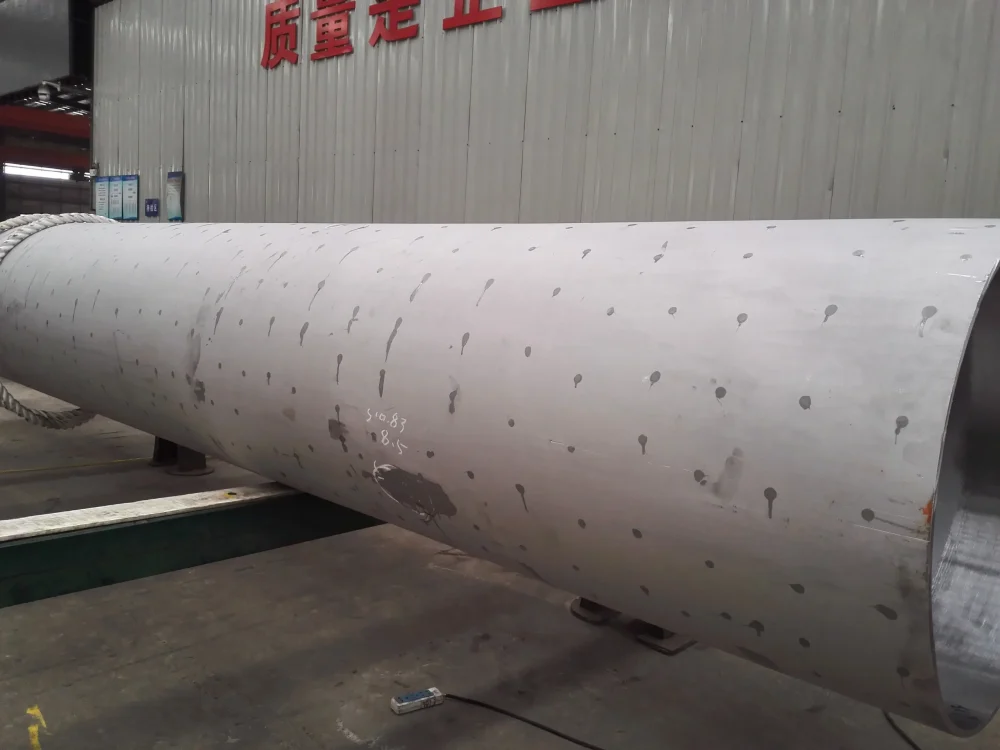
Specification of Seamless Monel 400 Pipe
| Product | Seamless Monel 400 Pipe |
| Working Temperature | up to 538°C (1,000°F) |
| Dimension Range | Outside Diameter (OD): 6 – 200 mm Wall Thickness (THK): 0.35 – 6 mm Length (L): 0.5 – 12 m The size can be customized according to ASME B36.10 / ASME B36.19 |
| Schedules | SCH 5, 10, 40, 80, 160, XXS, XXH |
| Materials | Monel 400 | UNS N04400 | W.Nr. 2.4360 2.4361 | DIN NiCu30Fe |
| Standards | ASTM B165 / ASME SB-165 / ASTM B163 / ASME SB-163 / ASTM B829 / ASME SB-829 |
| Surface Finish |
Annealed & Pickled Bright Annealed Stress Relieved Mill Finish |
| Corrosion Resistance Specifications |
Excellent Resistance To: Marine & Saltwater Environments Harsh Acids De-aerated Reducing Environments High-Temperature Steam Stress Corrosion Cracking Dry Gases |
| Applications | Marine Engineering Chemical Processing Oil & Gas Industry Power Generation & Nuclear Salt Production Aerospace |
| Our Strength | Over 10 Years Experience Exporting Pipes & Tubings Stock Available In Common Sizes Customized Fabrication Available Package Supplying of Piping Materials Strict QC With PMI Testing For Every Batch Experience in Exporting to the US,Germany,UAE,etc. Third Party Inspection Available |
For more information on monel 400 pipe and other products, please contact us.
Seamless Monel 400 Pipe Chemical Composition (%)
| Ni | Cu | Fe | Mn | Si | P | S |
| 63.0 Min | 28.0 – 34.0 | 2.5 Max | 2.0 Max | 0.5 Max | 0.3 Max | 0.024 Max |
How does it compare to Monel K-500?
Their chemical compositions are nearly identical,but Monel K-500 contains approximately 3% additional aluminum and titanium.These additions allow K-500 to undergo age hardening,resulting in higher strength,whereas Monel 400 can only be hardened through cold working.
Seamless Monel 400 Pipe Mechanical Properties(Typical value range)
| Property | Tensile Strength | Yield strength | Elongation | Hardness |
| Annealed | 480 – 590 MPa (70 – 85 ksi) | 170 – 310 MPa (25 – 45 ksi) | 35% – 50% | 60 – 75 HRB |
| Stress Relieved | 585 – 760 MPa (85 – 110 ksi) | 380 – 550 MPa (55 – 80 ksi) | 15% – 25% | 75 – 95 HRB |
How does it perform in cryogenic conditions?
Unlike many steels,Monel 400 does not undergo a ductile-to-brittle transition.Its tensile and yield strength actually increase at sub-zero temperatures (e.g., down to liquid hydrogen levels) while maintaining excellent toughness and impact resistance.
Can it be hardened via heat treatment?
No.Monel 400 is a single-phase solid-solution alloy.It cannot be strengthened by age-hardening.Strengthening is achieved only through cold working (e.g., cold drawing or rolling).
What is the impact of “Stress Relieving”?
Stress relieving reduces internal stresses from the cold-drawing process without fully recrystallizing the grain structure.This provides a balance of higher strength than annealed material with better dimensional stability for machining.
Physical Properties of Seamless Monel 400 Pipe
Density:8.80 g/cm³ (0.318 lb/in³)
Melting Range:1300°C – 1350°C (2370°F – 2460°F)
Specific Heat:0.102 Btu/lb · ℉(70℉)
Poisson’s Ratio:0.32
Magnetic Permeability:1.002 – 1.1 (at 70°F/21°C)
Thermal Properties of Seamless Monel 400 Pipe
| Temperature | Mean CTE (in/in/°F x 10⁻⁶) | Thermal Conductivity (Btu·in / ft²·h·°F) | Modulus (psi x 10⁶) |
| 70°F (21°C) | – | 151 | 26.0 |
| 200°F (93°C) | 7.7 | 164 | 25.7 |
| 400°F (204°C) | 8.1 | 183 | 24.9 |
| 600°F (316°C) | 8.3 | 203 | 24.1 |
| 800°F (427°C) | 8.5 | 223 | 23.3 |
| 1000°F (538°C) | 8.7 | 242 | 22.5 |
Manufacturing Process for Seamless Monel 400 Pipe
The manufacturing process for welded monel 400 pipe is a specialized procedure governed by standards like ASTM B725.Because monel 400 is sensitive to impurities like sulfur and lead,cleanliness and precise heat control are vital.
Billet Preparation and Heating
Heating:
The billet is heated in a furnace to the hot-working temperature range,typically between 1700℉ and 2150℉ (925℃ – 1175℃).
Control:
Precise temperature control is vital;if the temperature drops too low,the material becomes too stiff to pierce,risking internal cracks.
Hot Piercing
The heated billet is forced through a pair of rotating rollers against a stationary piercing point (mandrel).
This transforms the solid billet into a thick-walled hollow shell.
Because there is no welding involved, the pipe has a uniform metallurgical structure across its entire circumference.
Elongation and Sizing
The hollow shell is further processed to achieve the desired outer diameter (OD) and wall thickness.
Hot Rolling/Extrusion:
The shell is passed through multiple rolling mills to reduce wall thickness and increase length.
Sizing:
The pipe passes through a sizing mill to ensure it meets the dimensional tolerances for the specific pipe size (e.g., NPS 2″).
Cold Drawing
To achieve high precision,a smooth surface,and specific mechanical properties,the pipe undergoes cold drawing.
The pipe is pulled through a hardened steel die while a mandrel supports the inside diameter.
This process “cold works” the metal, increasing its tensile and yield strength.
Heat Treatment
After cold drawing, the pipe is often very hard. To meet ASTM B165 standards,it usually undergoes heat treatment:
Annealing:
Heating the tubing to approximately 1,400°F to 1,700°F,followed by rapid cooling.This process “soften” the metal,restoring its ductility and corrosion resistance.
Bright Annealing:
Performed in a hydrogen or nitrogen atmosphere to keep the surface shiny and scale-free.
Finishing and Testing
Straightening:
The pipe is passed through straightening machines to ensure it is perfectly true.
Pickling:
If annealed in air,an acid bath removes the dark oxide scale.
Non-Destructive Testing (NDT):
Every pipe undergoes hydrostatic testing,ultrasonic testing,or eddy current testing to ensure there are no hidden flaws or leaks.
write to us
Have a Question?
Contact Us!
Should you have any questions regarding stainless steel pipes, including manufacturing processes, chemical composition or other unfamiliar matters, our staff will be happy to assist you.