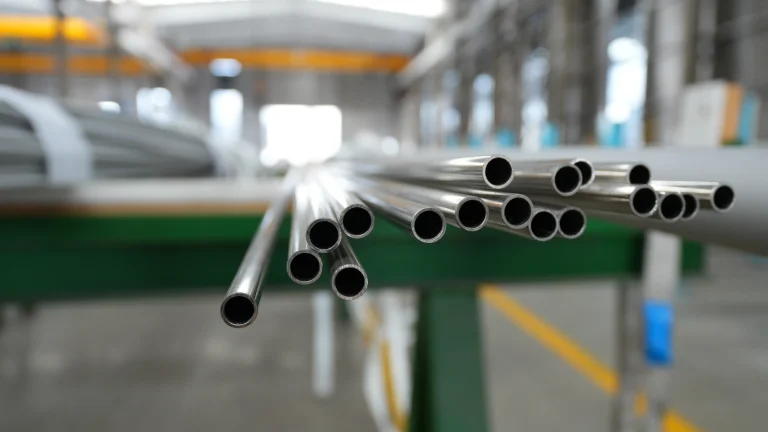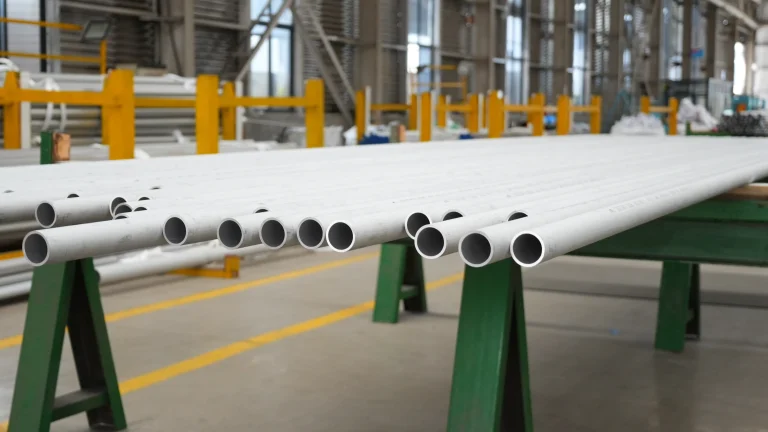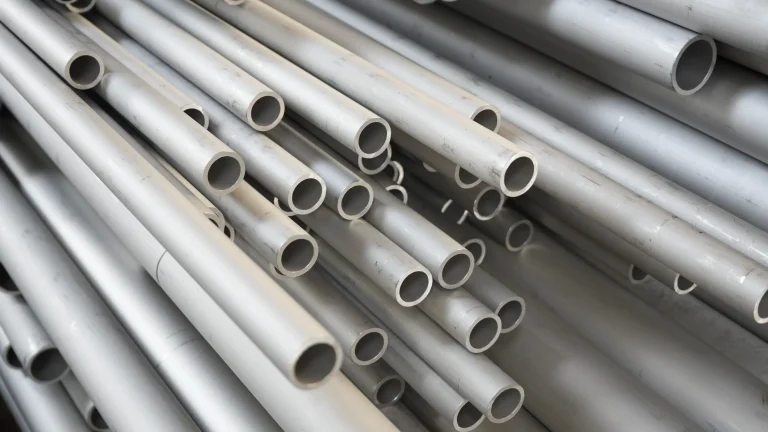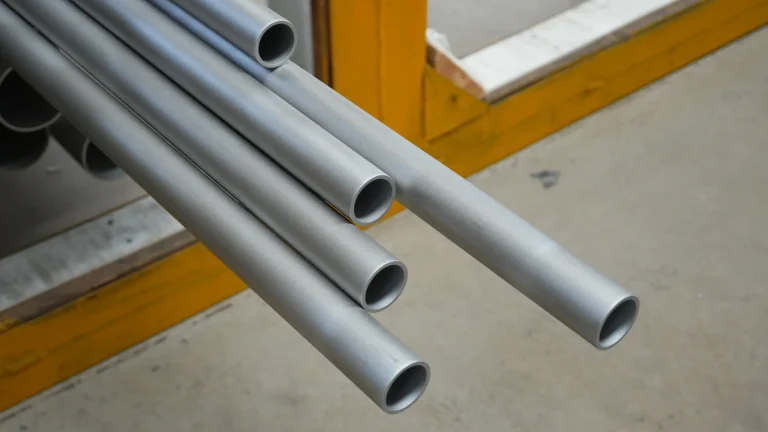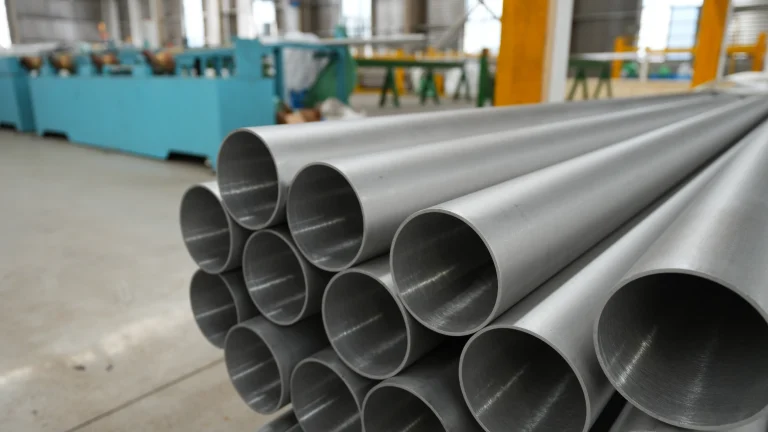
Welded Incoloy 800 Pipe
Welded Incoloy 800 pipe is a nickel-iron-chromium alloy pipe fabricated by welding,known for exceptional corrosion resistance,high strength,and oxidation resistance at elevated temperatures up to 816℃(1500℉).Used in petrochemical and power plants, it resists carburization and stress corrosion cracking.
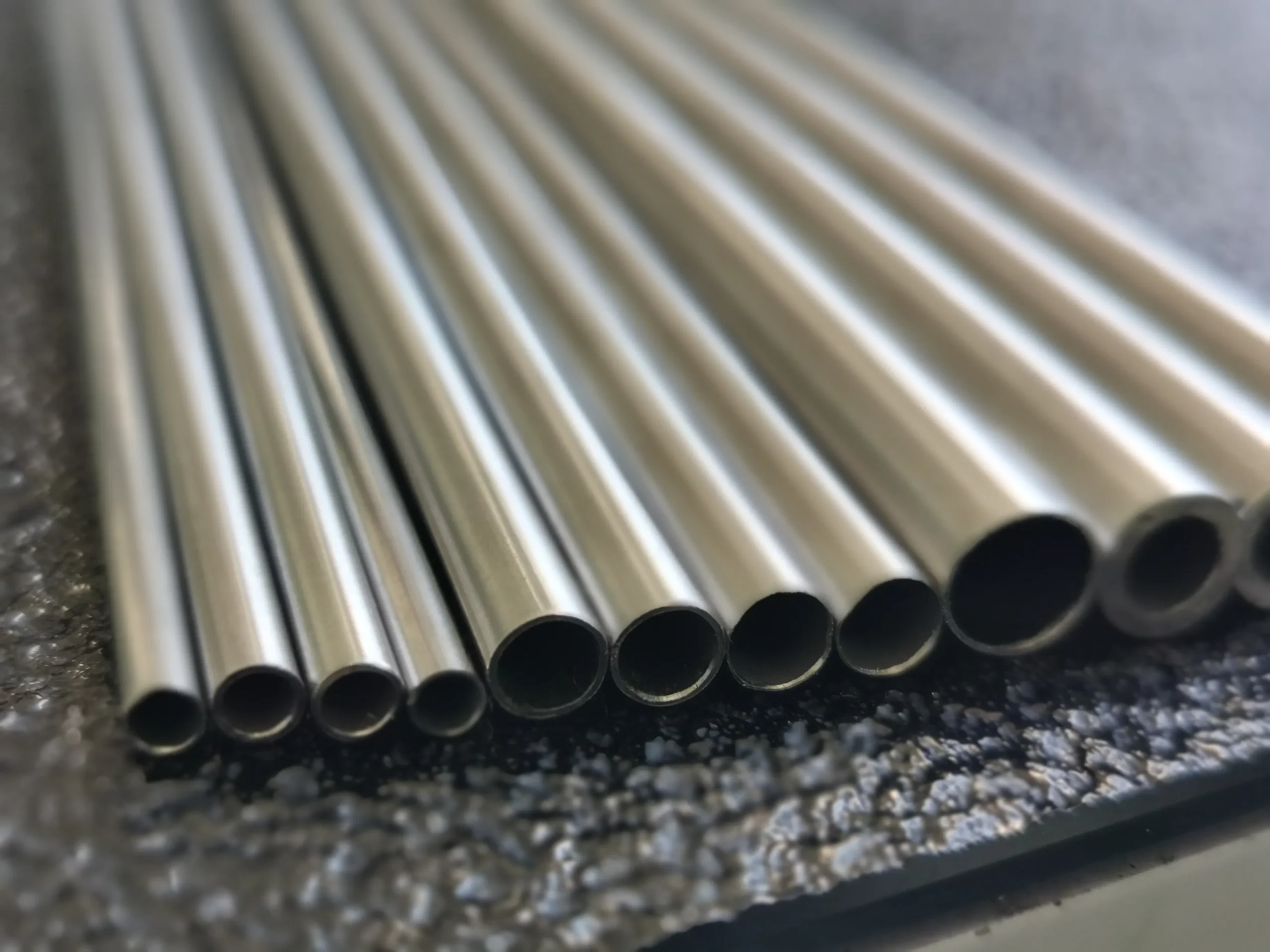
Specification of Welded Incoloy 800 Pipe
| Product | Welded Incoloy 800 Pipe |
| Working Temperature | up to 593°C (1,100°F) |
| Dimension Range | Outside Diameter (OD): 6 – 200 mm Wall Thickness (THK): 0.35 – 6 mm Length (L): 0.5 – 12 m The size can be customized according to ASME B36.10 / ASME B36.19 |
| Schedules | SCH 5, 10, 40, 80, 160, XXS, XXH |
| Materials | Incoloy 800 | UNS N08800 | W.Nr. 1.4876 | DIN X10NiCrAlTi32-20 |
| Standards | ASTM B514 / ASME SB514 / ASTM B515 / ASME SB515 |
| Surface Finish |
Annealed and Pickled Bright Annealed Polished Finish Cold Drawn |
| Corrosion Resistance Specifications |
Excellent Resistance To: Oxidation Carburization Sulfidation Nitriding Stress-Corrosion Cracking Pitting and Crevice Corrosion |
| Applications | Petrochemical and Chemical Processing Power Generation Thermal Processing and Heat Treating Environmental and Waste Treatment |
| Our Strength | Over 10 Years Experience Exporting Pipes & Tubings Stock Available In Common Sizes Customized Fabrication Available Package Supplying of Piping Materials Strict QC With PMI Testing For Every Batch Experience in Exporting to the US,Germany,UAE,etc. Third Party Inspection Available |
For more information on incoloy 800 pipe and other products, please contact us.
Welded Incoloy 800 Pipe Chemical Composition (%)
| Ni | Cr | Fe | C | Mn |
| 30.0 – 35.0 | 19.0 – 23.0 | 39.5 Min | ≤ 0.10 | ≤ 1.50 |
| S | Si | Cu | Al | Ti |
| ≤ 0.015 | ≤ 1.0 | ≤ 0.75 | 0.15 – 0.60 | 0.15 – 0.60 |
Does the welding process change the chemical composition?
The pipe itself maintains the standard composition,but the filler metal used during welding (often Inconel 82 or 617) may have a slightly different chemistry to ensure the weld joint is as strong and corrosion-resistant as the base metal.
How do Aluminum and Titanium help?
Small amounts of Al and Ti are added to facilitate precipitation hardening and contribute to the alloy’s structural integrity when used in high-stress thermal environments.
Welded Incoloy 800 Pipe Mechanical Properties(Typical value range)
| Tensile Strength | Yield strength | Elongation | Hardness |
| ≥ 520 MPa | ≥ 205 MPa | ≥ 30% | ≤ 180 HB |
Performance under high temperatures
Creep Strength:
At temperatures above 1100°F (593°C),the creep rupture strength of 800H and 800HT is significantly higher than that of standard 800 alloy due to grain coarsening treatment.
Thermal Stability:
After prolonged exposure in the range of 1200°F to 1600°F,this material retains good toughness and does not embrittle rapidly as some stainless steels do.
Performance of Welded Joints
Weld Strength:
When using compatible filler materials (such as Inconel Filler Metal 82 or Welding Electrode 182),the strength of the welded joint typically meets or exceeds the minimum specified strength of the base metal.
Work Hardening:
Due to its high nickel,iron,and chromium content,this alloy exhibits significant work hardening during cold working (such as tube bending),which increases strength but reduces elongation.
Physical Properties of Welded Incoloy 800 Pipe
Density:8.80 g/cm³ (0.318 lb/in³)
Melting Range:1357 – 1385°C (2475 – 2525°F)
Specific Heat:455 J/kg·°C (0.109 Btu/lb·°F)
Poisson’s Ratio:0.33 – 0.35
Magnetic Permeability:< 1.02,non-magnetic
Thermal Properties of Welded Incoloy 800 Pipe
| Temperature | Mean CTE (in/in/°F x 10⁻⁶) | Thermal Conductivity (Btu·in / ft²·h·°F) | Modulus (psi x 10⁶) |
| 70°F (21°C) | – | 80 | 28.5 |
| 200°F (93°C) | 7.9 | 84 | 27.8 |
| 400°F (204°C) | 8.2 | 90 | 26.8 |
| 600°F (316°C) | 8.4 | 96 | 25.7 |
| 800°F (427°C) | 8.6 | 102 | 24.6 |
| 1000°F (538°C) | 8.8 | 109 | 23.5 |
| 1200°F (649°C) | 9.0 | 115 | 22.3 |
| 1400°F (760°C) | 9.2 | 121 | 21.0 |
Manufacturing Process for Welded Incoloy 800 Pipe
The manufacturing process for Welded Incoloy 800 Pipe is a high-precision sequence designed to maintain the alloy’s specialized corrosion resistance and high-temperature strength.It typically follows standards like ASTM B514.
Material Preparation
The process begins with high-quality Incoloy 800 hot-rolled or cold-rolled strips/plates.These are slit into specific widths based on the desired outer diameter of the finished pipe.
Continuous Forming
The strip is fed through a series of progressive rollers.These rollers gradually bend the flat metal into a cylindrical shape.For larger diameters,a UOE or JCO process (using heavy hydraulic presses) is used to shape individual plates.
Welding
The longitudinal seam is joined using high-energy automated welding techniques.Since Incoloy 800 is sensitive to heat input,specific methods are preferred:
TIG (Tungsten Inert Gas / GTAW):
The most common method,providing a clean,high-quality weld without slag.
Plasma Arc Welding (PAW):
Used for thicker walls due to its deeper penetration capabilities.
Filler Metal:
While some pipes are “autogenous” (welded without filler),high-stress applications often use matching filler metals like Inconel 82 (ERNiCr-3).
Bead Removal
Immediately after welding,the internal and external weld beads (the “seam”) are mechanically removed or “scarfed.”This ensures a smooth surface finish,which is vital for preventing turbulence and localized corrosion inside the pipe.
Sizing and Calibration
The welded pipe passes through sizing rolls to achieve precise dimensions for outside diameter,roundness,and wall thickness according to API or ASTM tolerances.
Solution Annealing
For 800H and 800HT pipes,this “solution annealing” process is essential to control grain size and ensure maximum creep rupture strength.The steel tubes are heated to approximately 1800°F to 2100°F (980°C to 1150°C).The tubes are then rapidly quenched in water or air.
Finishing and Inspection
Straightening:
Pipes are passed through a multi-roll straightener to correct any thermal distortion.
Pickling/Cleaning:
A chemical bath removes oxide scales formed during heat treatment, restoring the “passive layer” for corrosion resistance.
Non-Destructive Testing:
100% of the weld seam is inspected using Eddy Current or Ultrasonic Testing to detect internal flaws.
Hydrostatic Test:
The pipe is pressurized with water to verify its structural integrity and leak-proof seal.
write to us
Have a Question?
Contact Us!
Should you have any questions regarding stainless steel pipes, including manufacturing processes, chemical composition or other unfamiliar matters, our staff will be happy to assist you.