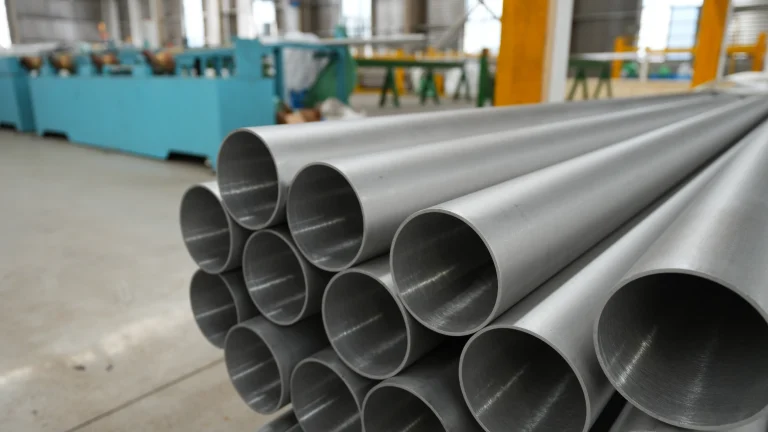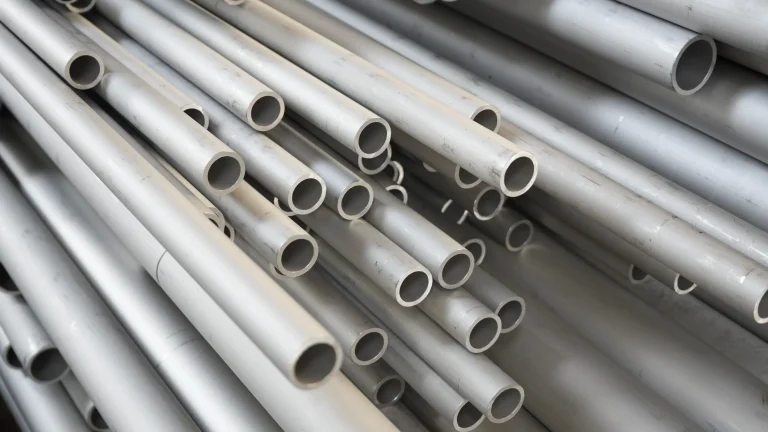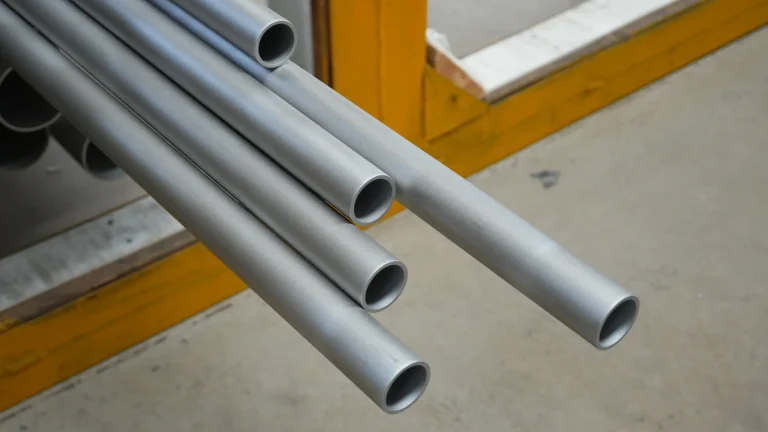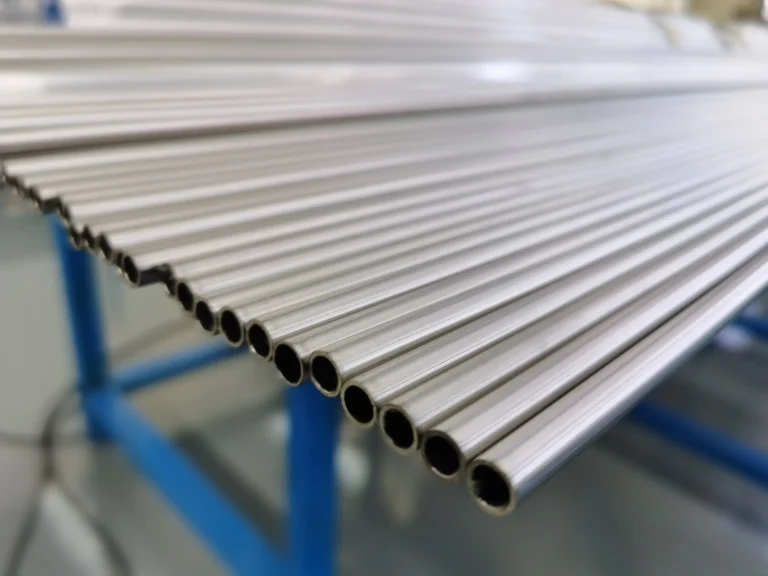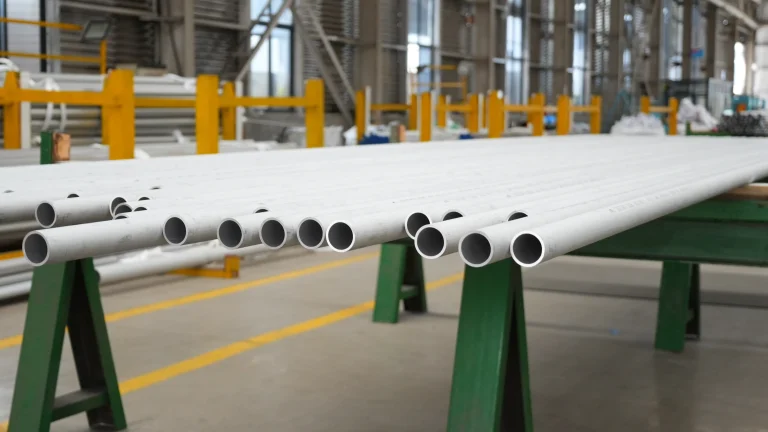
Welded incoloy 825 pipe
Welded Incoloy 825 pipe is a corrosion-resistant piping product made from a high-temperature nickel-iron-chromium alloy (UNS N08825).It is manufactured by roll-forming flat strip or sheet stock into a cylindrical shape and then joining the longitudinal edges by welding.
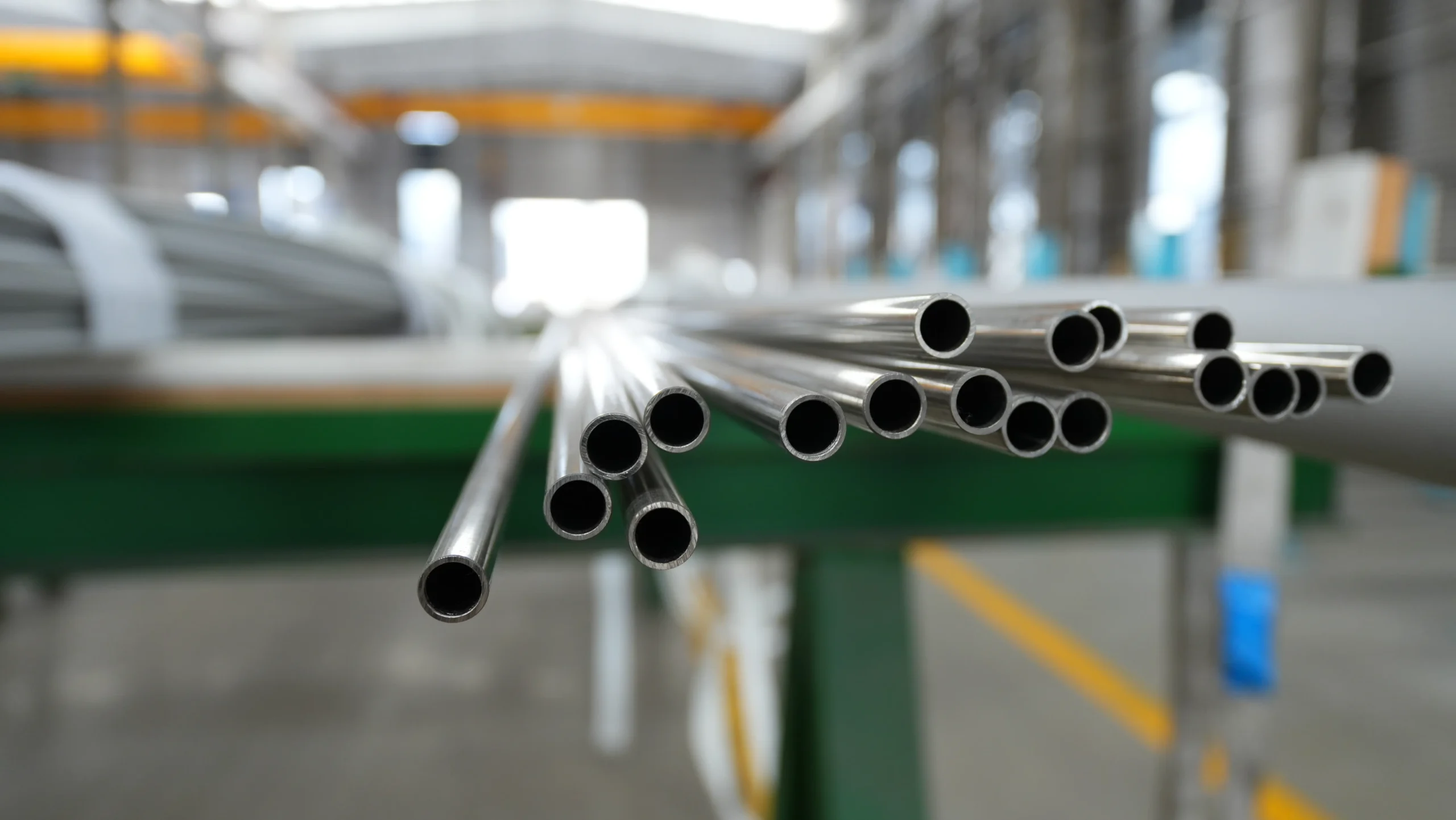
Specification of Welded incoloy 825 pipe
| Product | Welded incoloy 825 pipe |
| Working Temperature | up to 540℃(1000℉) |
| Dimension Range | Outside Diameter (OD): 6 – 200 mm Wall Thickness (THK): 0.35 – 6 mm Length (L): 0.5 – 12 m The size can be customized according to ASME B36.10 / ASME B36.19 |
| Schedules | SCH 5, 10, 40, 80, 160, XXS, XXH |
| Materials | Incoloy 825 | UNS N08825 | W.Nr. 2.4858 | DIN NiCr21Mo |
| Standards | ASTM B705 / ASME SB705 / ASTM B704 / ASME SB704 / ASTM B514 / ASME SB514 |
| Surface Finish |
Annealed & Pickled Bright Annealed 2B Finish No. 4 (Brushed/Satin) 8K / Mirror Finish Electropolished |
| Corrosion Resistance Specifications |
Excellent Resistance To: Sulfuric Acid Phosphoric Acid Oxidizing Acids Chloride-Ion Stress-Corrosion Cracking Pitting and Crevice Corrosion Intergranular Corrosion |
| Applications | Oil & Gas Chemical & Petrochemical Processing Pollution Control Nuclear Industry Food & Water Treatment Marine Engineering |
| Our Strength | Over 10 Years Experience Exporting Pipes & Tubings Stock Available In Common Sizes Customized Fabrication Available Package Supplying of Piping Materials Strict QC With PMI Testing For Every Batch Experience in Exporting to the US,Germany,UAE,etc. Third Party Inspection Available |
For more information on incoloy 825 pipe and other products, please contact us.
Welded incoloy 825 pipe Chemical Composition (%)
| Ni | Fe | Cr | Mo | Cu | Ti |
| 38.0 – 46.0 | 22.0 Min | 19.5 – 23.5 | 2.5 – 3.5 | 1.5 – 3.0 | 0.6 – 1.2 |
| Mn | Si | C | Al | S | |
| 1.0 Max | 0.5 Max | 0.05 Max | 0.2 Max | 0.03 Max |
Why is the nickel content so specific (38-46%)?
This range ensures the pipe is virtually immune to chloride-ion stress-corrosion cracking,a major advantage over standard stainless steels.
What does Titanium stabilization do for welded pipes?
The titanium reacts with carbon to form titanium carbides.This prevents the chromium from forming carbides at the grain boundaries during welding,which would otherwise leave the pipe vulnerable to intergranular corrosion.
How does Copper improve acid resistance?
Copper specifically enhances the alloy’s performance in reducing acids,particularly sulfuric and phosphoric acids,making it highly effective for chemical pickling and acid production.
Welded incoloy 825 pipe Mechanical Properties
| Tensile Strength | Yield strength | Elongation | Hardness |
| ≥ 586 MPa (85 ksi) | ≥ 241 MPa (35 ksi) | ≥ 30% | 135 – 200 HB |
How does cold working affect mechanical properties?
Although welded tubes are typically supplied in an annealed condition,any subsequent cold working (such as bending or flaring) will cause work hardening,which significantly increases the yield strength but correspondingly reduces elongation and corrosion resistance (unless the material is re-annealed).
Physical Properties of Welded incoloy 825 pipe
Density:8.14 g/cm³ (0.294 lb/in³)
Melting Range:1370 – 1400°C (2500 – 2550°F)
Specific Heat:440 J/kg·°C
Poisson’s Ratio:0.29
Magnetic Permeability:1.005,non-magnetic
Thermal Properties of Welded incoloy 825 pipe
Thermal Conductivity & Specific Heat
| Temperature | Thermal Conductivity (W/m·K) | Specific Heat (J/kg·°C) |
| 70°F (20°C) | 11.1 | 440 |
| 212°F (100°C) | 12.3 | 465 |
| 392°F (200°C) | 14.1 | 490 |
| 752°F (400°C) | 17.5 | 545 |
| 932°F (500°C) | 19.1 | 570 |
Thermal Expansion
| Temperature Range (°C) | Temperature Range (°F) | Expansion Rate (µm/m·°C) |
| 20 – 100 | 68 – 212 | 14.0 |
| 20 – 300 | 68 – 572 | 15.3 |
| 20 – 500 | 68 – 932 | 15.9 |
Manufacturing Process for Welded incoloy 825 pipe
The manufacturing process for welded incoloy 825 pipe is a precision-engineered sequence designed to ensure the weld zone has the same corrosion resistance and mechanical integrity as the parent metal.
Raw Material Preparation
Start by selecting high-quality Incoloy 825 strip or sheet that complies with the ASTM B424 standard.
Then,slit the wide coil into strips of precise widths corresponding to the circumference of the finished tubes.Mechanically clean or mill the edges to remove any oxides or contaminants that could cause welding defects.
Forming
The steel strip passes through a series of rollers,gradually bending the flat metal into a cylindrical shape.
For large-diameter or thick-walled pipes,a roll forming process is used to shape individual sheets into a “U” shape,which is then formed into a “O” shape.
Welding
TIG/GTAW is a method that uses an inert argon gas shield to prevent oxidation.
PAW provides deeper penetration and faster welding speeds for medium-wall pipes.
EFW is used for larger pipes and typically requires the addition of filler metal to ensure a strong joint.
ERW uses high-frequency current to fuse the edges together without the need for filler metal.
Bead Processing
The internal and external weld beads (the “seam”) are often leveled using rollers or scarfers.This ensures a smooth bore,which is critical for preventing crevice corrosion and ensuring smooth fluid flow.
Solution Annealing
Solution annealing is an essential process for Incoloy 825 material.The pipe is heated to approximately 1725°F – 1850°F (940°C – 1010°C) and then rapidly cooled.
This is done to relieve welding stresses and redissolve carbides precipitated during welding,thereby restoring optimal corrosion resistance.
Pickling and Passivation
The pipe is immersed in an acid bath (typically nitric and hydrofluoric acid) to remove heat tint and scale. This process restores the protective chromium oxide layer on the surface.
Quality Control & Testing
Non-destructive Testing (NDT):
This includes ultrasonic testing (UT),radiography (X-rays for EFW pipes),or eddy current testing to verify weld integrity.
Hydrostatic Testing:
The pipe is pressurized with high-pressure water to ensure there are no leaks.
Mechanical Testing:
Samples undergo flattening, flaring, and tensile tests to confirm compliance with the ASTM B705 standard.
Are welded joints more prone to rust than the pipe material itself?
No.Provided that the proper solution annealing process is performed,the carbides in the weld zone will redissolve,and corrosion resistance will be restored to a level consistent with that of the base material.Furthermore,the titanium additive in Alloy 825 is specifically designed to prevent intergranular corrosion during welding.
What kind of environment is Incoloy 825 most susceptible to?
Although it performs well in sulfuric and phosphoric acids,it is not recommended for use in environments with extremely high temperatures or strong oxidizing salts.
This is because it becomes brittle at temperatures exceeding 1000°F (538°C),and strong oxidizing salt solutions may cause pitting corrosion.
How to Order Your Incoloy 825 Pipes?
When ordering welded Incoloy 825 pipes,to ensure material compliance and precise installation,you should clearly specify the following details for the pipes you require in your request for quotation:OD,WT,Sch,length,quantity,and delivery condition.
write to us
Have a Question?
Contact Us!
Should you have any questions regarding stainless steel pipes, including manufacturing processes, chemical composition or other unfamiliar matters, our staff will be happy to assist you.