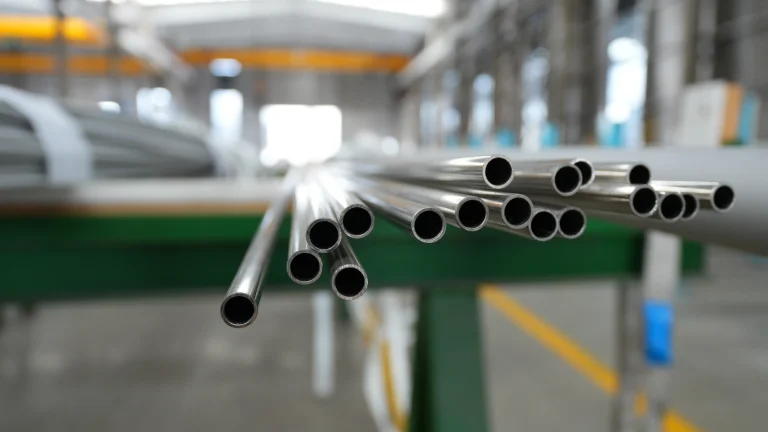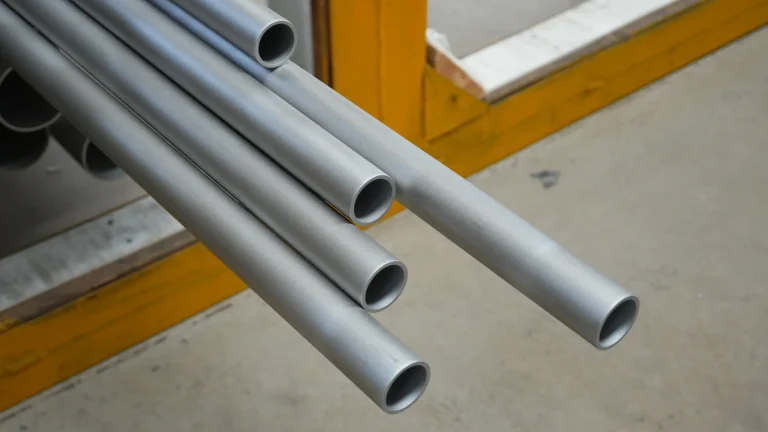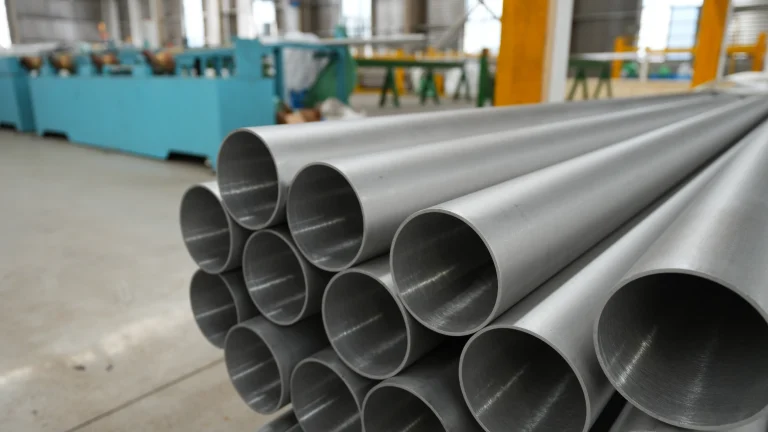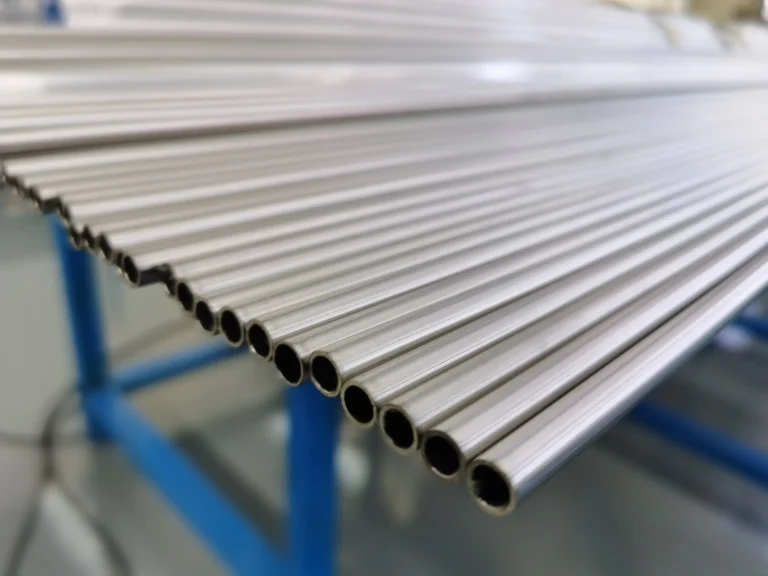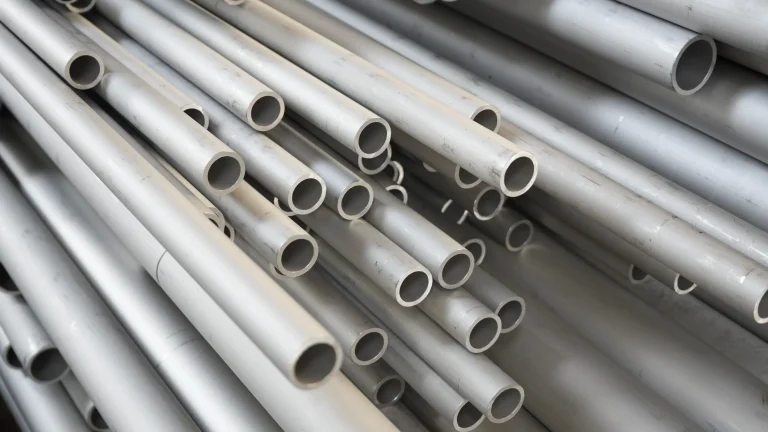
Seamless Incoloy 800H/HT Pipe
Seamless Incoloy 800H/HT pipe is a high-performance nickel-iron-chromium alloy designed for extreme high-temperature structural applications where resistance to creep and stress rupture is required.
The “H” and “HT” designations represent variants of the base alloy Incoloy 800 that have been optimized with controlled carbon levels and specific heat treatments to maintain strength at temperatures typically between 1100°F and 1800°F (593°C – 982°C).
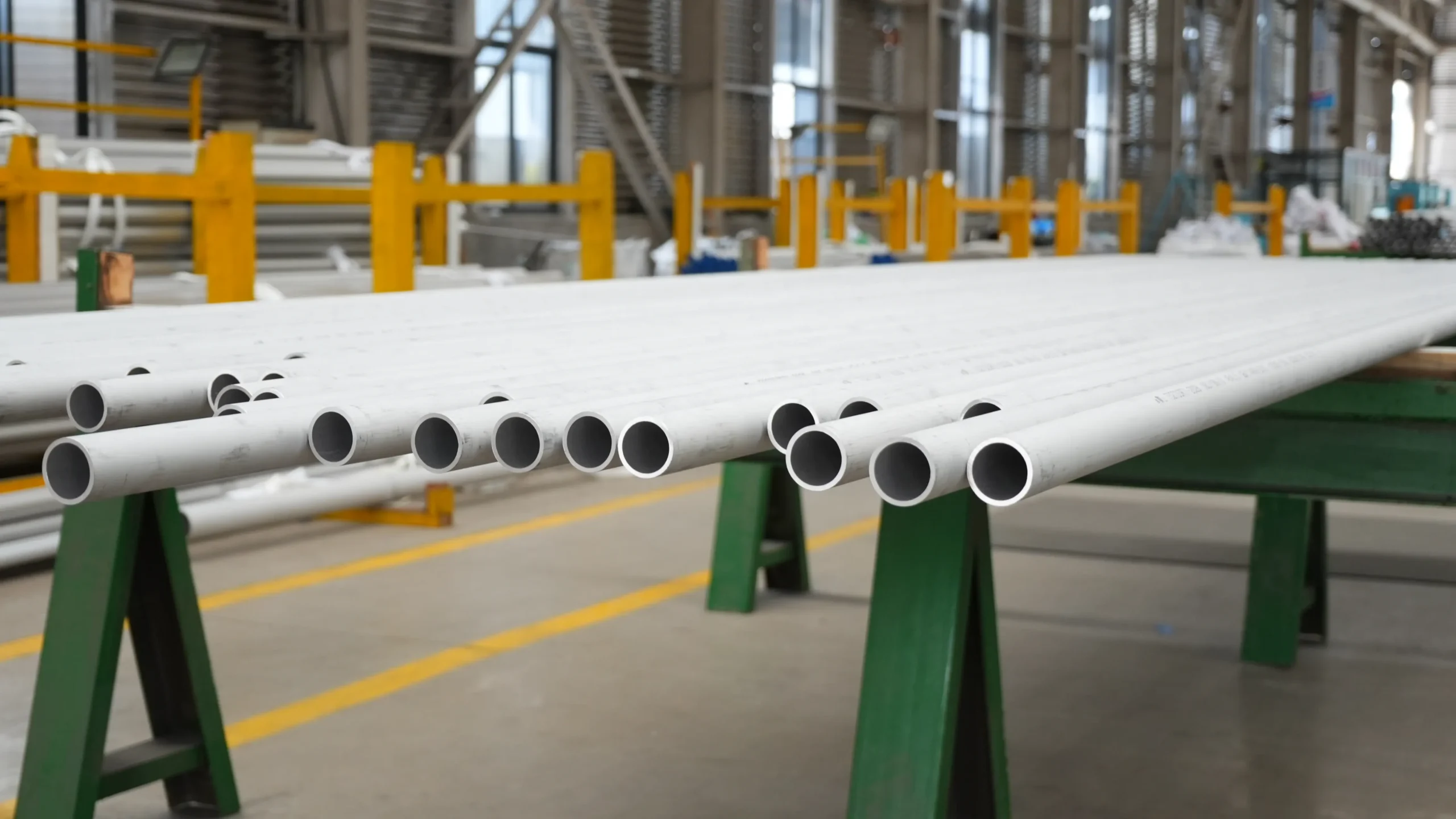
Specification of Seamless Incoloy 800H/HT Pipe
| Product | Seamless Incoloy 800H/HT Pipe |
| Working Temperature | 800H:593 – 815°C(1100 – 1500°F) 800HT:700 – 982°C(1290 – 1800°F) |
| Dimension Range | Outside Diameter (OD): 6 – 200 mm Wall Thickness (THK): 0.35 – 6 mm Length (L): 0.5 – 12 m The size can be customized according to ASME B36.10 / ASME B36.19 |
| Schedules | SCH 5, 10, 40, 80, 160, XXS, XXH |
| Materials | Incoloy 800H | UNS N08810 | W.Nr. 1.4958 | DIN X5NiCrAlTi31-20 Incoloy 800HT | UNS N08811 | W.Nr. 1.4959 | DIN X8NiCrAlTi32-21 |
| Standards | ASTM B407 / ASME SB407 / ASTM B829 / ASME SB829 |
| Surface Finish |
Pickled Finish Bright Annealed Polished Finish |
| Corrosion Resistance Specifications |
Excellent Resistance To: Oxidation Resistance Carburization Resistance Sulfidation Resistance Stress-Corrosion Cracking |
| Applications | Petrochemical & Refining Power Generation Heat Treating Environmental Protection Aerospace |
| Our Strength | Over 10 Years Experience Exporting Pipes & Tubings Stock Available In Common Sizes Customized Fabrication Available Package Supplying of Piping Materials Strict QC With PMI Testing For Every Batch Experience in Exporting to the US,Germany,UAE,etc. Third Party Inspection Available |
For more information on incoloy 800H/HT pipe and other products, please contact us.
Seamless Incoloy 800H/HT Pipe Chemical Composition (%)
| Ni | Cr | Fe | C | Al |
| 30.0 – 35.0 | 19.0 – 23.0 | Balance | H:0.05 – 0.10 HT:0.06 – 0.10 | 0.15 – 0.60 |
| Ti | Mn | Si | S | Cu |
| 0.15 – 0.60 | 1.50 Max | 1.00 Max | 0.015 Max | 0.75 Max |
Why must the formulation contain at least 0.05% carbon?
Unlike many stainless steels,which aim for “ultra-low carbon” content,800H/HT must contain a higher carbon content.This is to form uniformly distributed carbides at high temperatures,thereby suppressing grain boundary slippage and significantly improving the material’s creep resistance.
Why is 800HT often referred to as a “dual-grade” or “triple-grade” material?
This is because the composition range for 800HT is actually a subset of the 800H range.This means that seamless pipes meeting the 800HT requirements typically also meet the requirements for both 800H and the base Alloy 800 grade.We can provide a dual-certified Material Test Certificate upon your request.
Seamless Incoloy 800H/HT Pipe Mechanical Properties
| Property | Tensile Strength | Yield strength | Elongation | Hardness |
| Incoloy 800H | ≥ 450 MPa (65 ksi) | ≥ 170 MPa (25 ksi) | ≥ 30% | 126 – 192 HBW |
| Incoloy 800HT | ≥ 450 MPa (65 ksi) | ≥ 170 MPa (25 ksi) | ≥ 30% | 126 – 192 HBW |
Key Points Explained
Strength Performance:
Although the room-temperature strength properties of 800H and 800HT appear to be identical,800HT exhibits superior creep strength and stress-rupture strength at temperatures above 700°C (1290°F).
Key Factor:Grain Size:
These mechanical properties must be achieved in conjunction with a grain size of ASTM Grade 5 or coarser.If the grain size is too fine,although room-temperature strength will increase,creep resistance at high temperatures will decrease significantly,thereby failing to meet the 800H/HT standard.
How significant is the strength advantage of 800HT at extremely high temperatures?
Due to the precise control of the trace elements Al and Ti,the allowable stress of 800HT is typically about 10% to 20% higher than that of 800H at temperatures above 700°C (1290°F).This means that,under the same pressure,800HT allows for the design of thinner pipe walls.
Does this material exhibit low-temperature brittleness?
No.Incoloy 800H/HT has an austenitic microstructure and maintains good impact toughness from extremely high temperatures to low-temperature environments.It has no distinct brittle transition temperature and is therefore suitable for applications with significant temperature fluctuations.
Physical Properties of Seamless Incoloy 800H/HT Pipe
Density:7.94 g/cm³ (0.287 lb/in³)
Melting Range:1357 – 1385°C (2475 – 2525°F)
Specific Heat:460 J/kg·°C
Poisson’s Ratio:0.339
Magnetic Permeability:< 1.02,non-magnetic
Thermal Properties of Seamless Incoloy 800H/HT Pipe
For seamless incoloy 800H/HT pipes,their thermophysical properties serve as key reference data for applications in high-temperature industries,such as power generation and petrochemicals.Since these two alloys share the same matrix composition,their thermal parameters are generally considered equivalent in engineering calculations.
Mean Coefficient of Thermal Expansion
| Temperature | μm/m · °C | 10-6 in/in · °F |
| 70 – 200°F (20 – 100°C) | 14.4 | 8.0 |
| 70 – 750°F (20 – 400°C) | 16.1 | 8.9 |
| 70 – 1100°F (20 – 600°C) | 17.1 | 9.5 |
| 70 – 1475°F (20 – 800°C) | 18.1 | 10.1 |
| 70 – 1830°F (20 – 1000°C) | 18.9 | 10.5 |
Thermal Conductivity
| Temperature | W/m · K | BTU · in/ft2 · hr · °F |
| 20°C(70°F) | 11.5 | 80 |
| 200°C(400°F) | 14.3 | 99 |
| 400°C(750°F) | 17.4 | 121 |
| 600°C(1100°F) | 20.9 | 145 |
| 800°C(1475°F) | 24.1 | 167 |
| 1000°C(1830°F) | 27.2 | 189 |
Manufacturing Process for Seamless Incoloy 800H/HT Pipe
For Incoloy 800H/HT seamless pipes,their thermophysical properties serve as key reference data for applications in high-temperature industries,such as power generation and petrochemicals.Since these two alloys share the same matrix composition,their thermal parameters are generally considered equivalent in engineering calculations.
Melting and Refining
Because 800H/HT requires extremely precise control of the aluminum and titanium content,the following process is typically used:
Primary Smelting:
This is typically performed using an electric arc furnace (EAF) or vacuum induction melting (VIM).
Refining:
To remove impurities and achieve a purer microstructure,electroslag remelting (ESR) or vacuum arc remelting (VAR) is commonly employed.This significantly improves the internal density of the steel ingots.
Hot Working
The refined steel ingots are heated to approximately 1200°C (2200°F) for shaping:
Billet Heating:
Uniform heating in a rotary hearth furnace.
Hot Extrusion:
This is the most commonly used method for manufacturing Incoloy seamless pipes.The heated round billet is extruded through a die and mandrel to form a blank.Compared to oblique rolling piercing,the extrusion method produces fewer surface defects and a more uniform microstructure.
Hot Piercing:
A two-roll piercing machine can also be used to pierce the solid blank into a hollow rough pipe.
Cold Working
To achieve precise outer diameters,wall thicknesses,and excellent surface finish,hot-rolled pipes must undergo cold reduction:
Cold Pilger Rolling:
This is the core cold-working process.Through cyclic rolling,it reduces the diameter while significantly thinning the wall thickness and markedly improving the material’s microstructure.
Cold Drawing:
This involves forcing the pipe through a die.
Solution Annealing
This is the most critical step in determining the performance of 800H/HT steel.According to the ASTM B407 standard,the temperature must be raised to 1150°C (2100°F) or higher.This is done to fully dissolve the carbides and promote grain growth.It is essential to ensure that the grain size reaches ASTM No. 5 or coarser.
Finishing
Use an acid solution to remove the scale formed during annealing,restoring the surface’s corrosion resistance.Then ensure that the straightness of the pipe meets engineering standards.
Testing
After production is complete,testing and quality control are conducted.The interior of the pipe walls is inspected for cracks or inclusions.Surface and near-surface defects are examined.The pipe’s leak-tightness and strength under high pressure are verified.Metallographic sampling is performed to confirm that the grain size meets specifications.
write to us
Have a Question?
Contact Us!
Should you have any questions regarding stainless steel pipes, including manufacturing processes, chemical composition or other unfamiliar matters, our staff will be happy to assist you.