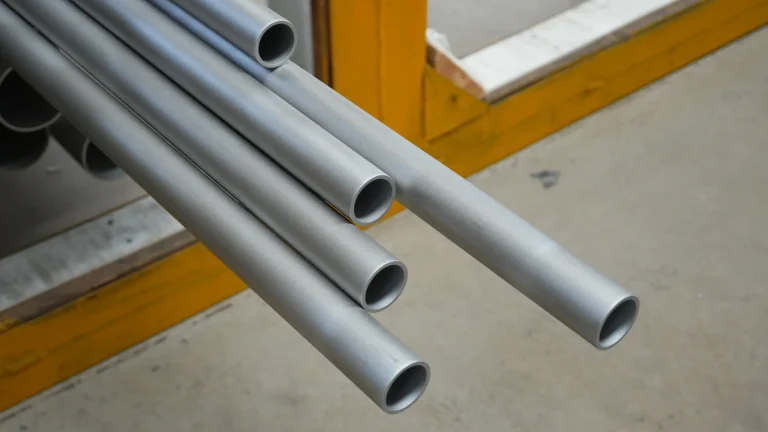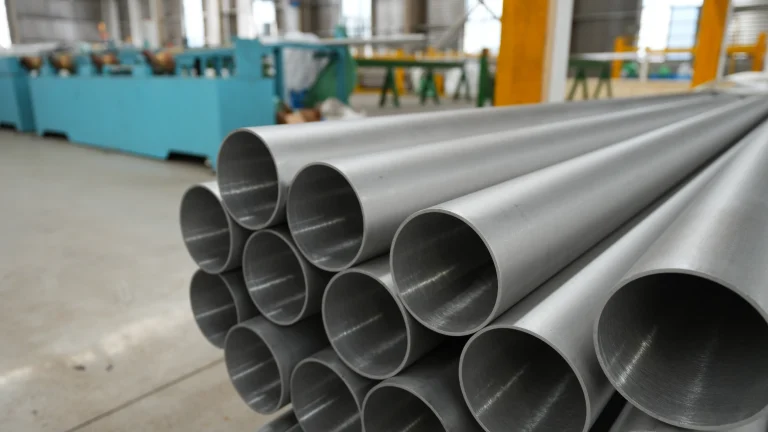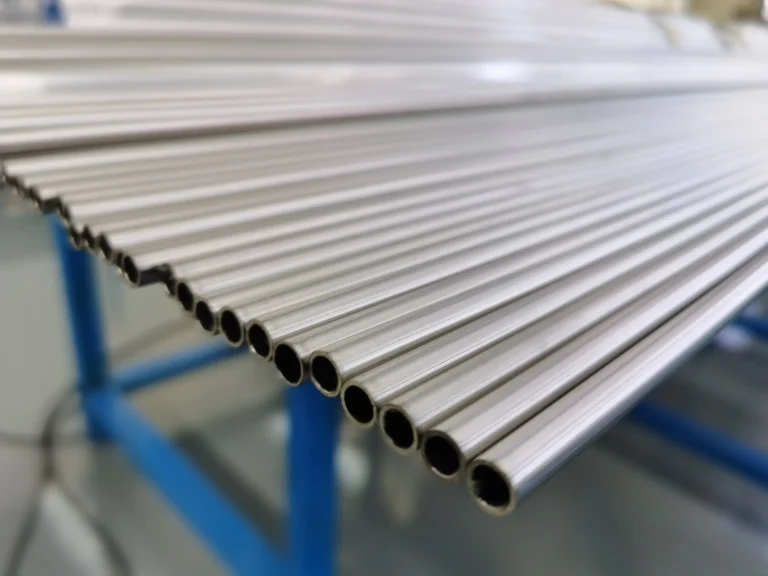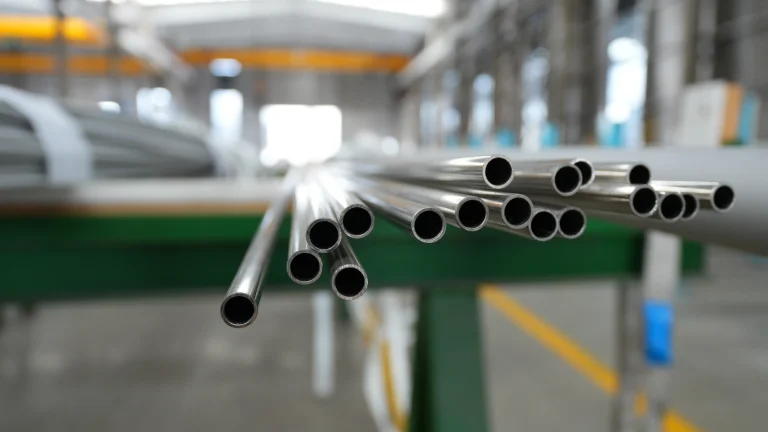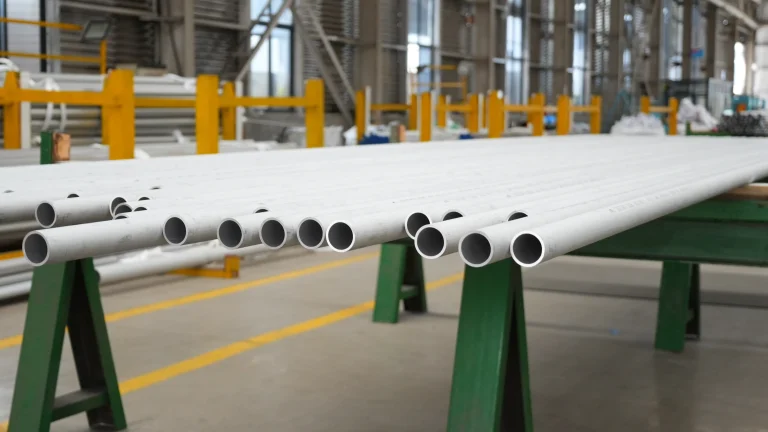
Welded Incoloy 800H/HT Pipe
Incoloy 800H/HT welded tubing is a high-performance iron-nickel-chromium alloy piping solution designed for long-term use in extreme high-temperature environments.It is manufactured by forming and welding alloy plates or strips into tubular shapes,typically in accordance with the ASTM B514 standard.
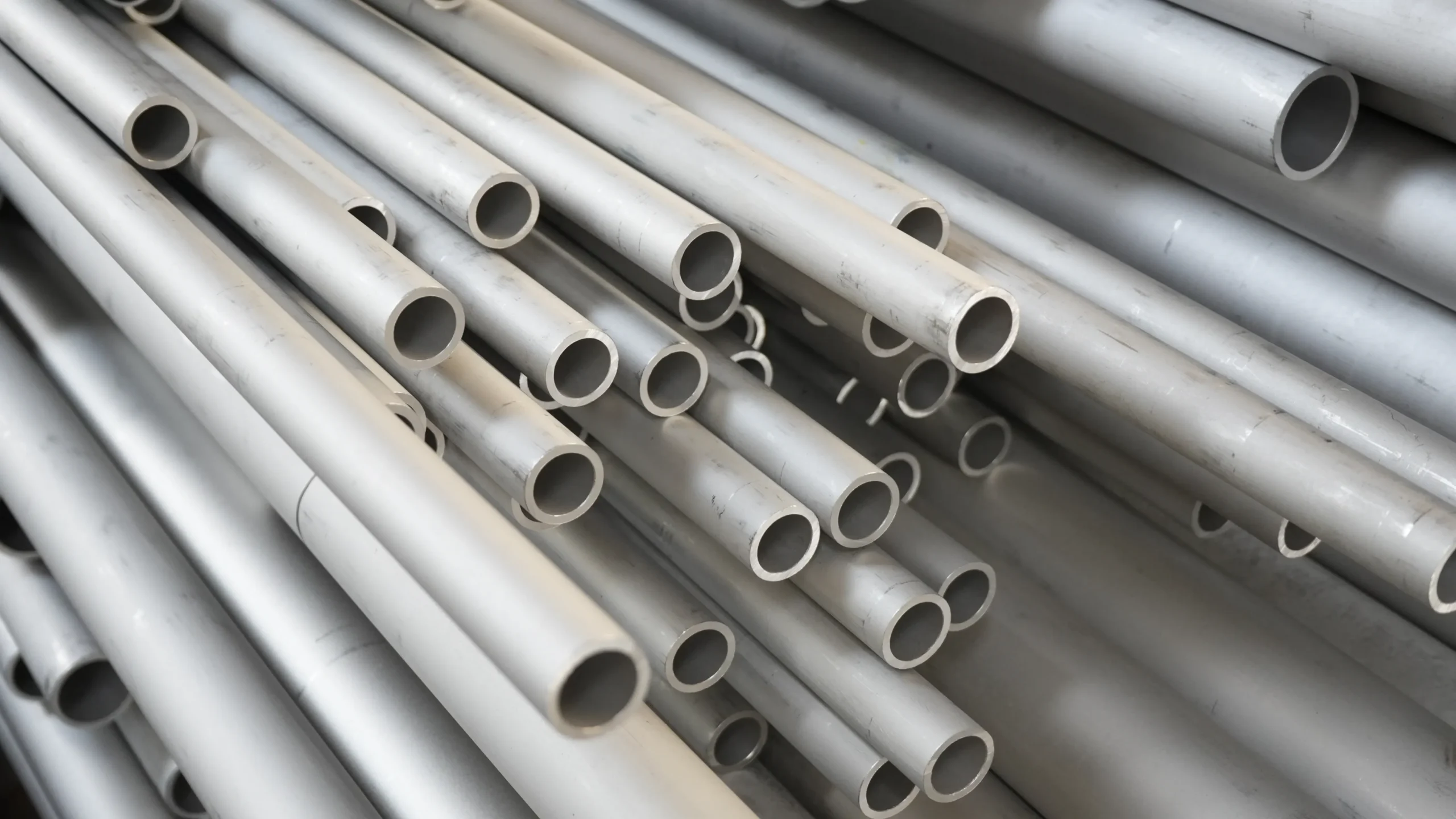
Specification of Welded Incoloy 800H/HT Pipe
| Product | Seamless Incoloy 800H/HT Pipe |
| Working Temperature | 800H:593 – 815°C(1100 – 1500°F) 800HT:700 – 982°C(1290 – 1800°F) |
| Dimension Range | Outside Diameter (OD): 6 – 200 mm Wall Thickness (THK): 0.35 – 6 mm Length (L): 0.5 – 12 m The size can be customized according to ASME B36.10 / ASME B36.19 |
| Schedules | SCH 5, 10, 40, 80, 160, XXS, XXH |
| Materials | Incoloy 800H | UNS N08810 | W.Nr. 1.4958 | DIN X5NiCrAlTi31-20 Incoloy 800HT | UNS N08811 | W.Nr. 1.4959 | DIN X8NiCrAlTi32-21 |
| Standards | ASTM B514 / ASME SB514 / ASTM B775 / ASME SB775 / ASTM B515 / ASME SB515 |
| Surface Finish |
Solution Annealed Bright Annealed Polished Finish Satin/Brushed Finish Bead Blasted |
| Corrosion Resistance Specifications |
Excellent Resistance To: Oxidation Resistance Carburization Resistance Creep & Stress Rupture Resistance Sulfidation Resistance Microstructural Stability Chloride Stress Corrosion Cracking |
| Applications | Petrochemical Processing Power Generation Industrial Heating & Furnaces Pulp & Paper |
| Our Strength | Over 10 Years Experience Exporting Pipes & Tubings Stock Available In Common Sizes Customized Fabrication Available Package Supplying of Piping Materials Strict QC With PMI Testing For Every Batch Experience in Exporting to the US,Germany,UAE,etc. Third Party Inspection Available |
For more information on incoloy 800H/HT pipe and other products, please contact us.
Welded Incoloy 800H/HT Pipe Chemical Composition (%)
| Ni | Cr | Fe | C | Al |
| 30.0 – 35.0 | 19.0 – 23.0 | Balance | H:0.05 – 0.10 HT:0.06 – 0.10 | 0.15 – 0.60 |
| Ti | Mn | Si | S | Cu |
| 0.15 – 0.60 | 1.50 Max | 1.00 Max | 0.015 Max | 0.75 Max |
Why is the alloy referred to as a nickel-based or nickel-iron-chromium alloy even though “iron (Fe)” makes up the largest percentage of the composition?
Although the iron content is typically 39.5% or higher,because the proportions of nickel and chromium are significantly higher than in ordinary stainless steel—and these elements determine its core properties—it is classified as a high-performance nickel-iron-chromium alloy.
Does the chemical composition of the weld change during welding?
Yes.During the welding process,certain elements (such as aluminum and titanium) may be subject to slight loss due to oxidation.Therefore,standards require the use of matched or enhanced welding consumables (such as Inconel 617 or Haynes 230) to ensure that the creep strength of the weld zone is not lower than that of the base metal of the pipe.
Welded Incoloy 800H/HT Pipe Mechanical Properties
| Property | Tensile Strength | Yield strength | Elongation | Hardness |
| Incoloy 800H | ≥ 450 MPa (65 ksi) | ≥ 170 MPa (25 ksi) | ≥ 30% | 126 – 192 HBW |
| Incoloy 800HT | ≥ 450 MPa (65 ksi) | ≥ 170 MPa (25 ksi) | ≥ 30% | 126 – 192 HBW |
Why does the yield strength of 800H/HT appear to be lower than that of standard stainless steel?
This is done to ensure high-temperature stability.800H/HT must undergo high-temperature solution annealing to develop coarse grains.Although this results in a lower yield strength at room temperature compared to cold-worked or fine-grained stainless steels,it prevents the material from creeping at high temperatures.
Does the strength of the weld meet the standards for the base material?
Yes,but with certain conditions.
At room temperature,the strength of a weld made with qualified welding consumables is typically equal to or greater than that of the base material.
At elevated temperatures,the design of welded pipes typically requires reference to the ASME Joint Efficiency Factor.If 100% radiographic testing (RT) is not performed,the pressure is generally calculated based on 85% of the base material’s strength.
If a material is exposed to temperatures above 700°C for an extended period, will it become brittle?
Generally not.This is the key advantage of 800H/HT.
Many heat-resistant stainless steels tend to precipitate sigma phases during prolonged operation at temperatures between 600 and 800°C,leading to embrittlement.However,the nickel-iron-chromium ratio in 800H/HT is highly stable;even after tens of thousands of hours of service,it retains excellent impact toughness and is unlikely to fracture due to embrittlement during shutdowns for maintenance.
Physical Properties of Welded Incoloy 800H/HT Pipe
Density:7.94 g/cm³ (0.287 lb/in³)
Melting Range:1357 – 1385°C (2475 – 2525°F)
Specific Heat:460 J/kg·°C
Poisson’s Ratio:0.339
Magnetic Permeability:< 1.02,non-magnetic
Thermal Properties of Welded Incoloy 800H/HT Pipe
From a materials physics perspective,the thermophysical properties of welded pipes and seamless pipes are identical.
This is because both types are made from base materials with the same chemical composition,and thermophysical properties are primarily determined by a material’s atomic structure and chemical composition,rather than by the manufacturing process.
Mean Coefficient of Thermal Expansion
| Temperature | μm/m · °C | 10-6 in/in · °F |
| 70 – 200°F (20 – 100°C) | 14.4 | 8.0 |
| 70 – 750°F (20 – 400°C) | 16.1 | 8.9 |
| 70 – 1100°F (20 – 600°C) | 17.1 | 9.5 |
| 70 – 1475°F (20 – 800°C) | 18.1 | 10.1 |
| 70 – 1830°F (20 – 1000°C) | 18.9 | 10.5 |
Thermal Conductivity
| Temperature | W/m · K | BTU · in/ft2 · hr · °F |
| 20°C(70°F) | 11.5 | 80 |
| 200°C(400°F) | 14.3 | 99 |
| 400°C(750°F) | 17.4 | 121 |
| 600°C(1100°F) | 20.9 | 145 |
| 800°C(1475°F) | 24.1 | 167 |
| 1000°C(1830°F) | 27.2 | 189 |
Manufacturing Process for Welded Incoloy 800H/HT Pipe
For Incoloy 800H/HT seamless pipes,their thermophysical properties serve as key reference data for applications in high-temperature industries,such as power generation and petrochemicals.Since these two alloys share the same matrix composition,their thermal parameters are generally considered equivalent in engineering calculations.
Raw Material Preparation
Select Incoloy 800H/HT hot-rolled or cold-rolled plates or sheets that comply with the ASTM B409 standard.Then perform a material composition analysis (PMI) to ensure that the Al+Ti and carbon content fall within the specific ranges required for 800H/HT.
Forming
Continuous roll forming is suitable for small-diameter pipes,in which steel strips are continuously bent into tubular shapes by a series of rollers.
Single-sheet forming (UOE/JCOE) is suitable for large-diameter,thick-walled pipes,in which a press is used to form a single sheet of thick plate into U, O, or J/C shapes.
Welding
TIG welding is used for high-quality internal welds.PAW is suitable for single-pass penetration in thick plates.Submerged arc welding is used for external welds on large-diameter pipes.
High-purity argon or an argon-helium mixture is used for internal and external shielding to prevent oxidation of the weld.After welding,the weld is typically subjected to “in-line flattening” (bead reduction) using mechanical means (such as rollers) to bring it flush with the base metal.
Solution Annealing
Solution annealing requires heating to 1150°C (2100°F) or higher.
The purpose is to eliminate residual welding stresses,ensure complete dissolution of carbides,and control grain growth to achieve a grain size of ASTM No. 5 or coarser.
Rapid water quenching or forced air cooling is used to prevent the precipitation of harmful phases.
Straightening & Cutting
After annealing, the pipes undergo slight deformation and must be straightened using a straightening machine.
They are then precision-cut to the length specified in the order (typically 6 meters or 12 meters).
Pickling & Surface Treatment
Use an acid solution to remove the scale formed during annealing,resulting in a uniform silver-gray surface (AP finish).
NDT & Quality Control
To meet the requirements of ASTM B514, RT (radiographic testing),hydrostatic testing,eddy current/ultrasonic testing,and grain size testing must be performed.
write to us
Have a Question?
Contact Us!
Should you have any questions regarding stainless steel pipes, including manufacturing processes, chemical composition or other unfamiliar matters, our staff will be happy to assist you.