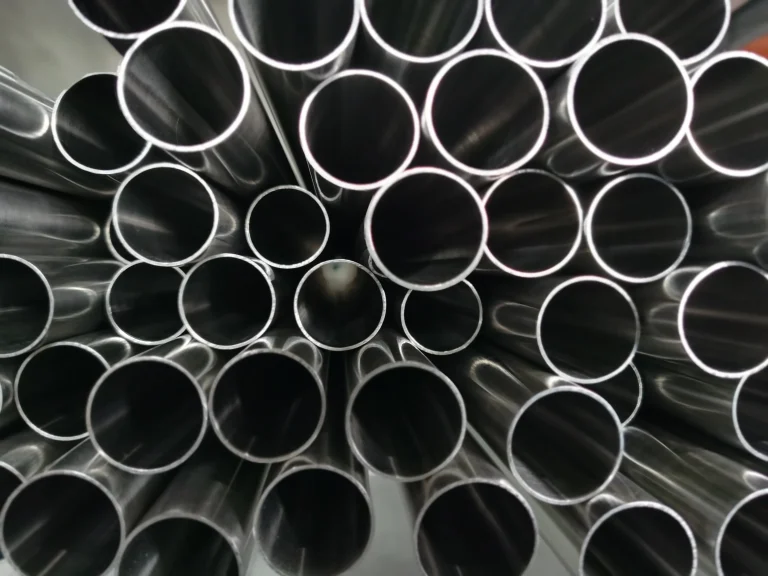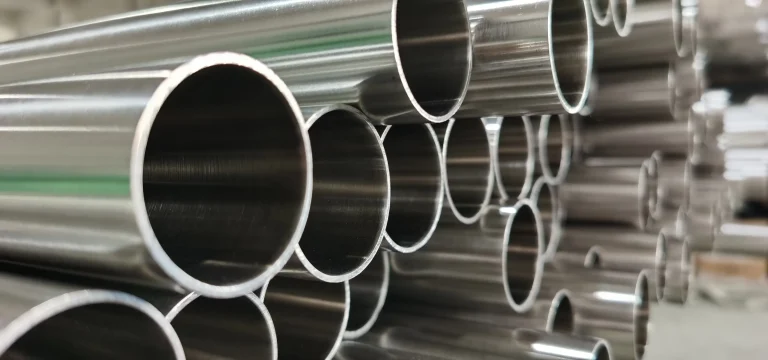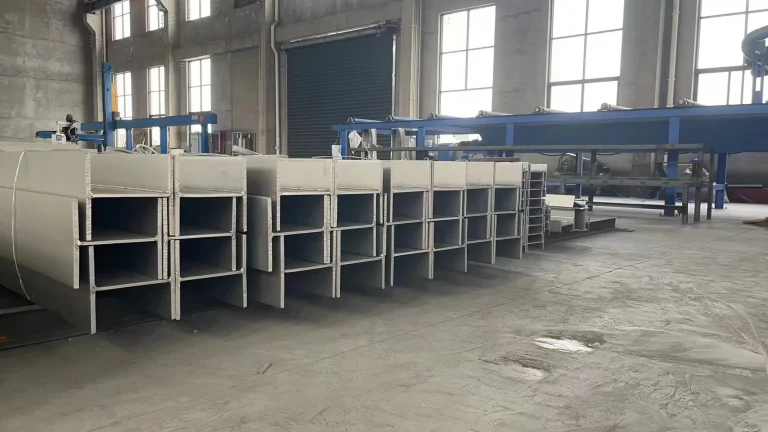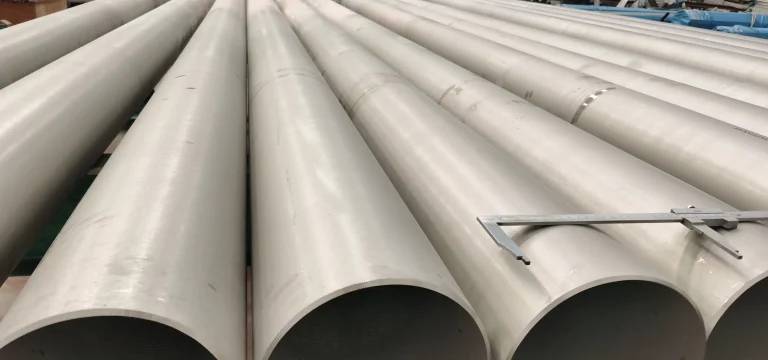
Round Alloy 718 Tube
Round Alloy 718 Tube (often called Inconel 718) is a high-strength,corrosion-resistant nickel-chromium-iron superalloy tube designed for extreme environments.It is precipitation-hardened with niobium for high tensile and fatigue strength at temperatures ranging from cryogenic up to 1400°F (760°C).
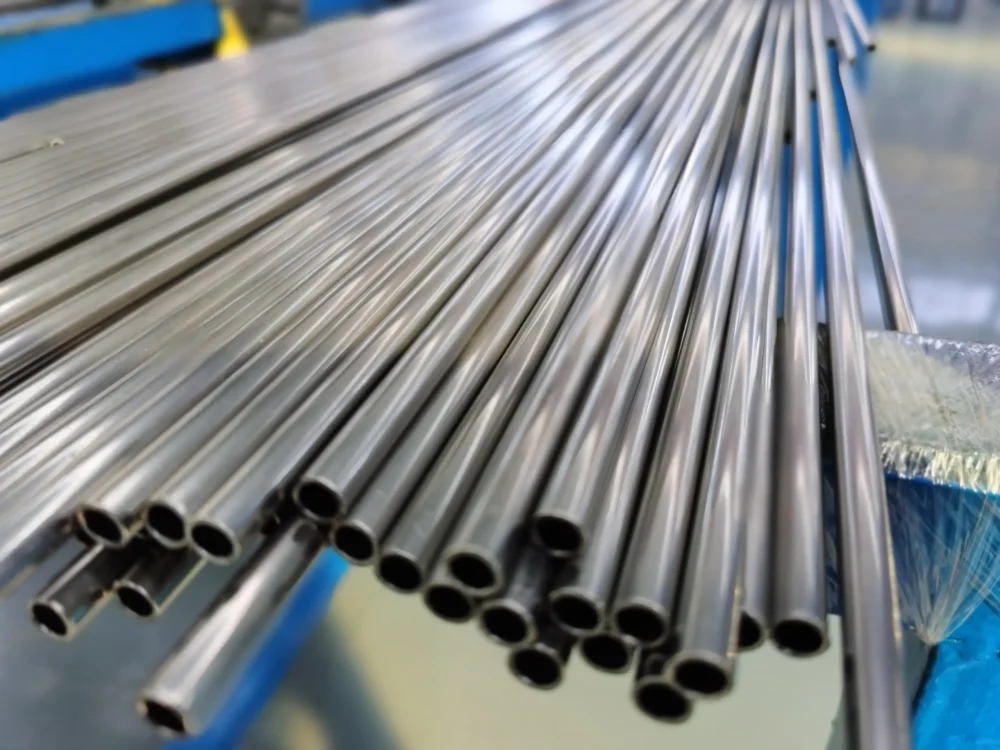
Specification of Round Alloy 718 Tube
| Product | Round Alloy 718 Tube |
| Working Temperature | Up to 705°C (1300°F) |
| Dimension Range | Outside Diameter (OD): 6 – 200 mm Wall Thickness (THK): 0.35 – 6 mm Length (L): 0.5 – 12 m The size can be customized according to ASME B36.10 / ASME B36.19 |
| Schedules | SCH 5, 10, 40, 80, 160, XXS, XXH |
| Materials | Inconel 718 | UNS N07718 | W.Nr. 2.4668 | DIN NiCr19Fe19Nb5Mo3 |
| Standards | ASTM B163 / ASME SB163 / ASTM B516 / ASME SB516 / ASTM B983 / ASME SB983 |
| Surface Finish |
Bright Annealed Annealed & Pickled Polished Shot Peening Passivation |
| Corrosion Resistance Specifications |
Excellent Resistance To: Corrosion Resistance Oxidation Resistance Creep & Rupture Resistance Fatigue Resistance Temperature Versatility |
| Applications | Aerospace and Defense Oil and Gas Extraction Power Generation and Nuclear Specialized Industrial and Automotive |
| Our Strength | Over 10 Years Experience Exporting Pipes & Tubings Stock Available In Common Sizes Customized Fabrication Available Package Supplying of Piping Materials Strict QC With PMI Testing For Every Batch Experience in Exporting to the US,Germany,UAE,etc. Third Party Inspection Available |
For more information on inconel 718 pipe and other products, please contact us.
Round Alloy 718 Tube Chemical Composition (%)
| Ni(+ Co) | Cr | Fe | Nb(+ Ta) | Mo | Ti | Al |
| 50.00 – 55.00 | 17.00 – 21.00 | Balance | 4.75 – 5.50 | 2.80 – 3.30 | 0.65 – 1.15 | 0.20 – 0.80 |
| Co | C | Mn | Si | P / S | B | |
| 1.00 Max | 0.08 Max | 0.35 Max | 0.35 Max | 0.015 Max | 0.006 Max |
Why does Alloy 718 tubing contain such a high percentage of nickel (Ni)?
Nickel serves as the matrix in this alloy.It provides excellent corrosion resistance and austenitic stability,particularly in acidic and saline environments.
Is this pipe made of a nickel-based alloy or an iron-based alloy?
Although it contains approximately 17% iron (Fe),it is classified as a nickel-based superheat-resistant alloy.The addition of iron reduces material costs and significantly improves machinability.The presence of iron also helps control grain size under specific heat treatment conditions.
Round Alloy 718 Tube Mechanical Properties(Typical value range)
| Tensile Strength | Yield strength | Elongation | Hardness |
| 1240 – 1450 MPa (180 – 210 ksi) | 1035 – 1200 MPa (150 – 175 ksi) | 12% – 25% | 36 – 44 HRC(331 – 415 HB) |
To what extent does high temperature affect mechanical properties?
At 1200°F (650°C),its yield strength remains above 140 ksi (965 MPa).Only when the temperature exceeds 1300°F (705°C) do the strengthening phases begin to coarsen,causing a significant drop in strength.
How does it perform in ultra-low temperature (cryogenic) environments?
Unlike most carbon steels,Alloy 718 does not become brittle at extremely low temperatures.At -423°F (-253°C),its tensile strength can increase to over 230 ksi (1585 MPa).It retains good impact toughness and can be used to manufacture rocket fuel lines for liquid oxygen and liquid hydrogen.
What is the difference in performance
between “solution-treated” and “age-hardened” tubing?
The annealed/solution-treated condition has a lower hardness (approximately 20–25 HRC),making it suitable for bending, flaring,or forming operations.
The aged condition,on the other hand,involves the precipitation of strengthening phases through heat treatment,nearly doubling the strength;this is the standard service condition for the final component.
Physical Properties of Round Alloy 718 Tube
Density:8.19 g/cm³ (0.296 lb/in³)
Melting Range:1260°C – 1336°C (2300°F – 2437°F)
Specific Heat:0.104 Btu/lb · ℉(70℉)
Poisson’s Ratio:0.29 to 0.30
Magnetic Permeability:Non-magnetic
Thermal Properties of Round Alloy 718 Tube
| Temperature | Mean Coeff. of Thermal Expansion (10-6 in/in·℉) | Thermal Conductivity (Btu·in/ft2·h·℉) | Specific Heat (Btu/lb·℉) |
| 70 | 7.2 | 79 | 0.104 |
| 200 | 7.3 | 82 | 0.107 |
| 400 | 7.5 | 87 | 0.111 |
| 600 | 7.7 | 93 | 0.115 |
| 800 | 7.9 | 99 | 0.119 |
| 1000 | 8.2 | 105 | 0.123 |
| 1200 | 8.4 | 111 | 0.127 |
| 1400 | 8.9 | 118 | 0.131 |
Manufacturing Process for Round Alloy 718 Tube
The manufacturing of round alloy 718 tubes is a high-precision process designed to address the material’s extremely high hardness and its tendency to work harden.Depending on the end application,we can provide you with seamless or welded tubes.
Melting and Refining
VIM (Vacuum Induction Melting):
Removes volatile impurities and gases.
VAR (Vacuum Arc Remelting):
Refines the grain structure and removes remaining inclusions,ensuring the alloy is “aerospace grade.”
Tube Formation (Seamless vs. Welded)
Seamless Tube:
Extrusion:A solid billet is heated and pushed through a die over a mandrel to create a hollow shell.
Pilgering (Cold Reducing):The shell is rolled over a tapered mandrel.This reduces the diameter and wall thickness while significantly improving the surface finish and grain structure.
Cold Drawing:The tube is pulled through a die at room temperature to achieve final precision dimensions and high strength.
Welded Tube:
A flat strip of Alloy 718 is rolled into a cylinder and joined using GTAW (TIG) or Laser Welding.
Because Alloy 718 has excellent weldability,the weld zone maintains high strength,though seamless is still preferred for critical flight hardware.
Heat Treatment
Solution Annealing:
Heat to approximately 1750–1950°F (954–1065°C),followed by water quenching or air quenching.This process dissolves the strengthening phases.
Precipitation Hardening:
A two-step process (typically 1325°F for 8 hours,followed by 1150°F for 8 hours) that causes the niobium to form “gamma-double-prime” (γ”) particles,which “lock” the structure in place and provide its exceptional strength.
Finishing and Inspection
Straightening:
Using multi-roll machines to ensure the tube meets strict “straightness” tolerances.
Surface Treatment:
Pickling (to remove oxide scale) or Bright Annealing (to keep the surface shiny and clean).
NDT (Non-Destructive Testing):
Hydrostatic Testing:Checking for leaks under extreme pressure.
Ultrasonic or Eddy Current Testing:Scanning for internal cracks or wall-thinning defects.
Final Cleaning
For aerospace or oxygen-service tubes,a final degreasing and passivation are performed to ensure no oils or contaminants remain inside the tube.
write to us
Have a Question?
Contact Us!
Should you have any questions regarding stainless steel pipes, including manufacturing processes, chemical composition or other unfamiliar matters, our staff will be happy to assist you.