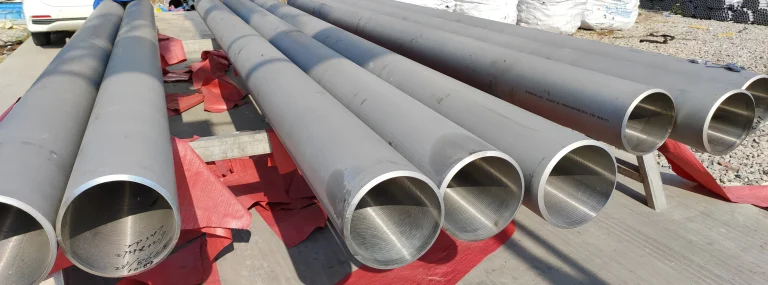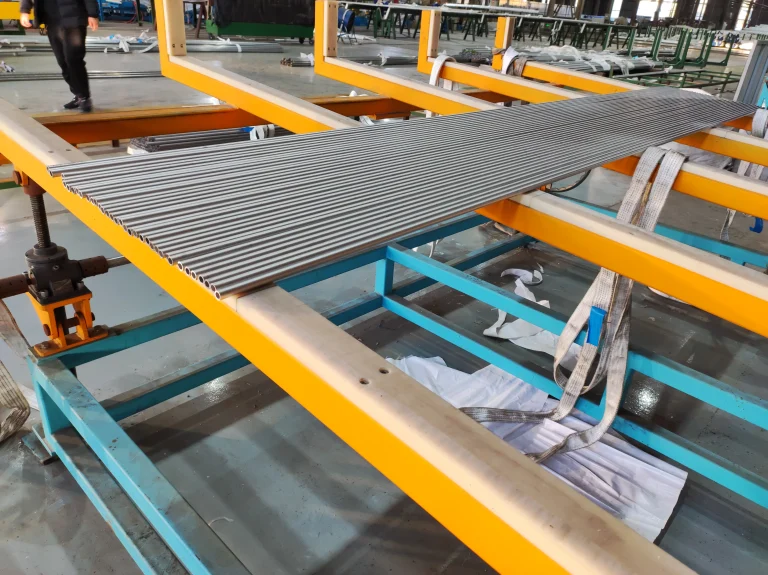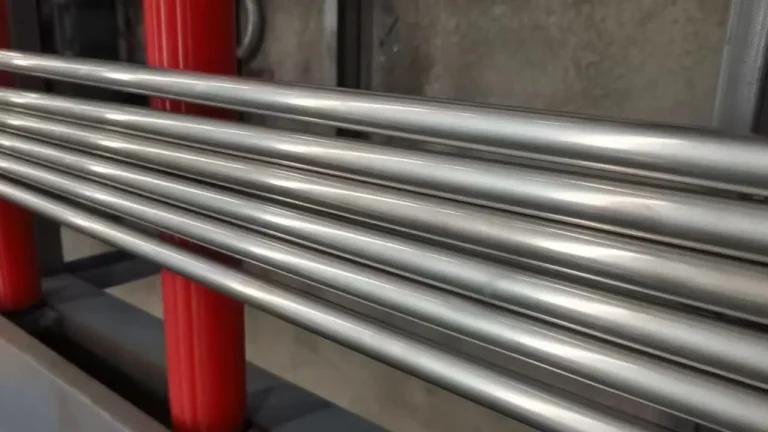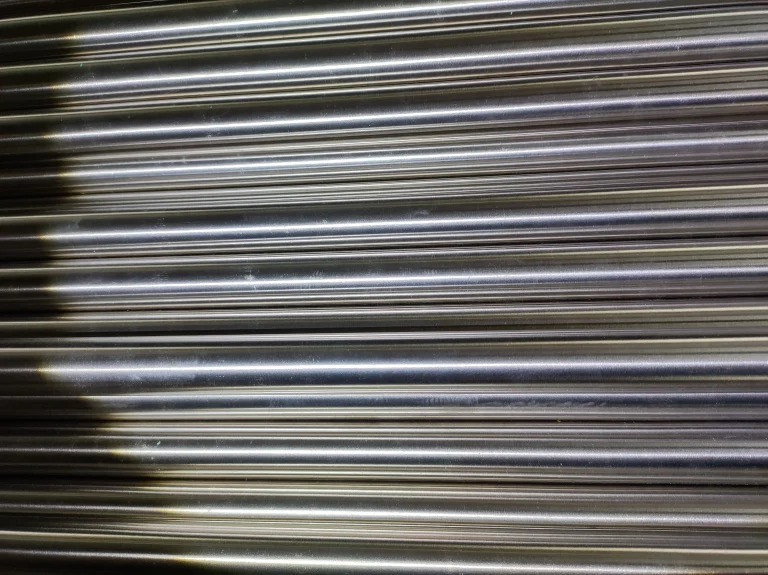
Super duplex pipe is a high-performance piping product made from a specialized category of stainless steel that features a dual-phase,50/50 microscopic mix of austenite and ferrite grains.It is engineered specifically to survive highly corrosive,high-pressure,and extreme-temperature environments where standard stainless steel would fail.
What is Super duplex Pipe:Main Characteristics
What is Super duplex Pipe:Chemical Composition
| Elements | Note |
| Chromium (24–26%) | Provides foundational corrosion resistance. |
| Nickel (6–8%) | Stabilizes the structural phase balance. |
| Molybdenum (3–4%) | Heavily prevents pitting and crevice breakdown. |
| Nitrogen (0.24–0.32%) | Further boosts mechanical strength. |
Stainless Tubings Supplier in china
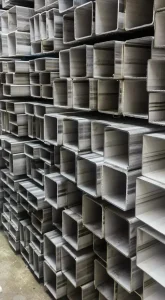
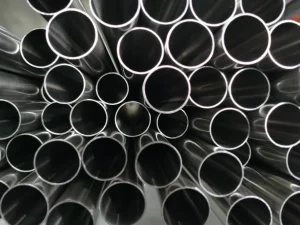
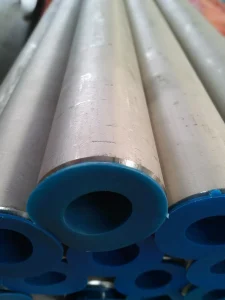
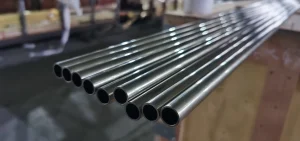
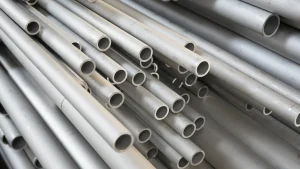
Common Industry Piping Grades
Currently,super duplex pipes in China are primarily 2507 super duplex pipes and 2205 duplex pipes,which are characterized by high strength and excellent corrosion resistance.They are mainly used in the chemical,petrochemical,and subsea equipment industries.
They exhibit excellent resistance to chloride corrosion,high thermal conductivity,and a low coefficient of thermal expansion.Due to their high chromium,molybdenum,and nitrogen content,they are highly resistant to pitting corrosion,crevice corrosion,and general corrosion.
Alloy 2507 also has high impact strength,but it is not suitable for use at temperatures above 570°C;prolonged exposure to such conditions will reduce its toughness.
| Standards | UNS | W.Nr. | EN | JIS | AFNOR |
| 2507 | S32750 | 1.4410 | X2CrNiMoN25-7-4 | SUS327L1 | Z3 CN 25.06 Az |
| 2205 | S32205 | 1.4462 | X2CrNiMoN22-5-3 | SUS32205 | Z3 CrNi 22.05 AZ |
What is Super duplex Pipe:Applications
What is Super Duplex Pipe:Points to Note
The Fundamental Differences of PREN
Super duplex stainless steel is considered “super” because it contains higher levels of alloying elements, particularly increased proportions of chromium, molybdenum and nitrogen.This is directly reflected in their PREN.
- Calculation Formula:
PREN = %Cr + 3.3 × %Mo + 16 × %N - 2205:
The PREN range is between 31 and 35.Suitable for general marine atmospheres and oil and gas fields containing hydrogen sulfide. - 2507:
PREN must be > 40 (typically between 41 and 43).
Specifically designed to withstand high concentrations of chlorine ions under high pressure.
Structure and Risk of Embrittlement
The key advantage of duplex steel lies in its microstructure,in which austenite and ferrite each account for approximately 50%.
- Strict Welding Requirements:
During welding, improper control of heat input or excessive cooling can result in an excessively high ferrite content or the precipitation of the harmful σ phase between 600°C and 900°C. - Serious Consequences:
Once the σ phase precipitates,the material’s toughness and corrosion resistance plummet instantly,making the pipeline highly susceptible to brittle fracture.
Therefore,the welding procedure specification for super duplex steel 2507 is much more stringent than that for 2205.
Temperature Limits
Duplex stainless steel and super duplex stainless steel should not be used indiscriminately in environments with extremely high or low temperatures;their operating temperature range is narrower than that of 316L.
- Upper temperature limit (300°C):
When exposed to temperatures around 475°C for extended periods (though the effect actually begins at temperatures above 300°C),the material undergoes “475°C embrittlement,” causing the ferritic phase to become brittle.ASME standards generally limit its operating temperature to no more than 250°C to 315°C. - Lower Temperature Limit (-50°C):
Typically,at temperatures below -40°C to -50°C, the impact energy decreases significantly.If extremely low temperatures are required,it is necessary to switch back to pure austenitic stainless steel or nickel-based alloys.
Economic Benefits
When designing long-distance, large-diameter pipelines,selecting 2205 or 2507 can often save the owner a significant amount of money.
- The yield strength of super duplex pipes is about twice that of 316L.
- According to calculations based on the ASME B31.3 Pressure Piping Code,under the same design pressure,the wall thickness of 2507 can be reduced by as much as 30% to 50%.
- Chain reaction:
Thinner pipe walls →
Significant reduction in total steel weight →
Lower costs for support structures →
Less welding material and labor required when welding pipes.
How does Super Duplex save project costs if the material is expensive?
Wall Thickness Reduction:
Because Super Duplex has double the yield strength of standard 316L stainless steel,the required pipe wall thickness can be slashed by 30% to 50% under ASME B31.3 codes.
Weight & Labor Savings:
Thinner walls translate directly to significantly lower total tonnage,lighter structural supporting frameworks,fewer weld passes,and reduced freight costs.
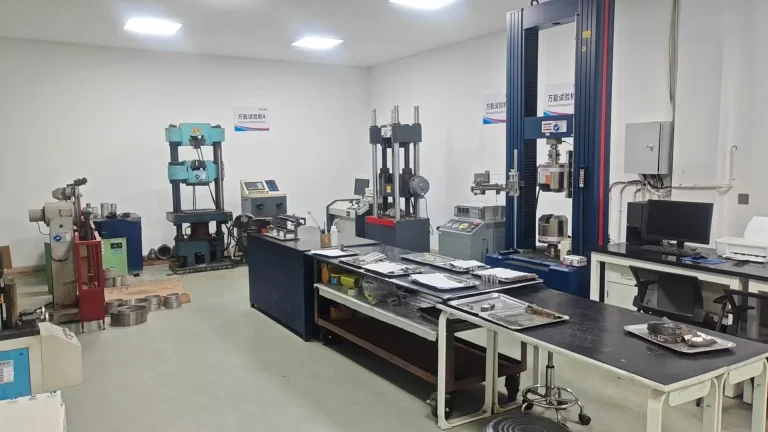
Can you provide MTR with ASTM A923 Method C test results?
Yes,absolutely.All our Super Duplex 2507 pipes are supplied with EN 10204 3.1 Mill Test Reports.The MTR will fully certify compliance with ASTM A923 Method C,Method B,and microstructural evaluations to guarantee maximum corrosion resistance.
How do you pack the pipes to prevent Carbon Steel contamination during sea freight?
We enforce a strict zero-carbon-steel-contact protocol during packaging and container loading to protect the passivated surface of the 2507 alloy.
Heavy-duty plastic end caps are secured on both ends to block moisture, debris, and marine salt spray.
Pipes are bundled using nylon/fiber straps – never raw carbon steel wires.
Every layer of pipe is physically isolated using wooden battens or rubber spacers.
The entire shipment is packed into IPPC-certified plywood boxes or securely loaded into containers with non-metallic barriers to eliminate any possibility of galvanic corrosion during transit.
write to us
Have a Question?
Contact Us!
Should you have any questions regarding stainless steel pipes, including manufacturing processes, chemical composition or other unfamiliar matters, our staff will be happy to assist you.