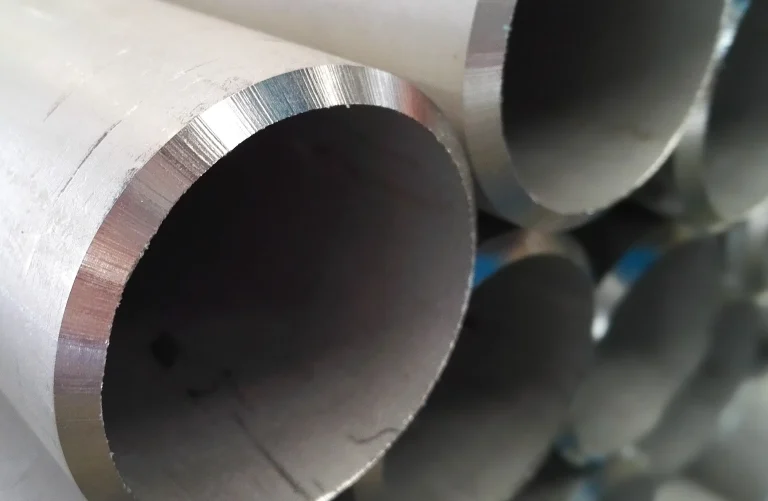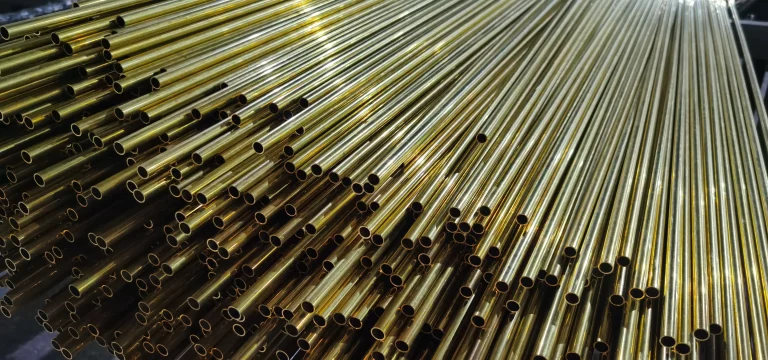
Welded Hastelloy C22 Pipe
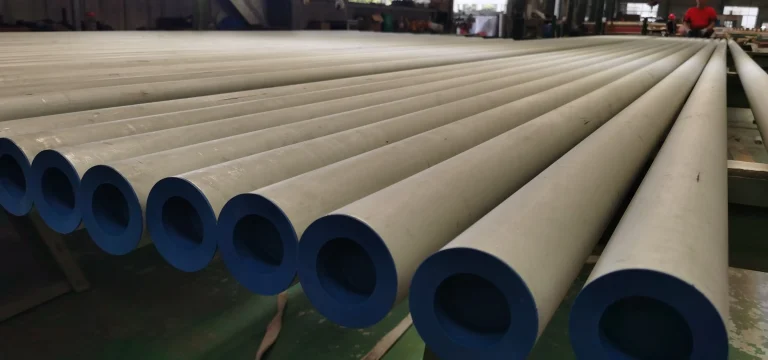
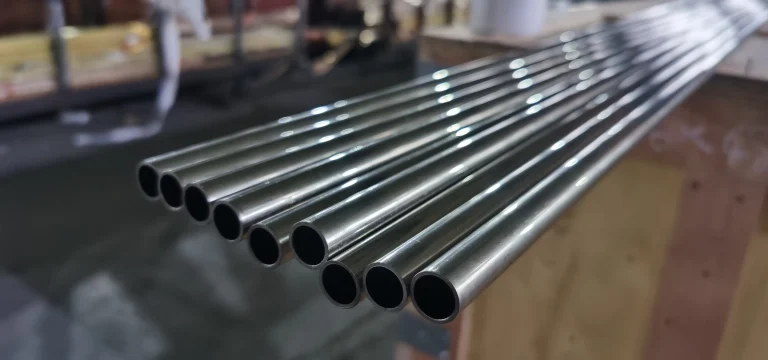
Welded Hastelloy C22 pipe is a corrosion-resistant nickel-chromium-molybdenum-tungsten alloy pipe (UNS N06022),formed and welded from plates or sheets.It exhibits outstanding resistance to pitting,crevice corrosion,and stress corrosion cracking,maintaining excellent performance even in severe chemical environments.It is highly suitable for demanding applications such as chemical processing,pollution control,and marine environments,offering high ductility and strength.
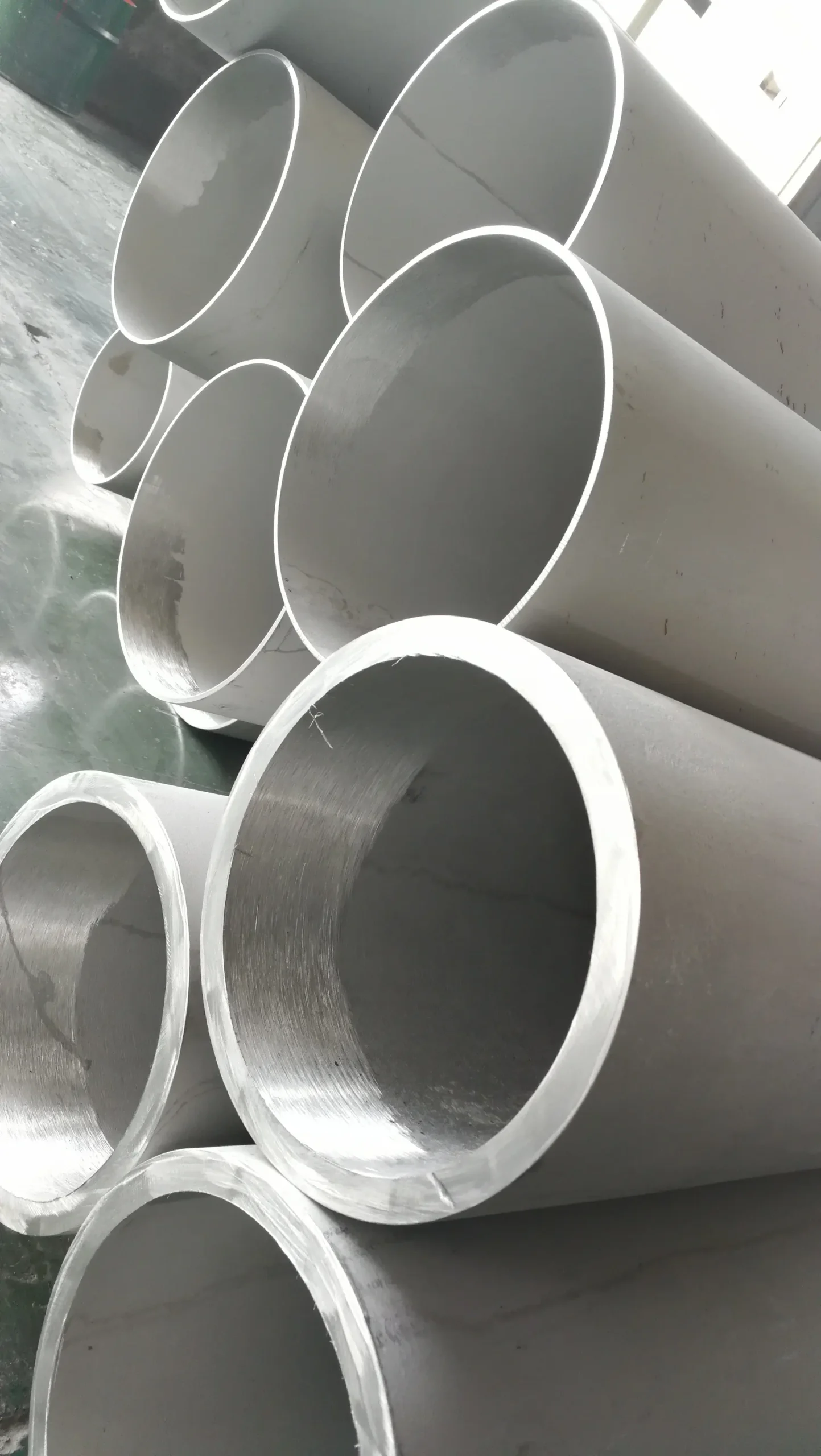
Specification of Welded Hastelloy C22 Pipe
| Product | Welded Hastelloy C22 Pipe |
| Working Temperature | 1250°F (677°C) Max |
| Dimension Range | Outside Diameter (OD): 6 – 200 mm Wall Thickness (THK): 0.35 – 6 mm Length (L): 0.5 – 12 m The size can be customized according to ASME B36.10 / ASME B36.19 |
| Schedules | SCH 5, 10, 40, 80, 160, XXS, XXH |
| Materials | Hastelloy C22 | UNS N06022 | W.Nr. 2.4602 | DIN/EN NiCr21Mo14W |
| Standards | ASTM B622 / ASME SB622 / ASTM B169 / ASME SB169 |
| Surface Finish |
Annealed & Pickled Mill Finish Bright Annealed Brushed/Satin Sanitary Finish Electropolished Mirror Finish |
| Corrosion Resistance Specifications |
Excellent Resistance To: Pitting Corrosion Crevice Corrosion Stress Corrosion Cracking |
| Applications | Pharmaceuticals and Biotechnology Chemical and Petrochemical Industry Environmental Protection and Pollution Control Energy and Marine Engineering |
| Our Strength | Over 10 Years Experience Exporting Pipes & Tubings Stock Available In Common Sizes Customized Fabrication Available Package Supplying of Piping Materials Strict QC With PMI Testing For Every Batch Experience in Exporting to the US,Germany,UAE,etc. Third Party Inspection Available |
For more information on hastelloy c22 pipe and other products, please contact us.
Welded Hastelloy C22 Pipe Chemical Composition (%)
| Ni | Cr | Mo | Fe | W | Co |
| Balance | 20.0 – 22.5 | 12.5 – 14.5 | 2.0 – 6.0 | 2.5 – 3.5 | 0.5 Max |
| Mn | C | Si | P | S | V |
| 0.50 Max | 0.015 Max | 0.08 Max | 0.02 Max | 0.02 Max | 0.35 Max |
How does the composition of Hastelloy C22 affect its weldability?
The chromium content is significantly higher than that of C276 steel,promoting the formation of a stable protective oxide layer.As a matrix element,nickel makes C22 more weldable than many other high-temperature alloys.Low carbon and low silicon prevent the formation of grain boundary precipitates (sensitization) in the heat-affected zone (HAZ).Molybdenum and tungsten enhance the weld metal’s resistance to pitting and crevice corrosion.
Does welding require filler metals with different compositions?
Although C22 exhibits high resistance to sensitization,if filler wire is required, based on our over 3 decades of manufacturing experience,we recommend using ER NiCrMo-10 filler wire.This filler wire’s composition closely matches the high-alloy chemical composition of the base metal.
Is there a difference in composition between welded pipes and seamless pipes?
No,the basic chemical composition requirements (UNS N06022) remain unchanged.The distinction lies in the manufacturing standards:welded pipe follows ASTM B619,while seamless pipe adheres to ASTM B622.
Welded Hastelloy C22 Pipe Mechanical Properties(Typical value range)
| Tensile Strength | Yield strength | Elongation | Hardness |
| 690 – 790 MPa(100 – 115 ksi) | 310 – 415 MPa(45 – 60 ksi) | 45% – 60% | 89 – 95 HRB |
Does welding significantly reduce the ductility of pipes?
No.Hastelloy C22 is renowned for its high ductility.Even in the welded condition,its elongation typically remains between 45% and 60%.This allows welded piping to withstand significant processing stresses or thermal expansion without fracturing.
How does temperature affect these mechanical properties?
As temperature increases,mechanical strength decreases.For example,at 316°C (600°F),tensile strength typically drops to approximately 634–676 MPa,while yield strength may decrease to 234–290 MPa.
Physical Properties of Welded Hastelloy C22 Pipe
Density:8.69 g/cm³ (0.314 lb/in³)
Modulus of Elasticity:206 GPa (29.9 x 10⁶ psi)
Poisson’s Ratio:0.32
Melting Range:1357 – 1399 ℃(2475 – 2550 ℉)
Magnetic Permeability:Non-magnetic
Typical Short-Term Strength vs. Temperature
As temperature increases,both the ultimate tensile strength (UTS) and yield strength of welded components decrease.Typical values for annealed plates (representing pipeline performance) are as follows:
| Temperature | Yield strength | Tensile strength | Elongation |
| 20°C / 68°F | ~ 370 – 410 MPa (54 – 60 ksi) | ~ 780 – 800 MPa (113 – 116 ksi) | 57% – 62% |
| 316°C / 600°F | ~ 250 – 290 MPa (36 – 42 ksi) | ~ 655 – 676 MPa (95 – 98 ksi) | 62% – 68% |
| 427°C / 800°F | ~ 240 – 280 MPa (35 – 40 ksi) | ~ 634 – 655 MPa (92 – 95 ksi) | 67% – 68% |
| 538°C / 1000°F | ~ 230 – 270 MPa (33 – 39 ksi) | ~ 600 – 627 MPa (87 – 91 ksi) | 61% – 67% |
| 649°C / 1200°F | ~ 220 – 248 MPa (32 – 36 ksi) | ~ 570 – 586 MPa (83 – 85 ksi) | 65% – 69% |
| 760°C / 1400°F | ~ 210 – 240 MPa (30 – 35 ksi) | ~ 524 – 534 MPa (76 – 77 ksi) | 63% – 68% |
Manufacturing Process for Welded Hastelloy C22 Pipe
The manufacturing process for welding Hastelloy C22 pipe (UNS N06022) primarily follows the ASTM B619 standard.Due to the tendency of this nickel-chromium-molybdenum alloy to exhibit poor weld pool fluidity and insufficient penetration,the process requires strict control of temperature and cleanliness to maintain its corrosion resistance.
Material Preparation & Slitting
High-quality Hastelloy C22 strip or coil must undergo quality inspection,with edges precisely trimmed to ensure clean, square butt joints during welding.
Tube Forming
The trimmed metal strip is fed into the tube rolling mill,where it passes through a series of rollers that progressively cold-roll the flat metal into a cylindrical tube shape.
Welding
Gas tungsten arc welding (GTAW/TIG) is typically employed to fuse the edges together,yielding the cleanest and most precise results.Other permissible methods include gas metal arc welding (GMAW) and shielded metal arc welding (SMAW).
Note that pure argon gas is used as the shielding gas to prevent oxidation.Welders must apply low to moderate heat input to avoid distortion and preserve the alloy’s mechanical properties.
Weld Bead Removal
After welding is completed,immediately remove excess weld material from both the inner and outer welds using a scraper or specialized machine to ensure a smooth and uniform pipe surface.
Solution Annealing
Although C22 can be used in an “as-welded” condition,standard manufacturing often includes solution annealing to remove stresses and restore maximum corrosion resistance.
The pipe is heated to approximately 2020–2150°F (1105–1177°C) and then rapidly quenched (usually with water) to prevent the formation of detrimental phases.
Pickling and Straightening
The pipes undergo straightening to meet dimensional tolerance requirements.
Acid pickling in a nitric acid/hydrofluoric acid solution removes surface scale and oxides formed during heat treatment,creating a passivation layer to restore the surface’s protective function.
Final Sizing and Testing
Cold Drawing:
If precise dimensions or thinner walls are required,the pipe may be drawn over a die (cold-drawn) before a final anneal.
Non-Destructive Testing:
Pipes undergo hydrostatic testing,eddy current testing,or X-ray inspection to ensure weld integrity.
write to us
Have a Question?
Contact Us!
Should you have any questions regarding stainless steel pipes, including manufacturing processes, chemical composition or other unfamiliar matters, our staff will be happy to assist you.