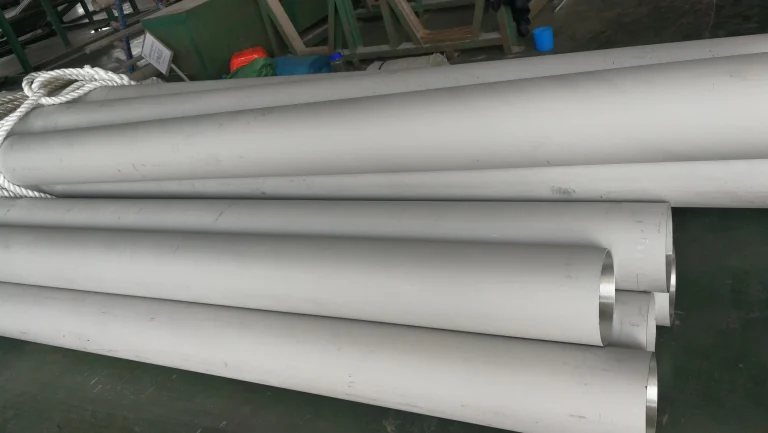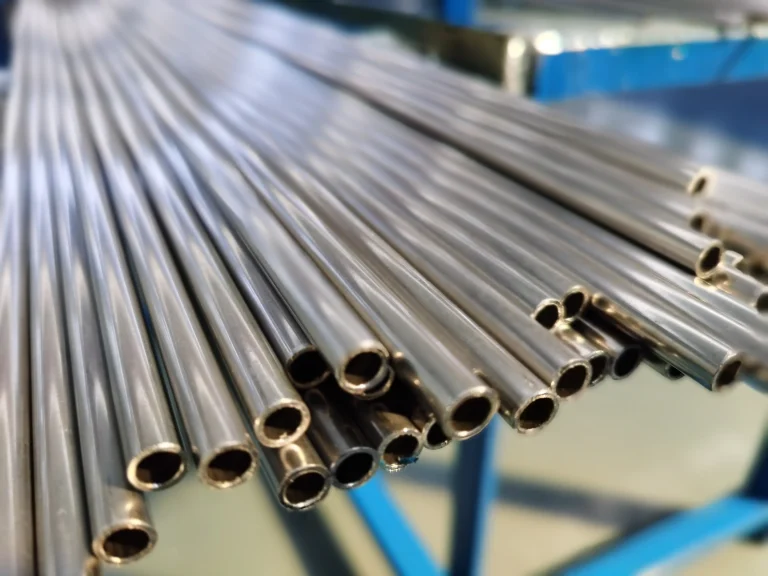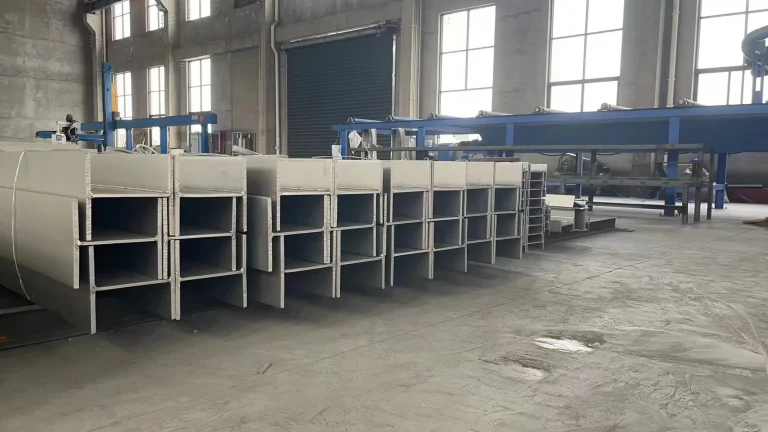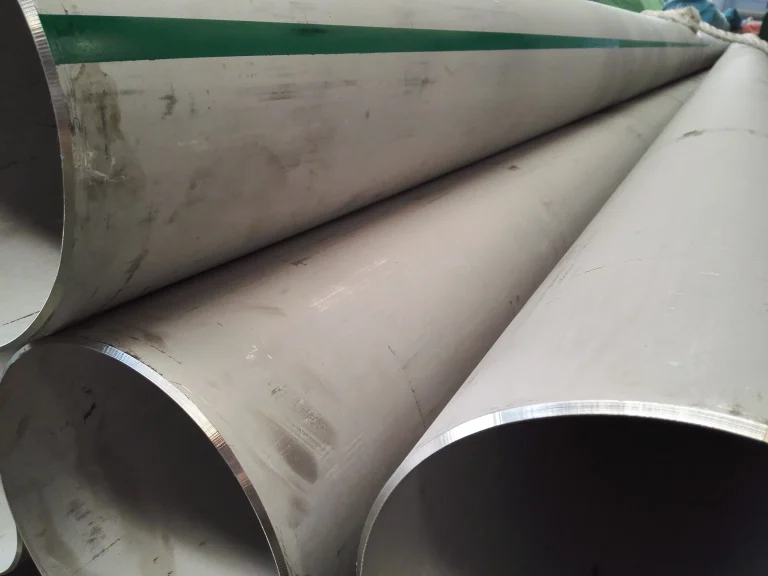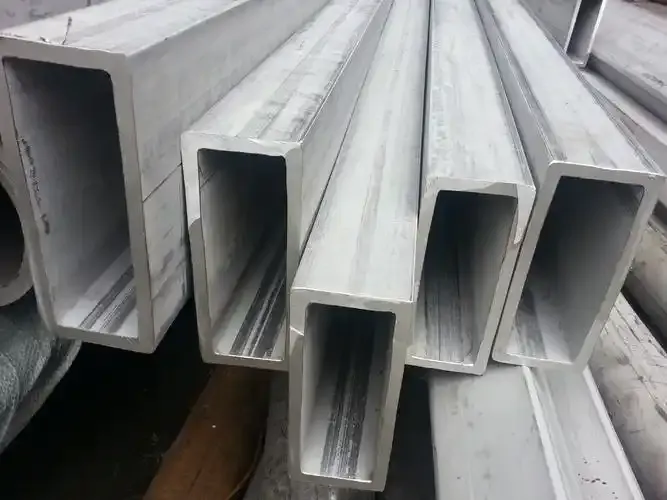
Welded Inconel 625 Pipe
All seamless tubes we produce must undergo a series of rigorous inspections,including but not limited to non-destructive testing (eddy current testing (ET),ultrasonic testing (UT),or X-ray inspection),hydrostatic pressure testing,mechanical property testing (tensile,hardness,flattening,and flaring tests),and measurement of outer diameter (OD) and wall thickness (WT) using high-precision instruments.
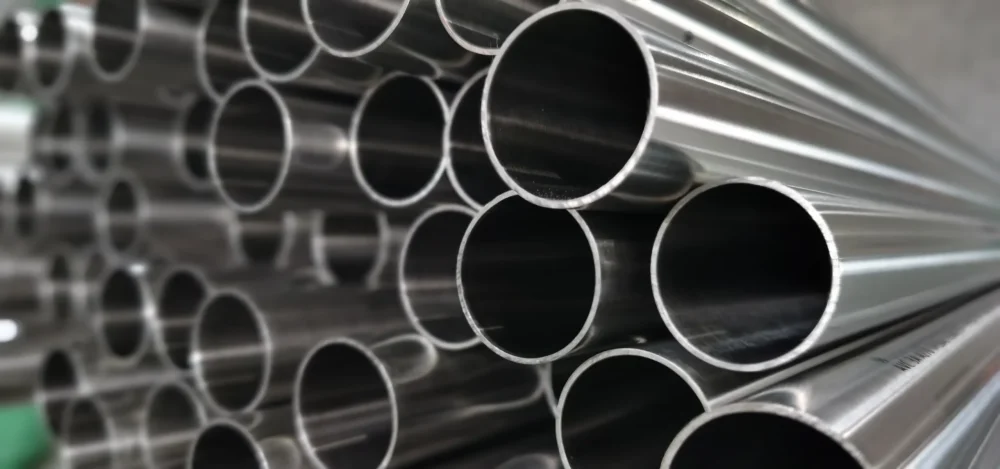
Specification of Welded Inconel 625 Pipe
| Product | Welded Inconel 625 Pipe |
| Working Temperature | Annealed:≤ 593℃(1100℉) Solution Annealed:≥ 593℃(1100℉) |
| Dimension Range | Outside Diameter (OD): 6 – 200 mm Wall Thickness (THK): 0.35 – 6 mm Length (L): 0.5 – 12 m The size can be customized according to ASME B36.10 / ASME B36.19 |
| Schedules | SCH 5, 10, 40, 80, 160, XXS, XXH |
| Materials | Inconel 625 | UNS N06625 | W.Nr. 2.4856 | DIN/EN NiCr22Mo9Nb |
| Standards | ASTM B517 / ASTM B705 / ASTM B775 / ASTM B474 |
| Surface Finish |
Annealed & Pickled Bright Annealed Polished Sandblasting |
| Corrosion Resistance Specifications |
Excellent Resistance To: Acidic Environment Pitting Corrosion Crevice Corrosion Stress Corrosion Cracking Antioxidant Properties Seawater Corrosion |
| Applications | Pharmaceuticals and Biotechnology Chemical and Petrochemical Industry Environmental Protection and Pollution Control Energy and Marine Engineering |
| Our Strength | Over 10 Years Experience Exporting Pipes & Tubings Stock Available In Common Sizes Customized Fabrication Available Package Supplying of Piping Materials Strict QC With PMI Testing For Every Batch Experience in Exporting to the US,Germany,UAE,etc. Third Party Inspection Available |
For more information on inconel 625 pipe and other products, please contact us.
Welded Inconel 625 Pipe Chemical Composition (%)
| Ni | Cr | Mo | Nb + Ta | Fe | Co |
| Balance | 20.0 – 23.0 | 8.0 – 10.0 | 3.15 – 4.15 | 5.0 Max | 1.0 Max |
| Mn | Si | Al | Ti | C | P / S |
| 0.50 Max | 0.50 Max | 0.40 Max | 0.40 Max | 0.10 Max | 0.015 Max |
Are the chemical compositions of welded pipes and seamless pipes completely identical?
Yes.Whether welded or seamless, any pipe designated as UNS N06625 must comply with the identical chemical composition ranges specified in ASTM B517 (welded) or ASTM B444 (seamless). The core proportions (Ni, Cr, Mo, Nb) remain unchanged.
Is filler metal (welding wire) required during welding?
Are there differences in its composition?
Automatic welding (e.g., TIG/Plasma welding):
Many welded tubes conforming to ASTM B517 are produced using self-fusion welding (without filler wire),with composition identical to the base material.
Filler Material Addition (e.g., EFW Tubes):
When filler wire is used,ERNiCrMo-3 is typically selected.This wire closely matches the composition of the 625 base material,sometimes with slightly increased molybdenum or niobium content to compensate for element burn-off during welding and ensure weld strength.
Welded Inconel 625 Pipe Mechanical Properties(Typical value range)
| Performance Metrics | Tensile Strength | Yield strength | Elongation | Hardness |
| Grade 1 Annealed | ≥ 827 MPa (120 ksi) | ≥ 414 MPa (60 ksi) | ≥ 30% | ≤ 22 HRC (243 HB) |
| Grade 2 Solution Annealed | ≥ 690 MPa (100 ksi) | ≥ 276 MPa (40 ksi) | ≥ 30% | ≤ 22 HRC (243 HB) |
Is the strength at the weld joint lower than that of the base material?
No.When welding processes (such as TIG or plasma welding) are performed correctly,the strength at the weld joint is typically comparable to that of the base material.During standard tensile testing, fractures often occur in the base material rather than the weld.
Does heat treatment need to be performed after welding to restore strength?
Typically not required.Due to the presence of niobium (Nb) in the 625 alloy,it maintains exceptionally high mechanical properties and corrosion resistance in the as-welded condition.This is why it is popular for field repairs and large pipeline systems.
Physical Properties of Welded Inconel 625 Pipe
Density:8.44 g/cm³ (0.305 lb/in³)
Melting Range:1290 – 1350 ℃(2350 – 2460 ℉)
Specific Heat:410 J/kg · ℃ (at 20 ℃)
Magnetic Permeability:This alloy exhibits non-magnetic properties and remains non-magnetic even in cryogenic environments.
Thermal Properties of Welded Inconel 625 Pipe
| Temperature | Thermal Conductivity(W/m·℃) | Specific heat capacity (J/kg·K) | Mean Coeff. of Thermal Expansion(μm/m·℃) |
| 20 ℃ | 9.8 | 410 | 12.8 |
| 100 °C | 10.8 | 427 | 12.8 |
| 300 °C | 12.8 | 461 | 13.3 |
| 500 °C | 14.7 | 494 | 13.7 |
| 700 °C | 16.7 | 528 | 14.8 |
| 900 °C | 18.7 | 561 | 15.8 |
Core Thermal Performance Characteristics
Low Thermal Conductivity:
Compared to stainless steel (approximately 15 W/m·K) and carbon steel (approximately 50 W/m·K),Inconel 625 exhibits lower thermal conductivity.This enables it to function as a thermal barrier in high-temperature exhaust systems,reducing heat transfer to surrounding structures.
Moderate Thermal Expansion:
Its coefficient of thermal expansion is similar to that of austenitic stainless steel.When designing large welded piping systems,linear expansion due to heating must be accounted for,typically requiring expansion joints (bellows) to absorb displacement.
Extremely High Melting point:
With a melting range of 1290–1350°C (2350–2460°F),far exceeding its typical upper operating limit (approximately 1093°C),it ensures structural integrity under extreme thermal overload conditions.
The Effect of Welding on Thermal Properties
Heat-Affected Zone (HAZ):
Although the welding process generates instantaneous extreme temperatures,Inconel 625 exhibits exceptional thermal stability.Provided welding procedures comply with standards (such as ASTM B517),the thermophysical properties of the weld zone remain highly consistent with the base material.
Thermal Stress Control:
Due to its low thermal conductivity,heat tends to accumulate at the weld during welding.Therefore,high-energy-density,low-heat-input welding methods (such as plasma welding or TIG welding) are typically employed in the production of welded tubes to prevent localized overheating that could cause grain coarsening.
Manufacturing Process for Welded Inconel 625 Pipe
The manufacturing process for welding Inconel 625 pipe (UNS N06625) is a high-precision engineering procedure designed to ensure weld integrity matches the parent material’s exceptional corrosion resistance.
Raw Material Preparation
High-quality Inconel 625 hot-rolled or cold-rolled steel coils conforming to ASTM B443 are selected.The edges of the steel coils are then mechanically milled or trimmed to ensure precise geometry during butt welding and to remove oxides and impurities,which is critical for ensuring weld quality.
Forming
Cold Forming:
Steel strip is progressively coiled into a cylindrical shape through a series of continuous forming rolls.Due to Inconel 625’s high work hardening rate,forming equipment requires greater power than that used for producing standard stainless steel.
Welding
Welded Inconel 625 pipe is typically fabricated using automatic welding methods without filler metal (compliant with ASTM B517).
TIG welding is the most commonly employed technique,producing flat,clean welds.
Plasma arc welding (PAW) offers higher energy density,making it suitable for medium-to-thick wall pipes.It enables fast welding speeds with a minimal heat-affected zone (HAZ).
Laser beam welding (LBW) is employed for thin-walled pipes requiring extreme performance,featuring extremely low heat input.
Both the inner and outer sides of the weld must be shielded with high-purity argon or helium gas to prevent oxidation of the nickel-chromium alloy at high temperatures.
Bead Working
On-line Bead Reduction flattens residual high pressure on the inner wall of the pipe through an in-line inner die or mechanical rolling,resulting in a smooth inner surface akin to seamless pipe.This is crucial for preventing fluid scaling and stress concentration.
Heat Treatment
Solution Annealing:
Welded tubing is fed into a continuous annealing furnace,heated to approximately 1038°C – 1150°C (1900°F – 2100°F),and then rapidly cooled.
The purpose is to eliminate residual welding stresses,re-dissolve precipitated phases,and restore the material’s workability and optimal corrosion resistance.
Straightening & Cutting
Use multi-roll straightening machines to ensure pipe straightness,and cut to customer-specified lengths (typically 6 meters or custom lengths).
Surface Finishing
Pickling:
Removes trace scale formed during heat treatment.
Polishing:
Performs mechanical polishing or bright annealing (BA) as required to achieve a specified surface roughness (Ra).
Testing & Inspection
Our Inconel 625 pipe undergoes a series of inspections before being shipped to you.These include,but are not limited to,eddy current testing (ET),ultrasonic testing (UT),hydrostatic testing,and dimensional inspection.
write to us
Have a Question?
Contact Us!
Should you have any questions regarding stainless steel pipes, including manufacturing processes, chemical composition or other unfamiliar matters, our staff will be happy to assist you.