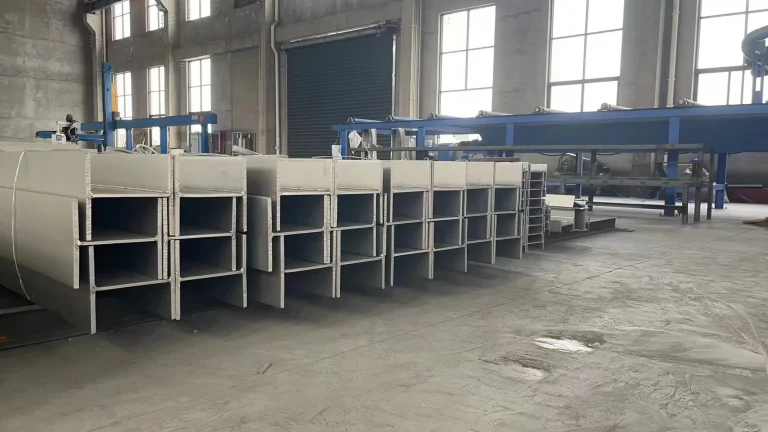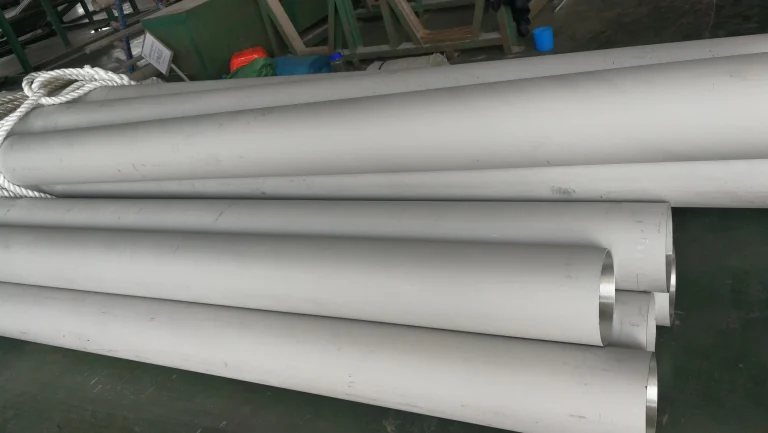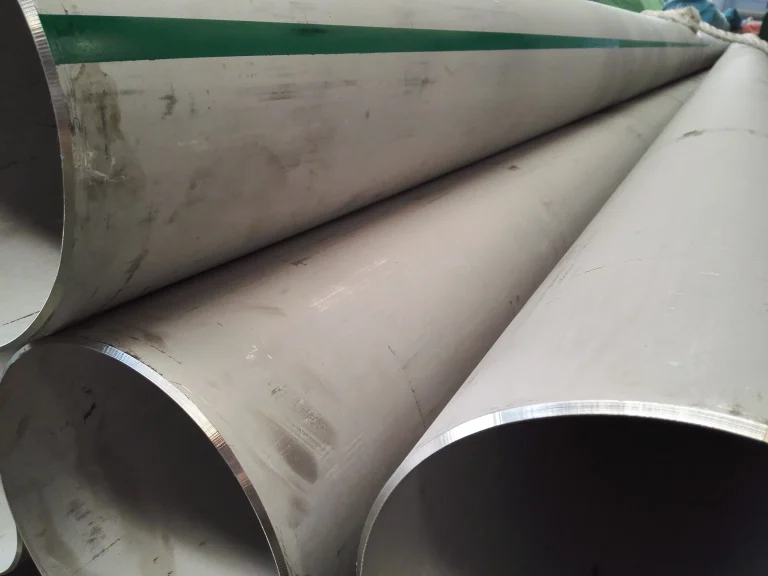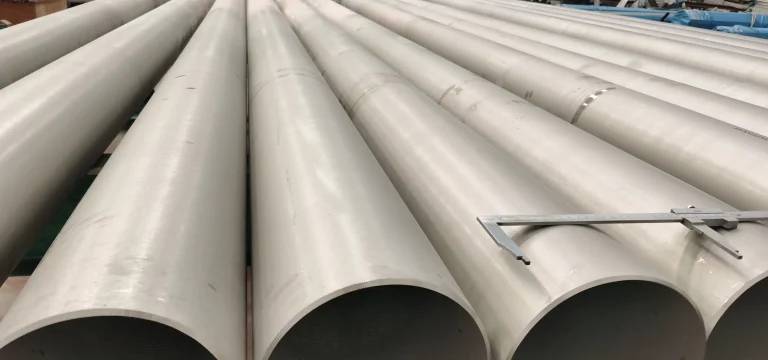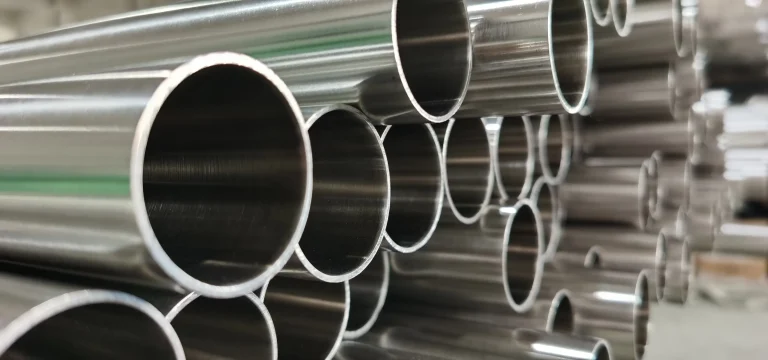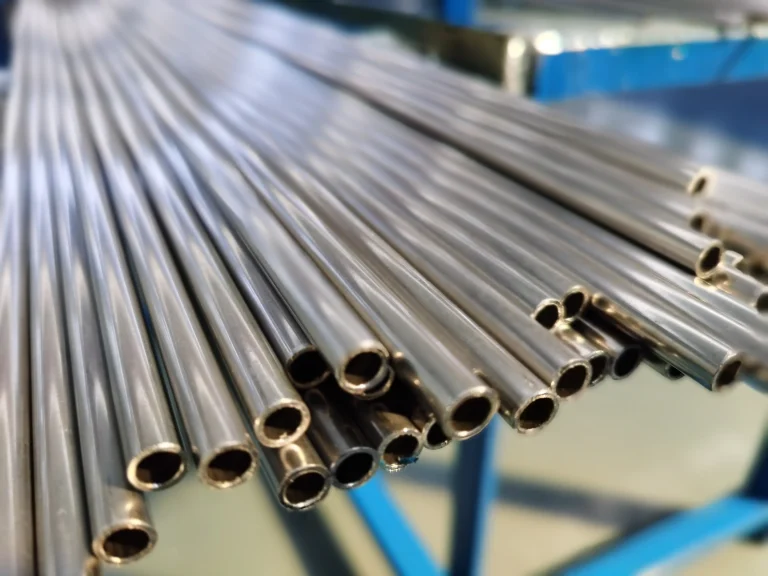
Rectangular Alloy 718 Tube
Rectangular Alloy 718 tubing is produced by machining Inconel 718,a high-performance nickel-chromium superalloy,into a rectangular cross-section.This material is highly regarded for its ability to maintain high strength and corrosion resistance across an extreme temperature range,from cryogenic conditions up to 1,300°F (704°C).
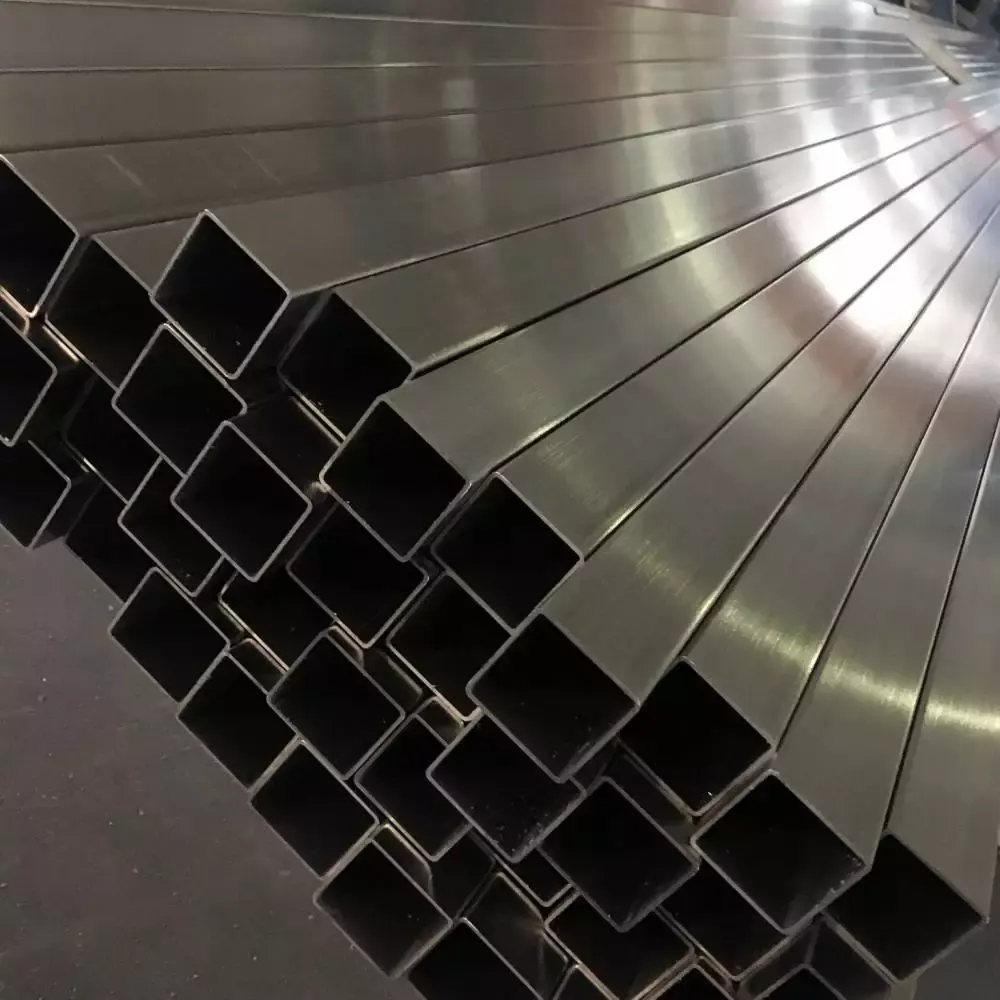
Specification of Rectangular Alloy 718 Tube
| Product | Rectangular Alloy 718 Tube |
| Working Temperature | Up to 705°C (1300°F) |
| Dimension Range | Outside Diameter (OD): 6 – 200 mm Wall Thickness (THK): 0.35 – 6 mm Length (L): 0.5 – 12 m The size can be customized according to ASME B36.10 / ASME B36.19 |
| Schedules | SCH 5, 10, 40, 80, 160, XXS, XXH |
| Materials | Inconel 718 | UNS N07718 | W.Nr. 2.4668 | DIN NiCr19Fe19Nb5Mo3 |
| Standards | ASTM B983 / ASTM B163 / ASME SB163 / ASTM B516 / ASME SB516 |
| Surface Finish |
As-Drawn / As-Rolled Bright Annealed Annealed and Pickled Descaled Polished Mirror Finish Electropolished |
| Corrosion Resistance Specifications |
Excellent Resistance To: Oxidation and Scaling Corrosion in “Sour” Environments Stress-Corrosion Cracking Creep and Stress Rupture Abrasive Wear Cryogenic Embrittlement |
| Applications | Aerospace & Defense Oil & Gas Power Generation Tooling & Manufacturing High-Performance Automotive |
| Our Strength | Over 10 Years Experience Exporting Pipes & Tubings Stock Available In Common Sizes Customized Fabrication Available Package Supplying of Piping Materials Strict QC With PMI Testing For Every Batch Experience in Exporting to the US,Germany,UAE,etc. Third Party Inspection Available |
For more information on inconel 718 pipe and other products, please contact us.
Rectangular Alloy 718 Tube Chemical Composition (%)
| Ni(+ Co) | Cr | Fe | Nb(+ Ta) | Mo | Ti | Al |
| 50.00 – 55.00 | 17.00 – 21.00 | Balance | 4.75 – 5.50 | 2.80 – 3.30 | 0.65 – 1.15 | 0.20 – 0.80 |
| Co | C | Mn | Si | P / S | B | Cu |
| 1.00 Max | 0.08 Max | 0.35 Max | 0.35 Max | 0.015 Max | 0.006 Max | 0.30 Max |
Why is the iron (Fe) content so high?
Although 718 is classified as a nickel-based alloy,it contains a significant proportion of iron.Compared to pure nickel alloys,this reduces material costs and improves its hot working properties under specific conditions,without significantly compromising high-temperature strength.
Rectangular Alloy 718 Tube Mechanical Properties(Typical value range)
| Specifications | Tensile Strength | Yield strength | Elongation | Hardness |
| Solution Annealed | 827 – 1034 MPa (120 – 150 ksi) | 414 – 621 MPa (60 – 90 ksi) | 30% – 50% | 20 – 25 HRC |
| Precipitation Hardened | 1241 – 1448 MPa (180 – 210 ksi) | 1034 – 1275 MPa (150 – 185 ksi ) | 12% – 25% | 36 – 44 HRC |
Why is age hardening so important for 718 rectangular tubing?
Age hardening can increase the yield strength of the alloy by 2 to 3 times.In the annealed condition,718 is relatively soft,making it easy to bend and form.After age hardening,its hardness can reach 36–44 HRC,and its tensile strength can exceed 180 ksi.
Do the properties of the corners (R corners)
of rectangular tubes match those of the straight sections?
The results are not entirely consistent.During the cold-drawing process,the four corners of rectangular tubes undergo significant deformation,resulting in noticeable work hardening.If full solution annealing is not performed,the hardness and strength of the corners will be slightly higher than those of the straight sections,but the elongation will decrease slightly.
Does welding reduce the mechanical properties of the pipe?
Yes,but it can be restored.The heat-affected zone (HAZ) around the weld can cause localized softening.To achieve optimal mechanical properties,it is generally recommended to subject the entire rectangular tube to a re-solution treatment followed by aging after welding to ensure that the weld strength matches that of the base material.
Physical Properties of Rectangular Alloy 718 Tube
Density:8.19 g/cm³ (0.296 lb/in³)
Melting Range:1260°C – 1336°C (2300°F – 2437°F)
Specific Heat:0.104 Btu/lb · ℉(70℉)
Poisson’s Ratio:0.29 to 0.30
Magnetic Permeability:Non-magnetic
Thermal Properties of Rectangular Alloy 718 Tube
| Temperature | Mean CTE | Thermal Conductivity | Modulus |
| 21°C (70°F) | 13.0 μm/m·℃ | 11.4 W/m·K | 200 GPa(29.0 Msi) |
| 427°C (800°F) | 14.2 μm/m·℃ | 17.5 W/m·K | 181 GPa(26.3 Msi) |
| 649°C (1200°F) | 15.1 μm/m·℃ | 21.1 W/m·K | 166 GPa(24.1 Msi) |
| 871°C (1600°F) | 16.0 μm/m·℃ | 25.2 W/m·K | 148 GPa(21.4 Msi) |
Manufacturing Process for Rectangular Alloy 718 Tube
The manufacturing process for rectangular alloy 718 tube is significantly more complex than standard stainless steel due to the material’s extreme work-hardening rates and high temperature strength.
Starting Material
This process begins with high-quality round tubes,which are primarily produced using two methods.
Seamless Tubes:
Manufactured using hot extrusion or rotary piercing processes.Because they have no weld seams,this process is better suited for high-pressure applications.
Welded and drawn (W&D) Tubes:
Formed from flat strips,welded using GTAW (TIG) or laser welding,and then cold-drawn to homogenize the weld zone.
Shaping
Cold Drawing:
The tube is drawn through a series of rectangular carbide dies.A mandrel is typically used to maintain precise wall thickness and inner diameter.
Turkish Head Rolling:
The round tube passes through a set of four adjustable rollers (arranged in a cross pattern),which gradually squeeze the tube into a rectangular shape.This method offers greater flexibility in terms of custom sizing.
Intermediate Annealing (Stress Relieving)
Alloy 718 hardens rapidly during forming.If the material becomes too brittle,it will crack.
Solution Annealing:
The tubing is heated to 954–1066°C (1750–1950°F) in a vacuum furnace or hydrogen-atmosphere furnace,followed by rapid quenching.This process “resets” the grain structure,softening the metal sufficiently to allow for subsequent forming operations.
Precision Finishing
Straightening:
Rectangular tubes naturally tend to twist during cooling;multi-axis straighteners are used to ensure “dead straight” lengths.
Pickling & Passivation:
Chemical baths remove surface oxides (scale) to restore the alloy’s natural corrosion resistance.
Cutting:
Precise abrasive sawing or laser cutting to the required lengths.
Precipitation Hardening
This is the key step in imparting “superior” properties to the 718 alloy.The “soft” tube is heat-treated to promote the formation of strengthening phases.
Standard Cycle:
Heated to 1325℉(718℃) for 8 hours,furnace cooled to 1150℉ (621℃),and held for another 8 hours.
Result:
The tensile strength jumps from ~120 ksi to over 180 ksi.
Quality Control & Testing (NDT)
Eddy Current/Ultrasonic Testing:
Used to detect micro-cracks,particularly at fillet radii (R corners) where stress is highest.
Dimensional Inspection:
A Coordinate Measuring Machine (CMM) is used to verify “flatness,”“perpendicularity,” and “fillet radius.”
Hydrostatic Testing:
Ensures that the pipe can withstand extremely high internal pressure without leaking.
write to us
Have a Question?
Contact Us!
Should you have any questions regarding stainless steel pipes, including manufacturing processes, chemical composition or other unfamiliar matters, our staff will be happy to assist you.