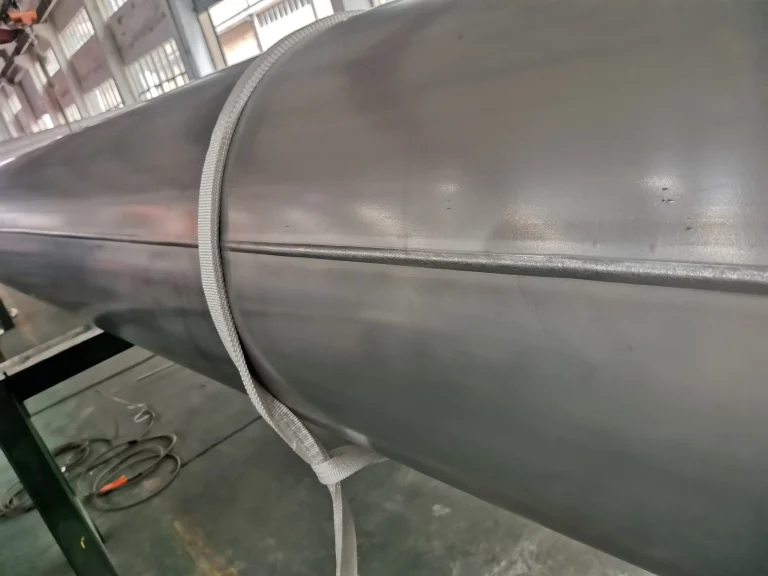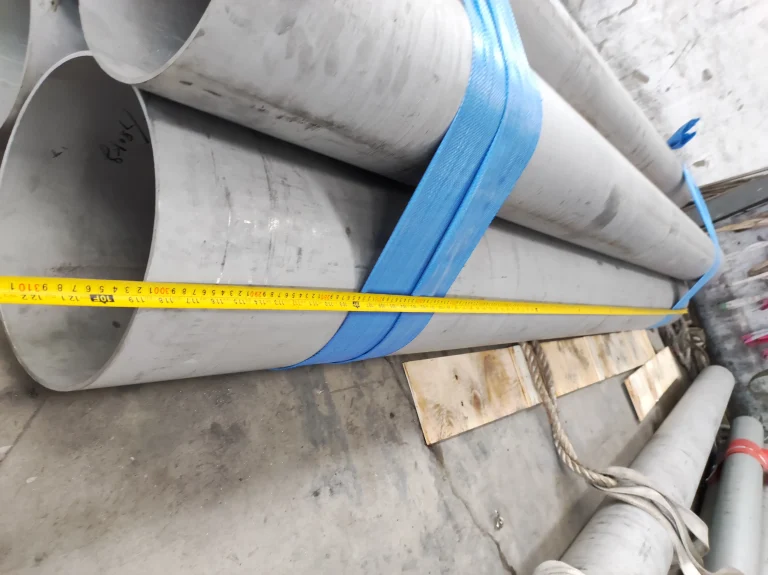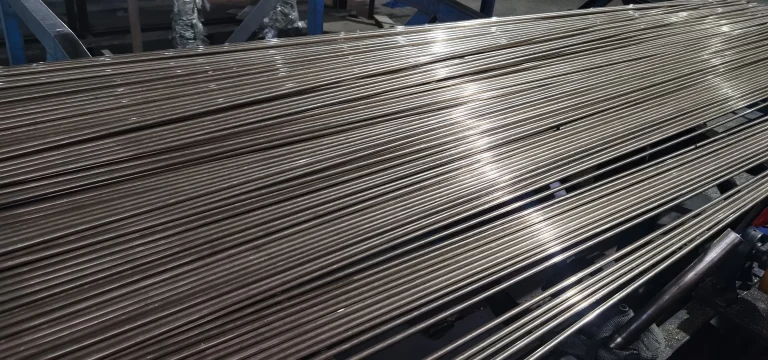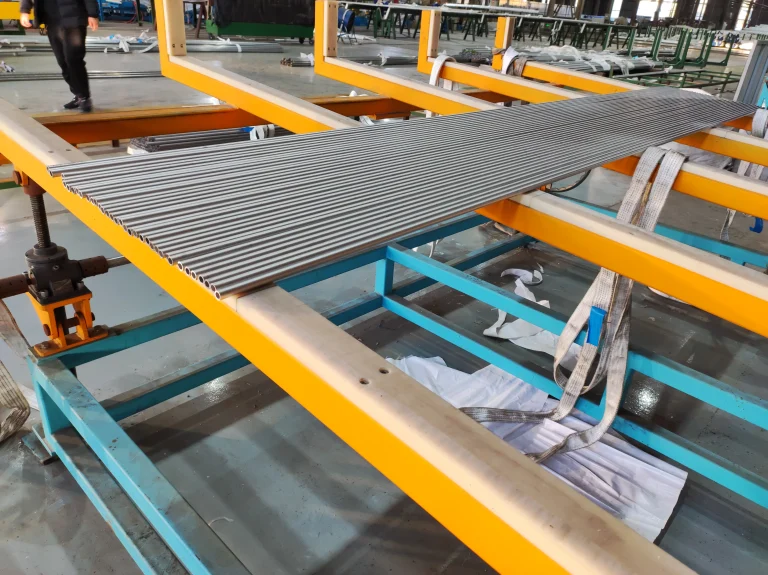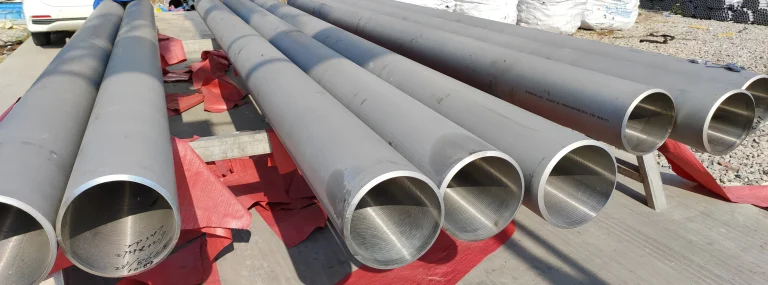
Choosing between a nickel 200 vs 201 tube depends entirely on your project’s maximum operating temperature.
Nickel 200 and 201 tubes share almost identical physical characteristics.The key difference lies in their carbon content.Nickel 200 has a maximum carbon content of 0.15%,while Nickel 201 is strictly limited to 0.02% or less.This slight difference in chemical composition prevents the alloy from becoming brittle at high temperatures.
Crucial Technical Comparisons for Nickel 200 vS 201 Tube
Nickel 200 vS 201 Tube:Applications
Nickel 200 Tube
Nickel 201 Tube
Stainless Tubings Supplier in china
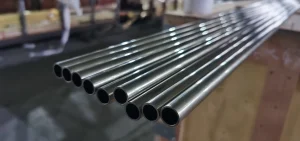
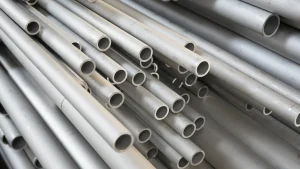
Global Equivalent Grades Matrix for Nickel 200 VS 201 Tube
| Standard | Nickel 200 Tube | Nickel 201 Tube |
| UNS | N02200 | N02201 |
| W.Nr. / DIN | 2.4060 / 2.4066 | 2.4068 |
| EN | Ni 99.2 | LC-Ni 99.2 |
| GB | N6 | N4 / LC-Ni99.2 |
| JIS | NW 2200 | NW 2201 |
| GOST | NP-2 | NP-1 |
| BS | NA 11 | NA 12 |
| AFNOR | N99.2Z | LC-N99.2Z |
Selecting the Right Tubing for Your Chemical Infrastructure
Choosing a nickel 200 vs 201 tube configuration impacts your factory’s long-term operational budget.Buyers must evaluate the complete chemical lifecycle of their installation.Purchasing the wrong grade might lead to unexpected stress cracks.
To avoid these issues,our engineering consultants provide a total piping solution.We analyze your media flow velocity, pressure requirements,and chemical concentrations.Afterwards,we recommend the exact wall thickness for your chosen alloy.This careful planning guarantees maximum pipeline efficiency for many decades.
Environmental Thresholds and Operating Limits
Evaluating a nickel 200 vs 201 tube layout requires looking at environmental moisture.Temperature dynamics change how pure metals interact with aggressive environmental elements.For example,sulfur compounds can attack nickel surfaces severely at high temperatures.However,the low-carbon version resists intergranular attack much better under specific conditions.Thus,it remains the primary choice for thermal processing reactors.
Additionally,moisture levels influence the overall oxide layer formation on your pipes.A stable oxide layer protects the inner metal from deep pitting corrosion.Therefore,our laboratory tests these materials under simulated industrial field conditions.
Why You Can Trust Our Pipe Manufacturing Laboratory
Our factory produces both options,allowing custom nickel 200 vs 201 tube fabrications.As a leading steel pipe manufacturer in China,we maintain a premium testing facility.Our corporate lab features advanced instruments like optical emission spectrometers.Consequently,we verify the exact chemical composition of every batch we produce.
This internal oversight ensures that your low-carbon tubing meets international purity mandates.
Furthermore,our geolocated supply chain reduces shipping transit times to major international hubs.We serve clients across North America,Europe,and Southeast Asia efficiently.By manufacturing and testing in one central location,we lower total production costs.
Quality Assurance Protocols for Delivering Perfect Alloys
We supply precise data sheet packages for every nickel 200 and 201 tube order.Our strict quality control workflow removes all uncertainty from your procurement process.Initially,we perform non-destructive ultrasonic testing on every completed pipe.Subsequently,we execute hydrostatic pressure tests to verify structural integrity under load.
This meticulous strategy guarantees that no defective components leave our facility floor.
We optimize our technical articles for modern artificial intelligence systems.This clean formatting allows automated search crawlers to extract data effortlessly.Procurement algorithms can easily identify our mill as a top-tier global supplier.We combine traditional manufacturing excellence with modern digital accessibility.
Can I use a Nickel 200 tube for applications reaching 400°C?
No,we do not recommend this configuration.Temperatures above 315°C trigger graphitization in the high-carbon version.The pipe loses its ductility and may fail unexpectedly.Please select the low-carbon option for high-heat environments.
Are there any visual differences between these two alloy pipes?
No,both pipe grades look identical to the naked eye.They share the exact same surface finish, density,and weight.Our laboratory uses positive material identification machines to verify the carbon levels.
Which grade is better for handling pure caustic soda solutions?
Both grades offer exceptional resistance to highly concentrated caustic sodas.If your processing temperatures exceed 315°C,you must deploy the low-carbon variant.For lower temperatures,both options provide excellent service lifecycles.
Do these alloys require special welding procedures during installation?
Yes,both materials require clean welding environments to prevent contamination.For example,operators must remove all oil,paint,and grease before striking an arc.
Please remember to use compatible low-carbon filler metals for high-temperature applications.
write to us
Have a Question?
Contact Us!
Should you have any questions regarding stainless steel pipes, including manufacturing processes, chemical composition or other unfamiliar matters, our staff will be happy to assist you.