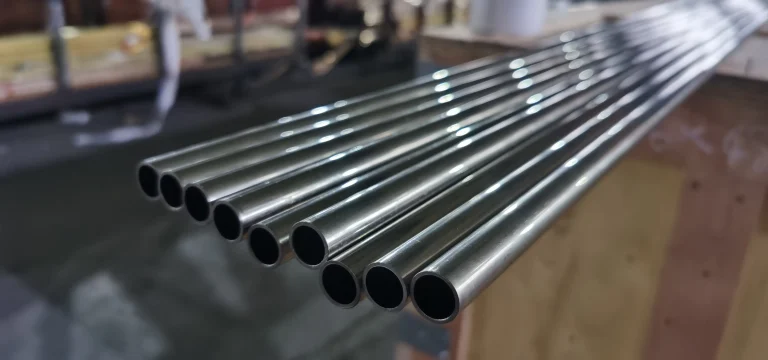
Superalloys are high-performance metallic materials designed to withstand extreme mechanical stress and chemical degradation at elevated temperatures,often operating near their melting points.
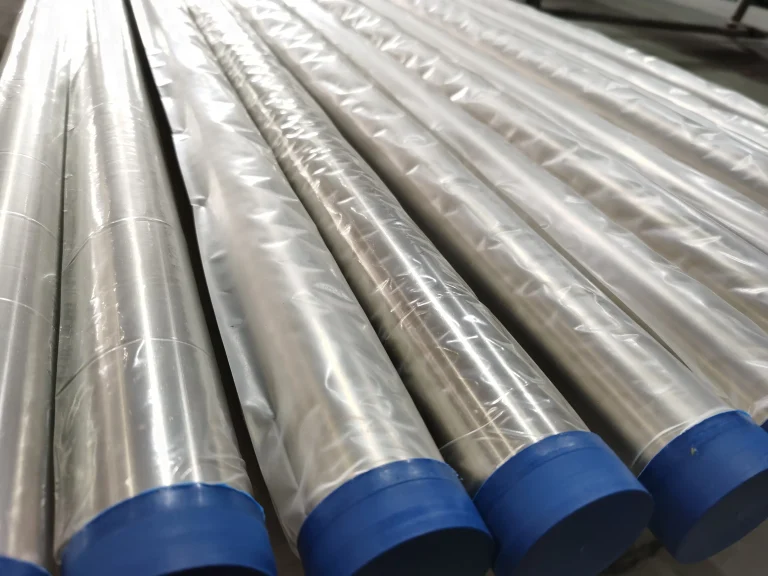
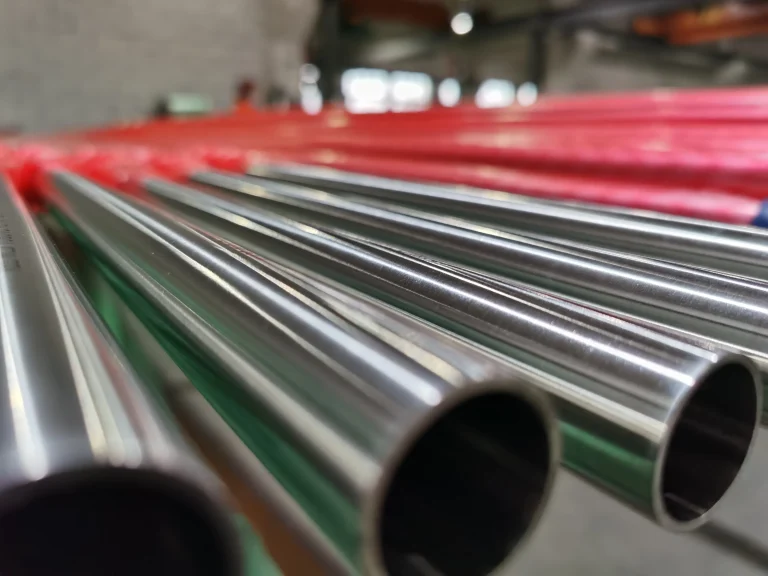
When manufactured into superalloy pipes,these materials provide a robust,leak-proof conduit for moving highly corrosive liquids and gases under immense pressure and heat where standard stainless steel pipes would burst or collapse.
Core Classifications & Types of Superalloys
Key Applications of Superalloy Pipes
Stainless Tubings Supplier in china
Why Superalloys Are Unique
- The Anomalous Yield Strength:
Ordinary metals typically become softer when heated.Nickel-based superalloys,however,have a unique atomic structure in which their yield strength actually increases as the temperature rises,peaking at around 700°C to 800°C before gradually decreasing. - Microscopic Barrier Phase:
The matrix of superalloys consists of a tough,ductile nickel,cobalt,or iron base.The precipitation phases are perfectly ordered geometric lattices composed of aluminum and titanium atoms.These γ’ precipitation phases act like atomic roadblocks.When stress is applied,dislocations encounter these roadblocks and are unable to move,effectively locking the crystal structure in place,even at high temperatures. - Unmatched Creep Resistance:
Thanks to a special formulation,the superalloy can resist creep for tens of thousands of hours under the combined effects of centrifugal force and high temperatures. - Self-Healing Protective Oxide Scales:
When exposed to extreme temperatures and oxygen,chromium and aluminum form a layer of chromium oxide or aluminum oxide on their surfaces.This oxide layer acts as a permanent protective barrier,preventing oxygen and corrosive gases from penetrating further into the metal.
Superalloy Hastelloy Pipe
Hastelloy is renowned for its exceptional corrosion resistance.Thanks to the synergistic effect of its high molybdenum and chromium content,it can withstand strong reducing acids and strong oxidizing salts.It also maintains high strength and excellent resistance to pitting corrosion at high temperatures.
Hastelloy pipes are primarily used in core pipelines for the transport of highly toxic substances and strong acids in the chemical,petrochemical,and environmental protection industries.For example,chemical plants must use Hastelloy C276 pipes to transport boiling hydrochloric acid or wet chlorine gas,as ordinary stainless steel would be corroded through within a matter of hours.
Superalloy Inconel Pipe
Inconel is the “all-rounder” among superalloys.It retains its oxidation resistance,creep strength,and tensile strength even at extremely high temperatures.
Inconel pipe is commonly used as a fluid conduit in environments where extreme high temperatures and high pressures coexist.Typical applications include high-pressure fuel lines in aerospace rockets,heat transfer tubes in steam generators for nuclear pressurized water reactors,and high-performance automotive exhaust manifolds,as it can withstand frequent thermal cycling without cracking.
Superalloy Monel Pipe
Monel is a unique nickel-copper alloy.It offers superior corrosion resistance in marine environments and fluorochemical applications.
Monel pipes are widely used in marine engineering and environments with heavy salt fog.Examples include seawater circulation cooling lines on offshore drilling platforms,seawater piping systems on submarines,and core transport pipelines in alkylation units at refineries.
Superalloy Incoloy Pipe
Incoloy is a ferronickel-based alloy.It features a higher iron content and a lower nickel content,which allows it to offer the excellent high-temperature oxidation and carburization resistance typical of superalloys while being more cost-effective than Inconel and easier to machine and weld.
Incoloy pipe is commonly used in large-diameter,long-distance high-temperature industrial piping systems.It is most frequently found in ethylene cracking furnace tubes in the petrochemical industry,reheater tubes in industrial boilers, and heating tube bundles for chemical products,offering an ideal balance between cost and high-temperature durability.
Do these three grades use different welding filler metals?
No,they generally use the same welding consumables.The most common filler metals are Inconel Filler Metal 82 (ERNiCr-3) for TIG welding or Inconel Welding Electrode 182 (ENiCrFe-3) for stick welding.
For maximum creep-rupture strength matching Alloy 800HT in extreme environments, specialized matching filler metals like Inco-Weld A or Alloy 617 fillers are preferred.
Is Post-Weld Heat Treatment required for 800H/800HT pipes?
It depends on the application,but it is highly recommended for heavy-wall or highly stressed pipes.If the pipe undergoes severe cold forming (over 5% strain) or extensive welding,a full solution anneal at ≥1,149°C (2,100°F) is required to restore the coarse-grain microstructure and prevent stress-relaxation cracking during service.
Is there a significant price difference between 800, 800H, and 800HT pipes?
The raw material base cost is very similar because the primary alloy elements (Nickel, Iron, Chromium) are identical.However,800H and 800HT are slightly more expensive due to the higher energy costs of the high-temperature solution-annealing process and the strict quality controls needed to verify grain size and chemical compliance.
write to us
Have a Question?
Contact Us!
Should you have any questions regarding stainless steel pipes, including manufacturing processes, chemical composition or other unfamiliar matters, our staff will be happy to assist you.