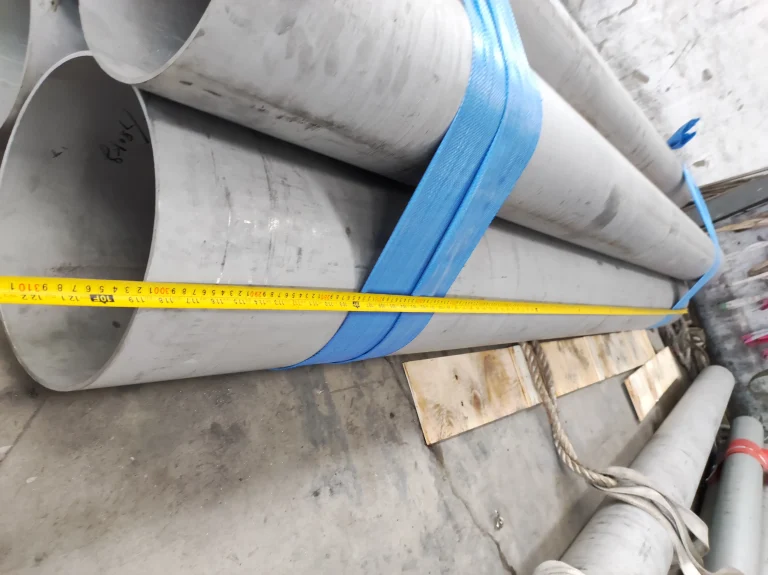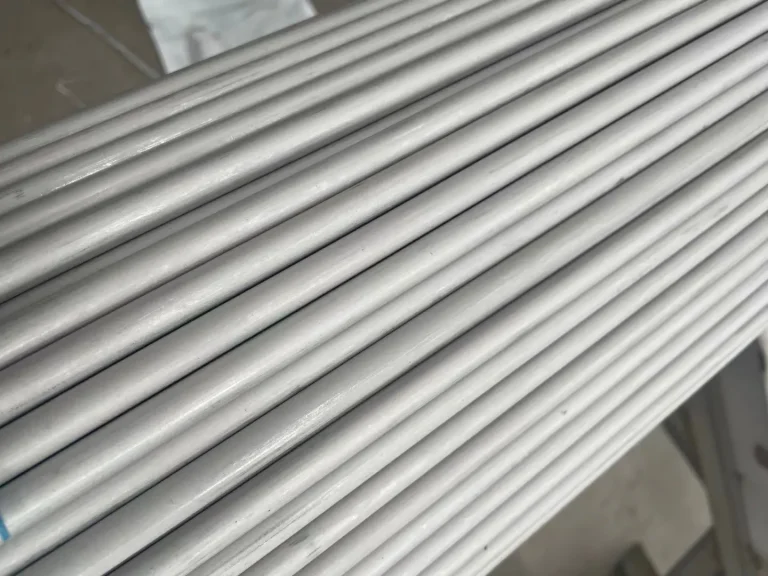
How To Weld Hastelloy C276 Pipe?
Some of our customers sometimes ask us how to weld Hastelloy C276 pipes.Welding Hastelloy C276 pipe requires meticulous cleanliness,strict heat input control,and complete atmospheric purging to preserve its exceptional corrosion resistance.Because nickel alloys behave differently than stainless steel, the molten weld pool is notoriously sluggish,meaning the metal will not flow or wet out as easily.
Methods for Welding Hastelloy C276 Pipes
The primary industrial methods for welding Hastelloy C276 pipes are GTAW (TIG), GMAW (MIG),and SMAW (Stick). Because this nickel-chromium-molybdenum alloy has a sluggish molten puddle, specific configurations are required for each method.Manual TIG is overwhelmingly preferred for pipe root passes to ensure maximum quality and penetration control.
Stainless Tubings Supplier in china
Points to Note When Welding Hastelloy C276 Pipes
Pre-Weld Joint Preparation
- Sanding and Grinding:
Clean the pipe ends and the adjacent area 2 inches back on each side using dedicated,labeled stainless steel wire brushes or clean grinding wheels. - Chemical Degreasing:
Wipe the joint surfaces thoroughly with a solvent like acetone to remove all traces of oil,grease,or dirt before striking an arc. - Bevel Design:
For standard weight pipe walls,use a standard V-bevel joint design with a slightly wider root opening than you would use for stainless steel to compensate for the sluggish puddle behavior.
Shielding and Purging Gas Setup
- Torch Shielding:
Use high-purity (99.99%) 100% Argon or 100% Helium for torch shielding gas.
Helium can be substituted for deeper arc penetration and cleaner oxide removal. - Back Purging:
You must back purge the inside of the pipe with 100% Argon before starting the root pass.
Cap off the pipe ends,tape the root opening shut,and purge until all oxygen is displaced.
Keep the purge active during the root and hot passes to prevent the backside from oxidizing.
Filler Metal Selection
- Matching Composition:
Use ERNiCrMo-4 filler wire for TIG/MIG welding Hastelloy C276 to itself.
If using Shielded Metal Arc Welding (Stick/SMAW),use ENiCrMo-4 coated electrodes. - Dissimilar Joints:
If welding Hastelloy C276 to 316 stainless steel or carbon steel,ERNiCrMo-4 remains the proper choice to avoid dilution cracks and manage thermal expansion mismatches.
Do not use standard stainless filler wires.
Thermal and Parameters Control
- Preheating:
Do not preheat the pipe; the material should be welded at ambient temperature. - Low Heat Input:
Keep current low and travel speed high.Run straight stringer beads with minimal weave to avoid over-heating the metal. - Interpass Temperature:
Maintain a strict interpass temperature of 200°F (93°C) or lower.Allow the pipe to cool naturally between passes. - Pulse TIG:
Implementing a pulsed GTAW setup is highly recommended to manage heat while keeping the sluggish puddle moving.
Post-Weld Treatment
- Stress Relieving:
Standard post-weld stress-relief heat treatment in the 1200°F (650°C) range is strongly discouraged and harmful for Hastelloy C276 because it ruins the alloy’s microstructure. - Solution Annealing:
In heavy industrial or highly corrosive code applications where heat treatment is legally mandatory,a full solution heat treatment must be done at 2050°F (1121°C),immediately followed by a rapid water quench. - Cleaning Oxide Layers:
Carefully brush away any surface oxide scale (heat tint) using a clean stainless steel wire brush to keep the chromium content intact at the surface.
How do I prevent hot cracking and lack of fusion when I Weld Hastelloy C276 Pipe?
Use a current-slope-out function to fill craters and avoid abrupt arc terminations.
Run flat stringer beads and never weave wider than twice the filler wire diameter to overcome puddle sluggishness.
What are the critical oxygen level limits required for back-purging when Welding Hastelloy C276 Pipe?
Use a digital ppm analyzer to ensure internal oxygen drops below 50 ppm before striking an arc.Maintain this argon purge through the root pass and the first two filler layers.
What special tooling and material handling taboos must be enforced to successfully Weld Hastelloy C276 Pipe?
Line all clamps and rollers with stainless steel or rubber to prevent iron contamination.Never strike an arc outside the bevel,and completely grind out any defective tack welds.
What NDT methods are required for quality assurance after welding Hastelloy C276 Pipe?
Perform liquid dye penetrant testing on the root pass and the final cap weld.Conduct 100% X-ray inspection to catch subsurface lack of fusion on high-pressure lines.
write to us
Have a Question?
Contact Us!
Should you have any questions regarding stainless steel pipes, including manufacturing processes, chemical composition or other unfamiliar matters, our staff will be happy to assist you.