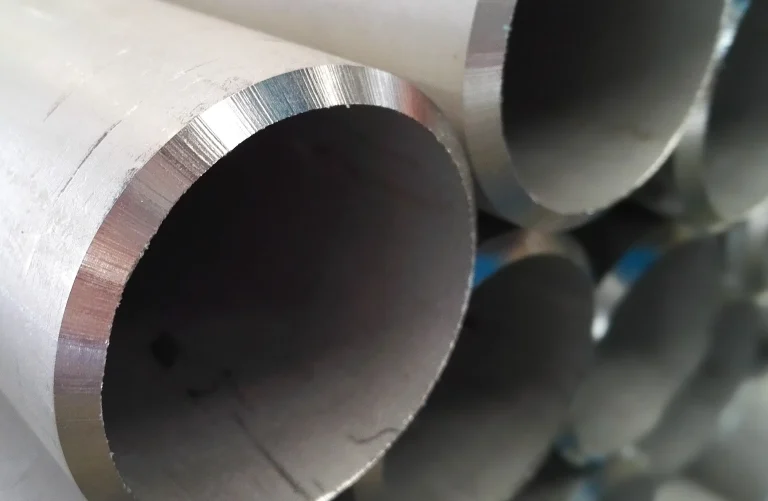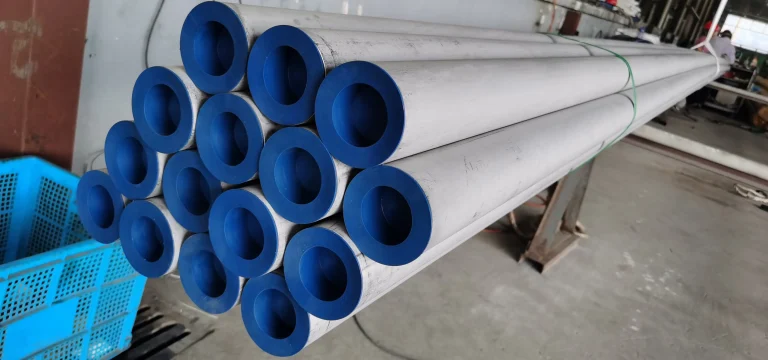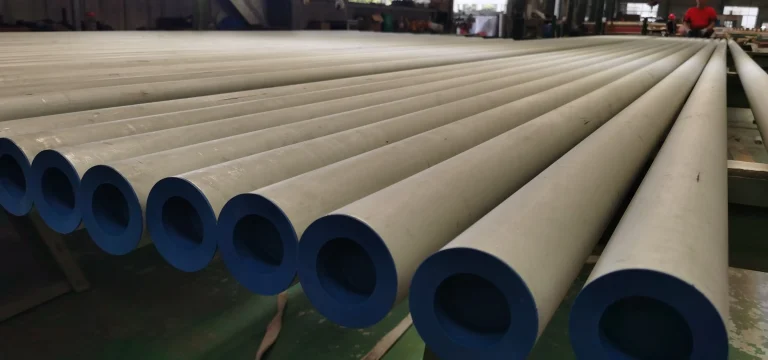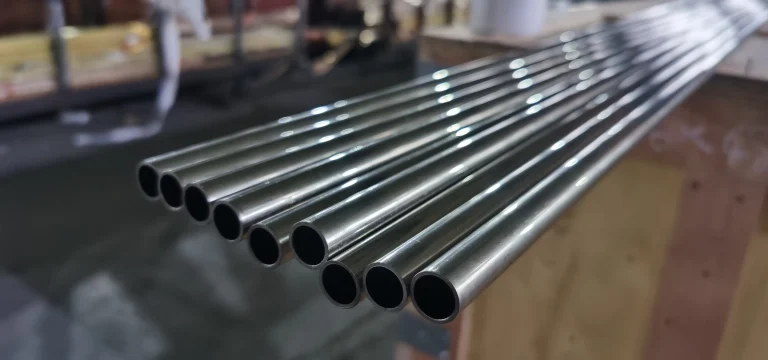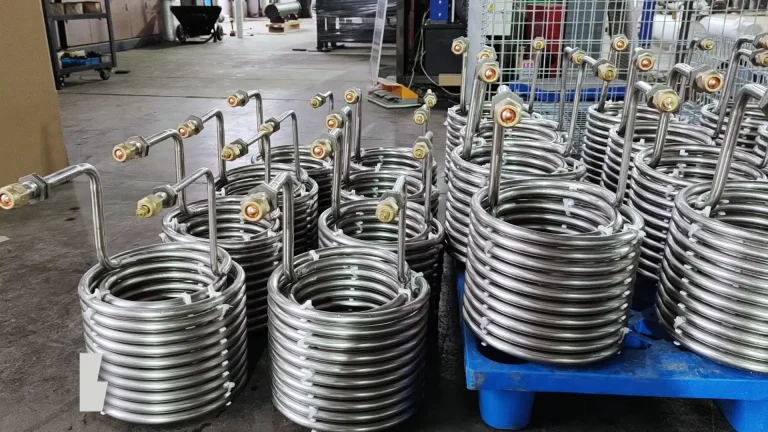
Seamless Hastelloy C276 Pipe
We are a professional Hastelloy C276 seamless pipe supplier,offering ASTM B622 UNS N10276 pipes for chemical processing,oil & gas and high-corrosion environments.
Hastelloy C-276 (UNS N10276) is a nickel-molybdenum-chromium superalloy with tungsten,known for exceptional corrosion resistance in both oxidizing and reducing environments.
We manufacture seamless hastelloy C276 pipes to ASTM B622 specifications by default.Pipe tolerances are strictly controlled according to ASTM B829 standards.All seamless hastelloy C276 pipes undergo rigorous solution annealing and hydrostatic testing.For surface finishing,pickling is our standard treatment.Polished surfaces can be customized upon request.
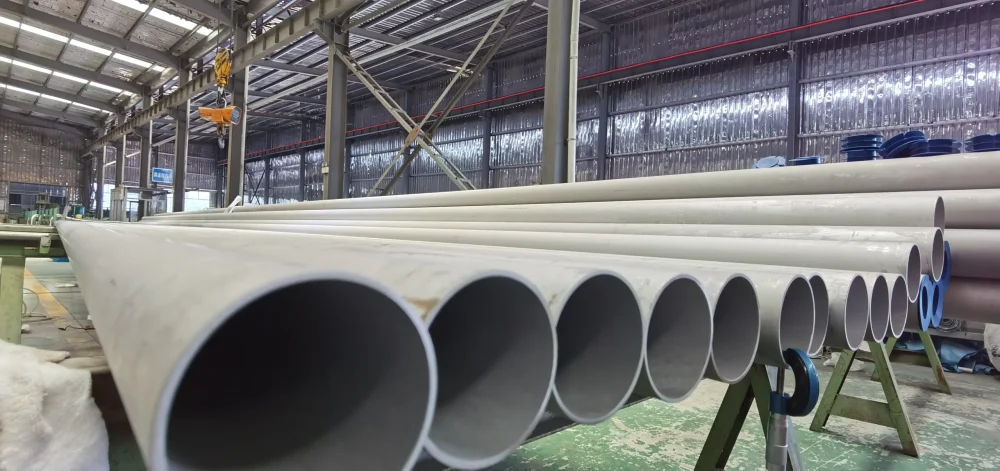
Specification of Seamless Hastelloy C276 Pipe
| Product | Seamless Hastelloy C276 Pipe |
| Working Temperature | -455℉ To 1800℉ | -271℃ To 982℃ Up to 1900℉ (1038℃) in Less Severe Oxidizing Conditions |
| Dimension Range | Outside Diameter (OD): 3 – 600 mm Wall Thickness (THK): 0.5 – 30 mm Length (L): 0.5 – 12 m The size can be customized according to ASME B36.10 / ASME B36.19 |
| Schedules | SCH 5, 10, 40, 80, 160, XXS, XXH |
| Materials | Hastelloy C276 | UNS N10276 | W.Nr.2.4819 | DIN/EN 2.4606 |
| Standards | ASTM B622 / ASME SB622: For Seamless Pipes And Tubes. |
| Manufacturing Process | Cold Drawn Cold Rolled |
| Surface Finish |
Standard Industrial Finishes: Pickled / AP Bright Annealed / BA Mechanical & Polished Finishes: Polished No.4 (Brushed/Satin Finish), No.8 (8K Mirror Finish) Electropolished / EP Specialty Conditions: Cold Drawn / Cold Rolled Sand Blasted |
| Corrosion Resistance Specifications |
Excellent Resistance To: Pitting Corrosion Crevice Corrosion Stress Corrosion Cracking Oxidizing And Reducing Acids Wet Chlorine Gas Sulfuric Acid And Hydrochloric Acid Environments |
| Applications | Chemical & Petrochemical Processing:Acid Treatment System , Reactor and Heat Exchanger Oil & Gas Industry:Sour Gas Service , Offshore Engineering Pollution Control:Flue Gas Desulfurization System , Waste Disposal Power Generation:Components of Superconducting Equipment , Boiler Components Pharmaceutical & High Purity:Sanitary Grade Systems Pulp and Paper:Bleaching System , Steamer Seawater Desalination:High-salinity Heat Exchange Pipeline |
| Our Strength | Over 10 Years Experience Exporting Pipes & Tubings Stock Available In Common Sizes Customized Fabrication Available Package Supplying of Piping Materials Strict QC With PMI Testing For Every Batch Experience in Exporting to the US,Germany,UAE,etc. Third Party Inspection Available |
For more information on seamless Hastelloy C276 pipes and other products, please contact us.
Seamless Hastelloy C276 Pipe Surface Finishes
| Surface Name | Processing Technology | Visual Appearance | Typical Ra value |
| Pickled (AP) | Solution Annealing + Acid Pickling | Matte Silver-gray | 1.6 – 3.2 µm |
| Bright Annealed (BA) | Protective Atmosphere Annealing | Bright White / Mirror Finish | 0.4 – 1.0 µm |
| Polished | Mechanical Abrasive Polishing | Reflected Gloss | ≤ 0.4 µm |
| Electropolished (EP) | Electrochemical Polishing | Ultra-Bright Mirror Finish | ≤ 0.1 µm |
Chemical Composition (%)
| Ni | Cr | Fe | Mo | W | Co |
| Balance | 14.5 – 16.5 | 4 – 7 | 15 – 17 | 3 – 4.5 | ≤ 2.5 |
| C | Mn | Si | S | P | V |
| ≤ 0.01 | ≤ 1 | ≤ 0.08 | ≤ 0.03 | ≤ 0.04 | ≤ 0.35 |
Mechanical Properties
| Tensile Strength | Yield strength | Elongation | Hardness |
| ~ 690 – 790 MPa | ~ 283 – 355 MPa | ≥ 40 % | ≤ 90 – 95 HRB |
Physical Properties
| Property | Value |
| Density | 8.89 g/cm3 | 0.321 lb/in3 |
| Melting Range | 1323 – 1371℃ | 2415 – 2500℉ |
| Elastic Modulus | 205 GPa | 29.8 x 10³ ksi |
| Poisson’s Ratio | 0.307 |
| Magnetic Permeability | ≤ 1.0002 |
For more information on welded hastelloy C276 pipes and other products, please contact us.
Manufacturing Process for Seamless Hastelloy C276 Pipe
To help you produce high-quality Hastelloy C-276 seamless steel pipes,we strictly adhere to the standards during manufacturing.
Billet Preparation
Smelting:
Initial smelting is performed in an electric arc furnace (EAF), followed by mandatory vacuum oxygen decarburization (VOD) or electroslag remelting (ESR) to ensure extremely low carbon content (≤0.01%) and silicon content.This is critical for preventing intergranular corrosion at welds and during service.
Cutting and Heating:
Round tube billets are cut to length and heated in a controlled atmosphere furnace to a starting forging/rolling temperature between 1100°C and 1230°C.
Hot Piercing
Hot Oblique Rolling Piercing:
Heating round steel bars and rolling them through a piercing machine to form thick-walled hollows.
Challenge:
C276 exhibits high thermal deformation resistance.Piercing requires strict control of speed and pressure to prevent cracking or folding on the inner hole surface.
Cold Working
Cold Drawing:
Reducing the diameter of a tube blank by drawing it through a die.This process achieves extremely high surface finish and dimensional tolerances.
Cold Pilgering:
Periodic cold rolling using a pilger mill.For C276,cold pilgering is preferable to cold drawing because it achieves a greater reduction ratio and produces a more uniform wall structure,effectively breaking down coarse grains.
Solution Annealing
Temperature Control:
Heat to between 1121°C (2050°F) and 1149°C (2100°F).
Rapid Cooling:
Must be rapidly cooled in a hydrogen-protected or water-quenching environment.If cooled too slowly,μ phase or σ phase (intermetallic compounds) precipitation may occur,significantly reducing corrosion resistance.
Pickling & Surface Treatment
Pickling:
A mixture of nitric acid (HNO3) and hydrofluoric acid (HF) is used to remove scale formed during annealing.
Passivation:
The pickling process simultaneously forms a dense, chromium-rich protective layer on the pipe surface.
Straightening & Finishing
Straightening:
Utilizing a straightening machine to ensure pipe straightness meets the standard of less than 0.010 inches deviation per foot.
Cut-to-length:
Performing straight-end cutting according to customer specifications (typically 6 meters or random lengths).
Inspection & Testing
Each C276 seamless pipe must pass the following inspections before being released from the factory.
Non-Destructive Testing (NDT):
Eddy Current Testing (ET):
Detects surface cracks and defects.
Ultrasonic Testing (UT):
Detects internal wall thickness uniformity and hidden defects (compliant with ASTM E213 standard).
Hydrostatic Test:
Calculate pressure according to ASME SB622 standards to verify the pressure integrity of piping systems.
PMI Inspection:
Use a handheld spectrometer to verify nickel,molybdenum and chromium content to prevent material mix-ups.
Intergranular Corrosion Testing:
Corrosion weight loss evaluation shall be conducted according to ASTM G28 Method A or Method B to ensure heat treatment compliance.
write to us
Have a Question?
Contact Us!
Should you have any questions regarding stainless steel pipes & tubings,including manufacturing processes,chemical composition or other unfamiliar matters, our staff will be happy to assist you.