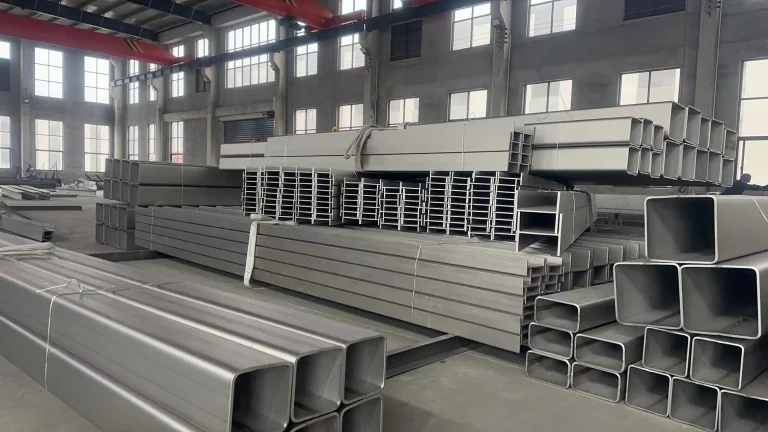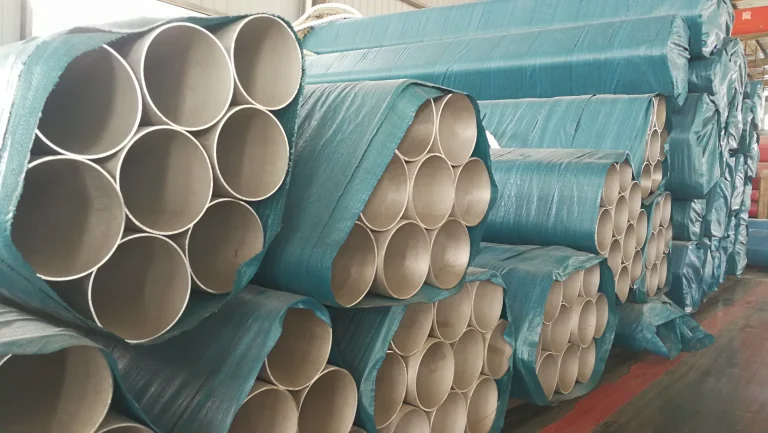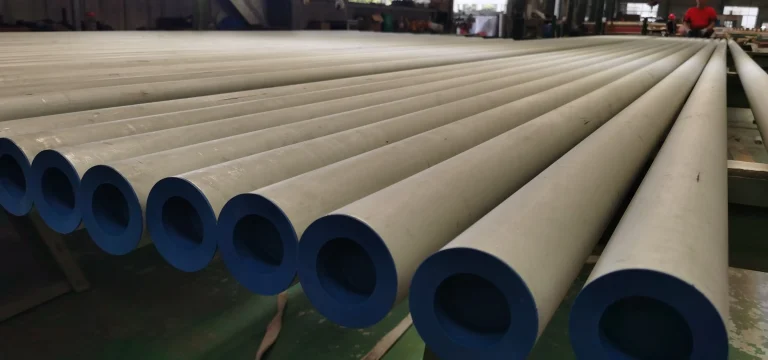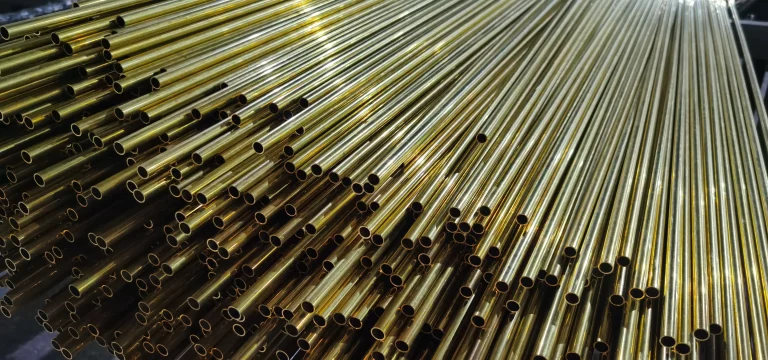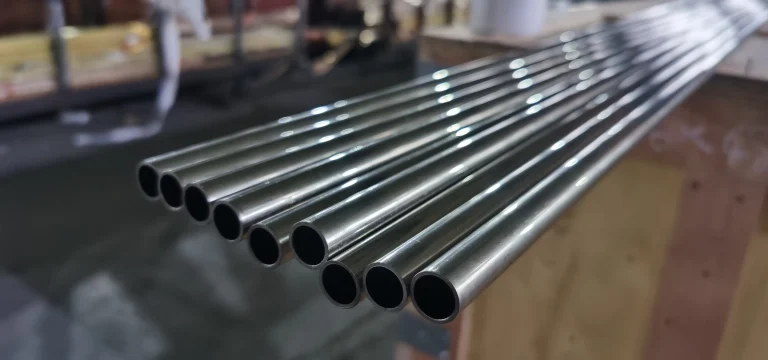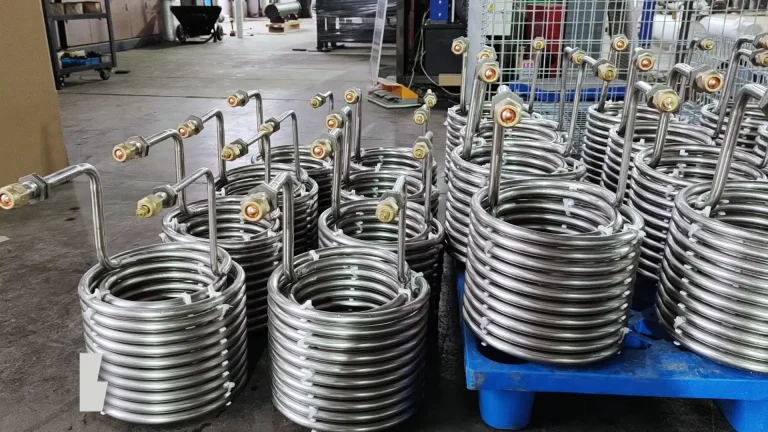
Welded Hastelloy C276 Pipe
As a premium supplier,we specialize in providing customers with high-quality Hastelloy C276 welded pipes.
Hastelloy C276 exhibits exceptional corrosion resistance,withstanding erosion from most chemicals and performing reliably in extreme environments.
Manufactured from premium raw materials through precision processes and stringent quality control,our Hastelloy C276 welded pipe ensures full compliance with ASTM B619 and ASTM B626 specifications for chemical composition and mechanical properties.As a premium supplier,we not only provide high-quality Hastelloy C276 welded pipe but also offer professional pre-sales services to ensure customer needs are met.Whether in terms of quality,pricing or service,we are your trusted partner.
Specification of Welded Hastelloy C276 Pipe
| Product | Welded Hastelloy C276 Pipe |
| Working Temperature | Maximum Pperating Temperature Up To 1250℉ | 677℃ |
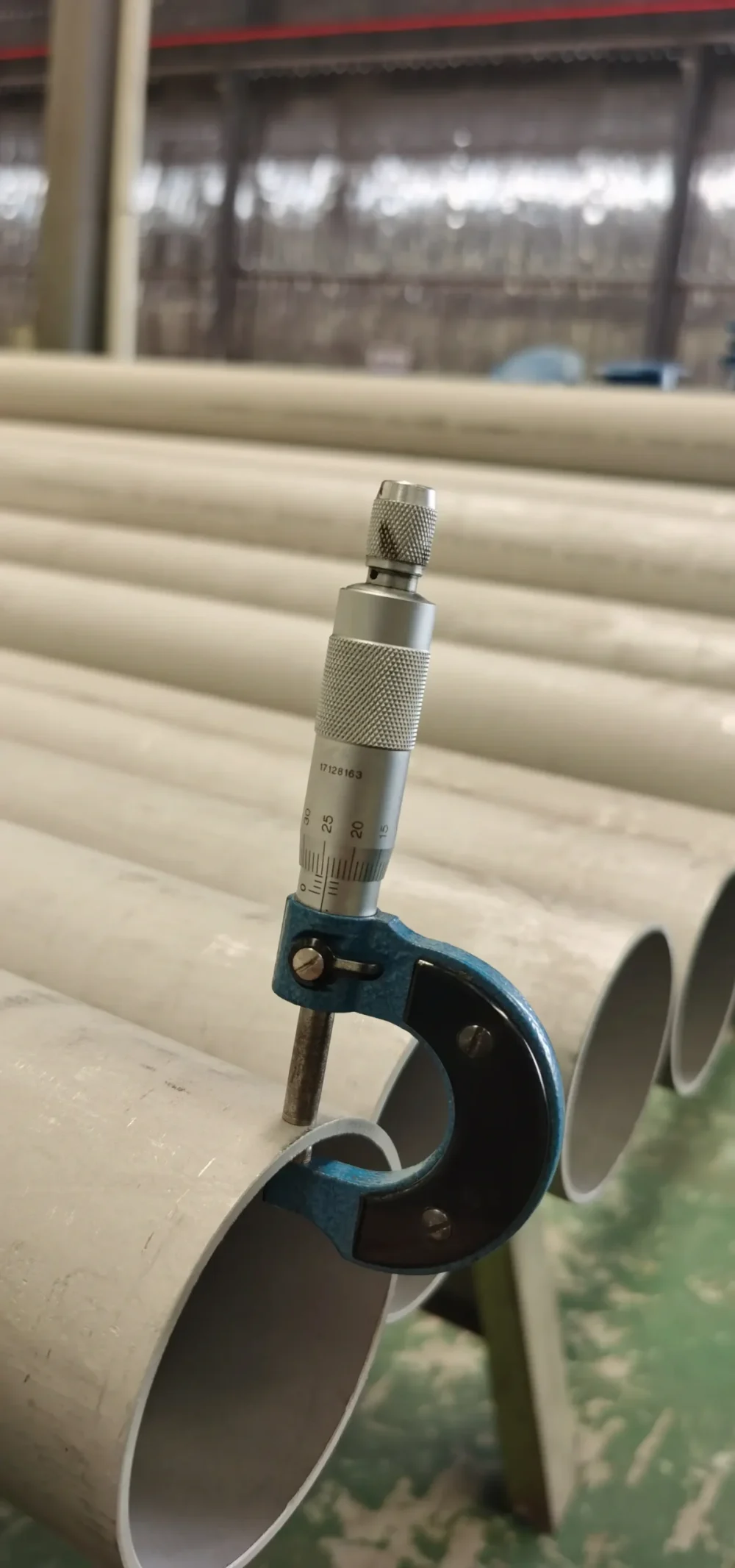
| Dimension Range | Outside Diameter (OD): 6 – 200 mm Wall Thickness (THK): 0.35 – 6 mm Length (L): 0.5 – 12 m The size can be customized according to ASME B36.10 / ASME B36.19 |
| Schedules | SCH 5, 10, 40, 80, 160, XXS, XXH |
| Materials | Hastelloy C276 | UNS N10276 | W.Nr.2.4819 | DIN/EN 2.4606 |
| Standards | ASTM B619 / ASME SB619: For Welded Pipes. ASTM B626 / ASME SB626: For Welded Tubes. |
| Welding Process | GTAW (TIG/Gas Tungsten Arc Welding) GMAW (MIG/Gas Metal Arc Welding) SMAW (Shielded Metal Arc Welding) PAW (Plasma Arc Welding) |
| Welding Materials | To ensure the weld’s corrosion resistance is no less than that of the base metal,it is generally recommended to use filler metal of the same or higher performance. Typically,ERNiCrMo-4 is selected for welding wire,and ENiCrMo-4 for welding rods.If you have specific welding material requirements,please contact us. |
| Surface Finish |
Annealed & Pickled Polished Bright Annealed (BA) Sanitary Finish External Coatings |
| Corrosion Resistance Specifications |
Excellent Resistance To: Pitting Corrosion Crevice Corrosion Stress Corrosion Cracking Oxidizing Atmospheres & Acids Chlorides & Oxidizers |
| Applications | Chemical & Petrochemical Processing Oil & Gas Industry Pollution Control Pulp and Paper Waste Treatment Marine Engineering |
| Our Strength | Over 10 Years Experience Exporting Pipes & Tubings Stock Available In Common Sizes Customized Fabrication Available Package Supplying of Piping Materials Strict QC With PMI Testing For Every Batch Experience in Exporting to the US,Germany,UAE,etc. Third Party Inspection Available |
For more information on welded hastelloy C276 pipes and other products, please contact us.
Welded Hastelloy C276 Pipe Surface Finishes
| Surface Name | Processing Technology | Visual Appearance | Typical Ra value |
| Annealed & Pickled (AP) | Annealing + Acid Pickling | Dull gray,matte,non-reflective. | 40–125µin 1.0–3.2µm |
| Bright Annealed (BA) | Controlled Atmosphere Heat Treatment | Bright,mirror-like,reflective. | <10–20µin <0.25–0.5µm |
| Polished (No. 4 Finish) | Mechanical Grinding (180-240 Grit) | Brushed | 20–32µin 0.5–0.8µm |
| Mirror Polished (No. 8) | Fine Buffing & Polishing | Mirror-like,no grit lines | <4µin <0.1µm |
| Electropolished (EP) | Electrochemical Anodic Removal | Ultra-smooth,brilliant | 5–15µin 0.13–0.38µm |
| Cold Drawn (CD) | Post-weld Cold Drawing | Smooth,uniform,metallic. | 15–30µin 0.38–0.76µm |
Chemical Composition (%)
| Ni | Cr | Fe | Mo | W | Co |
| Balance | 14.5 – 16.5 | 4 – 7 | 15 – 17 | 3 – 4.5 | ≤ 2.5 |
| C | Mn | Si | S | P | V |
| ≤ 0.01 | ≤ 1 | ≤ 0.08 | ≤ 0.03 | ≤ 0.04 | ≤ 0.35 |
Mechanical Properties
| Tensile Strength | Yield strength | Elongation | Hardness |
| ~ 690 – 790 MPa | ~ 283 – 355 MPa | ≥ 40 % | ≤ 90 – 95 HRB |
Physical Properties
| Property | Value |
| Density | 8.89 g/cm3 | 0.321 lb/in3 |
| Melting Range | 1323 – 1371℃ | 2415 – 2500℉ |
| Elastic Modulus | 205 GPa | 29.8 x 10³ ksi |
| Poisson’s Ratio | 0.307 |
| Magnetic Permeability | ≤ 1.0002 |
For more information on welded hastelloy C276 pipes and other products, please contact us.
Manufacturing Process for Welded Hastelloy C276 Pipe
The manufacturing process for welded Hastelloy C276 pipe is governed by specifications such as ASTM B619 (pipe) and ASTM B626 (tube).
The process transforms flat-rolled nickel alloy into a high-performance cylindrical product through a series of cold-forming, welding, and heat-treatment stages.
Preparation of Raw Material
Material Selection:
The process begins with flat-rolled alloy (strip or sheet) of UNS N10276.
Edge Cleaning:
Critical for C276,the edges and adjacent surfaces (up to 100mm on both sides) must be thoroughly cleaned of oxides,oils,and paint using organic solvents like acetone or alcohol to prevent weld contamination.
Beveling:
Edges are mechanically cut or ground,often into a V-shaped groove (80°±5° angle) to ensure proper weld penetration.
Forming and Welding
Cold Forming:
The flat coil is fed through a series of rollers or dies that gradually bend it into a cylindrical shape until the edges meet.
Welding Processes:
Automatic Welding:
Standard ASTM B619 pipes are typically made by an automatic welding process without the addition of filler metal (Class I).
Manual/Semi-Automatic:
For specialized fabrications, Gas Tungsten Arc Welding (GTAW/TIG) or Gas Metal Arc Welding (GMAW/MIG) are used.
Control Parameters:
Low heat input and fast welding speeds are essential to prevent the formation of brittle phases (like the σ phase). Argon gas (99.995% purity) is used as a shielding gas to prevent oxidation.
Sizing and Post-Weld Processing
Cold Working (Class II):
For ASTM B619 Class II pipe, the weld and/or base metal undergoes cold working after welding to improve dimensional accuracy and refine the grain structure.
Heat Treatment (Solution Annealing):
Finished pipes are heated to approximately 1121°C (2050°F) and then rapidly quenched in water or air.This step is vital to restore maximum corrosion resistance by redissolving any precipitates formed during welding.
Finishing and Testing
Descaling:
Pipes are typically descaled (pickled) to remove any oxide film formed during heat treatment,unless processed in a controlled atmosphere furnace.
Mandatory Testing:
Non-Destructive Testing (NDT):
Ultrasonic or eddy current tests,and hydrostatic or pneumatic pressure tests.
Mechanical Testing:
Tension,flattening,and transverse guided bend tests to ensure the weld is as strong as the base metal.
Chemical Analysis:
Verification of chemical composition limits.
write to us
Have a Question?
Contact Us!
Should you have any questions regarding stainless steel pipes, including manufacturing processes, chemical composition or other unfamiliar matters, our staff will be happy to assist you.