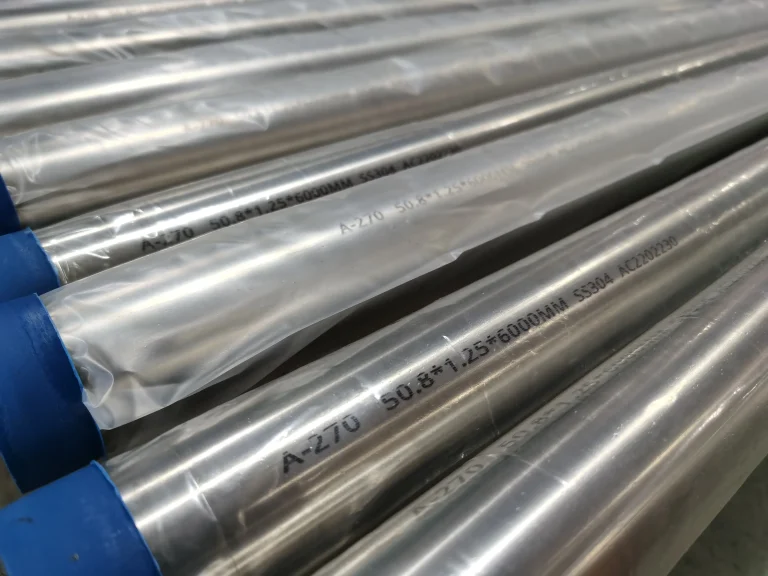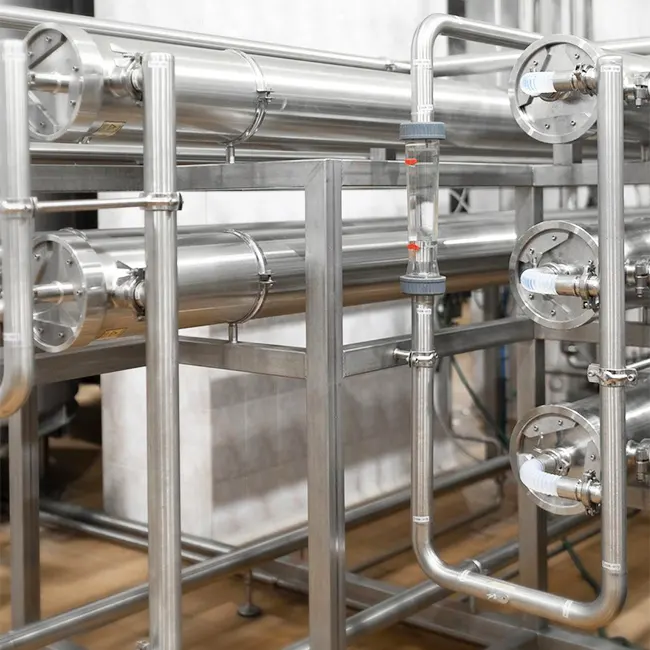
What are Brake Tubes Of Bullet Train & High-speed Rail
In bullet trains and high-speed rail systems,brake tubes of bullet train serve as the “blood vessels” of the train’s braking system,responsible for conveying compressed air or hydraulic fluid to drive braking actuators such as calipers and brake pads.
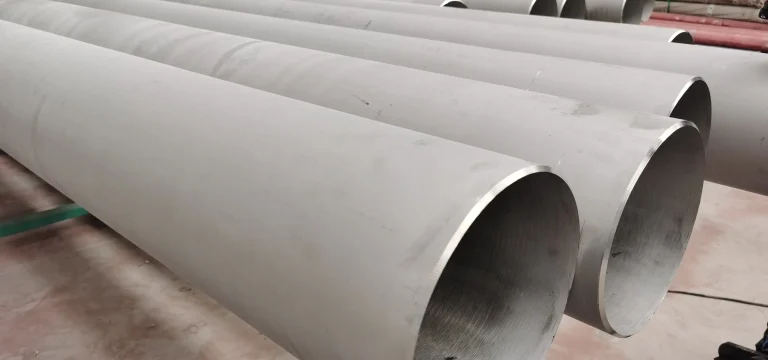
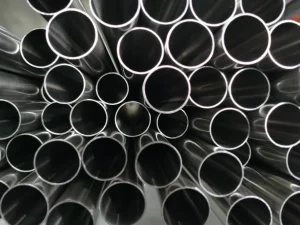
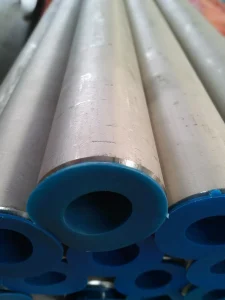
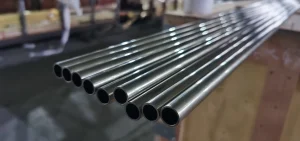
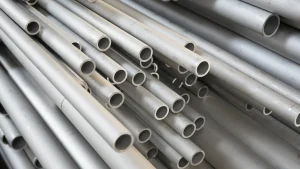
Brake lines must be highly pressure-resistant,corrosion-resistant, and reliable.Stainless steel tubing and copper-nickel alloy tubing are typically used.
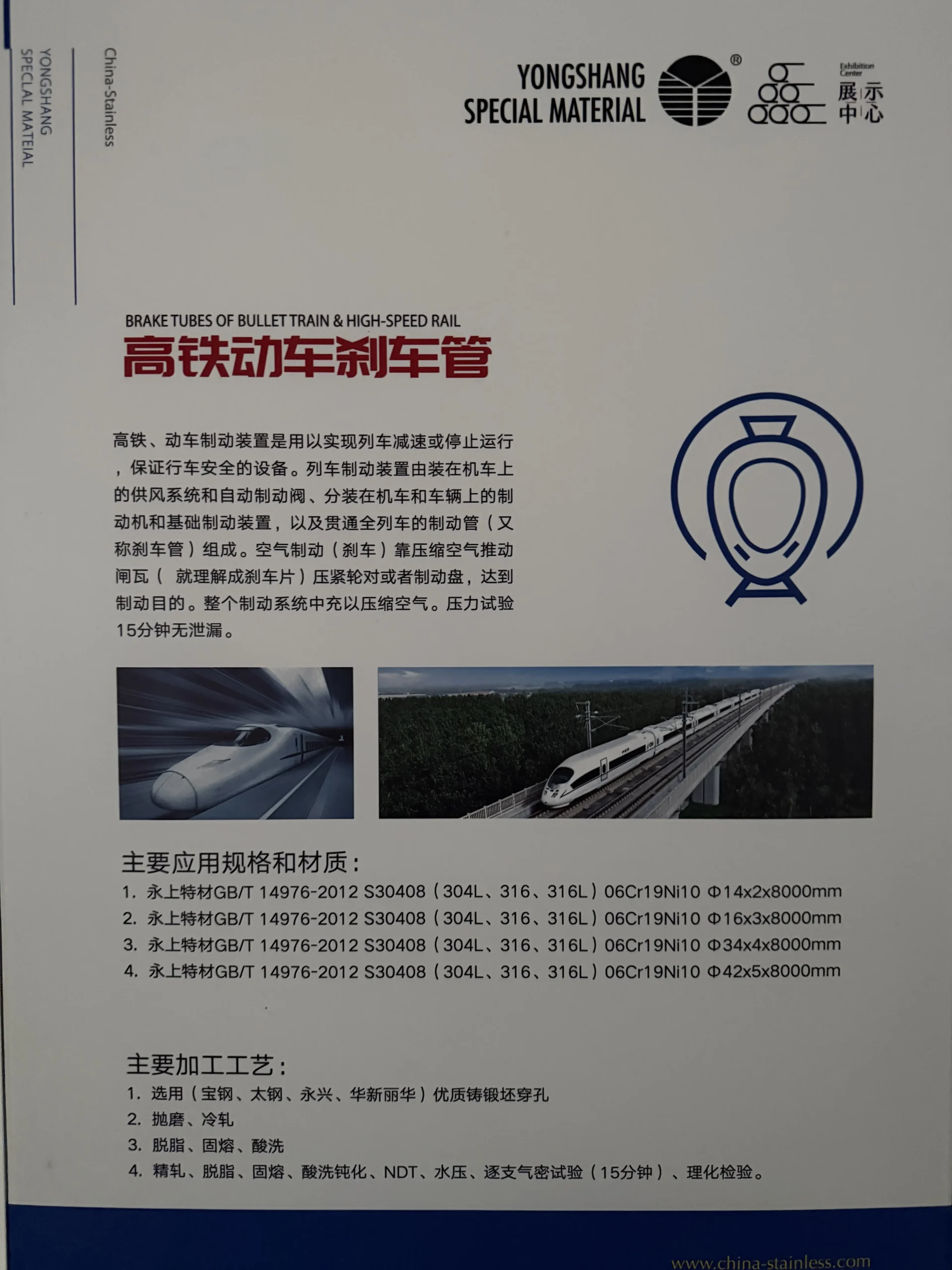
Core Strengths of Brake Tubes Of Bullet Train & High-speed Rail
Common Standards of Brake Tubes Of Bullet Train & High-speed Rail
| Critical Standards | Description/Usage |
| EN 15085 | Railway applications – Welding of railway vehicles and components.This is the primary standard for the welding quality of brake pipe joints and brackets,ensuring structural integrity at high speeds. |
| UIC 830-1 | International Union of Railways (UIC) standard for brake hoses.It specifies requirements for the technical supply of rubber hoses used in pneumatic brake systems,focusing on pressure resistance and durability. |
| EN 10305 (formerly DIN 2391) | Steel tubes for precision applications.This standard defines the dimensional accuracy and surface finish of seamless cold-drawn steel tubes used for hard brake piping to ensure leak-proof fitting. |
| ASTM A269 / A213 | Standard Specification for Seamless Stainless Steel Tubing.These define the chemical and mechanical properties of the TP316L or TP304L stainless steel often used in modern bullet train brake lines for corrosion resistance. |
| DIN 2353 / ISO 8434-1 | 24° cone connectors and compression fittings.This standard governs the mechanical joints between tubes,ensuring they can withstand the constant vibration and pressure spikes of HSR braking. |
| EN 45545-2 | Fire protection on railway vehicles.It regulates the fire behavior (flammability,smoke,and toxicity) of non-metallic components in the brake system,such as flexible hoses and seals. |
| ISO 9227 | Corrosion tests in artificial atmospheres (Salt spray tests).Used to verify the anti-corrosive coating or material quality of tubes exposed to harsh trackside environments and de-icing chemicals. |
| UIC 541-05 | Brakes – Regulations concerning the construction of the various brake parts.This specialized UIC leaflet ensures the compatibility and performance of pneumatic brake equipment across different high-speed train sets. |
High-speed rail and EMU braking systems are devices used to decelerate or stop trains and ensure operational safety. A train braking system consists of an air supply system and automatic brake valves installed on the locomotive;brake actuators and basic braking devices distributed across the locomotive and passenger cars;and brake pipes (also known as brake lines) running throughout the entire train.
Air braking relies on compressed air to push brake shoes (think of them as brake pads) against the wheel sets or brake discs to achieve braking.The entire braking system is filled with compressed air.A pressure test must be conducted for 15 minutes with no leaks.
Stainless Tubings Supplier in china
Main Application Specifications and Materials
| Category | Grades | Standards | Size Range |
| Stainless Steel | 304/304L, 316/316L, 316Ti, 321 | GB/T 14976, GB/T 34107 | Φ6 – Φ48 Φ 14 × 2 × 8000mm Φ 16 × 3 × 8000mm Φ 34 × 4 × 8000mm Φ 42 × 5 × 8000mm |
Manufacturing Processes for Brake Tubes of Bullet Train
Why is a “15-minute individual airtightness test” required in the manufacturing process?
While standard industrial pipes may undergo only a brief pressure test lasting a few seconds, high-speed rail piping requires individual pressure retention tests lasting up to 15 minutes.
This is to detect even the tiniest “pinholes” or microcracks.During high-speed operation,even a minor leak could lead to catastrophic pressure loss.This step is central to ensuring “zero-defect” delivery.
How does your Brake Tubes Of Bullet Train handle severe vibrations at 350 km/h?
Double Ferrule Fittings:
Double ferrule technology is commonly used for rigid pipe connections.This mechanical connection utilizes preload to counteract high-frequency vibrations and prevent joint loosening.
Flexible Compensation:
At the connection between the bogie and the car body,high-grade reinforced rubber hoses or PTFE tubing are used to absorb displacement and vibration caused by the car body during turns and over bumps.
Precision Bracket Layout:
Pipe supports undergo rigorous modal analysis,and installation spacing is scientifically calculated to avoid resonance frequencies.
Why is stainless steel primarily used for high-speed rail brake lines instead of ordinary carbon steel?
High-speed trains frequently travel through different climate zones.Stainless steel offers exceptional resistance to oxidation,preventing air leaks in the piping caused by corrosion.
In addition,the inner walls of carbon steel are prone to rust,and flaking iron particles can damage precision brake valves.The smooth inner walls and stable properties of stainless steel ensure the integrity of the pneumatic system.
Stainless steel allows for thinner wall designs while maintaining high-pressure load-bearing capacity,meeting the weight-reduction requirements of high-speed trains.
What happens if a Brake Tubes Of Bullet Train suddenly breaks during operation?
Fail-safe Mechanism:
High-speed rail braking systems operate on the principle of “pressure-loss braking.” If a brake pipe ruptures and pressure is lost,the system automatically detects this as an emergency and immediately activates the emergency brake to bring the train to a forced stop.
Redundant Design:
Although a single pipe rupture will cause the train to stop,modern high-speed trains are typically equipped with redundant pneumatic circuits or electronic control backups to ensure that braking force remains smooth and controllable until the train comes to a complete stop.
write to us
Have a Question?
Contact Us!
Should you have any questions regarding stainless steel pipes, including manufacturing processes, chemical composition or other unfamiliar matters, our staff will be happy to assist you.