Stainless Steel Pipes For Urea

What are Stainless Steel Pipes For Urea

Stainless steel pipes for urea are used in urea production environments where highly corrosive media such as ammonium carbamate are present,and where high temperatures and pressures are common.
Such environments place extremely high demands on the corrosion resistance of stainless steel piping.Conventional 304 or 316L stainless steel is prone to severe intergranular corrosion or selective corrosion under these extreme conditions.
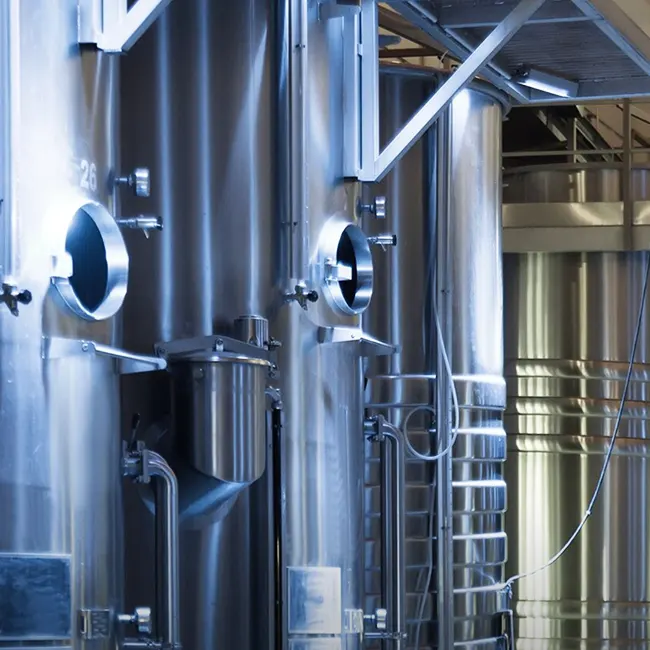
Core Strengths of Stainless Steel Pipes For Urea

Thanks to its extremely low carbon content and rigorous heat treatment,the precipitation of chromium carbides at grain boundaries is prevented, ensuring stability in highly oxidizing environments.
The composition has been specifically optimized to address “weld corrosion” or “pitting corrosion” in urea environments,and the steel has passed the rigorous Huey Test,with corrosion rates significantly lower than those of ordinary stainless steel.
In austenitic urea steel,ferrite is highly susceptible to preferential dissolution by ammonium hydroxide solutions.Urea-grade steel pipes limit the ferrite content to extremely low levels through their chemical composition,thereby eliminating corrosion weak points.
Modern super duplex urea steel,on the other hand,utilizes a precise duplex composition that provides high strength while preventing passivation film failure in oxygen-deficient environments.
Stainless steel pipes for urea have a yield strength that is 2 to 3 times that of conventional austenitic steel.This means that under the same high-pressure design conditions,thinner pipe walls can be used,thereby reducing the total weight of the equipment and significantly improving the heat transfer efficiency of the heat exchanger.
Strict limits are imposed on impurities such as sulfur,phosphorus,and silicon.In a urea environment,these elements significantly increase the material’s susceptibility to thermal cracking and the risk of localized corrosion.High purity ensures the reliability of the piping system throughout its long service life.
316L pipes require a continuous supply of process air to maintain the passivation film.Stainless steel pipes for urea can remain passivated even in environments with extremely low oxygen levels or in an oxygen-free environment,which reduces the risk of explosions caused by oxygen buildup and simplifies operational procedures.

Common Standards of Stainless Steel Pipes For Urea

Critical StandardsDescription/Usage
ASTM A262 Practice CThe Huey Test;the industry benchmark for urea grade materials.Pipes are tested in boiling 65% nitric acid for five 48-hour periods to evaluate intergranular corrosion resistance.
ISO 21459The specific international standard for stainless steels for urea production.It defines chemical composition and testing requirements for grades like 316L Mod and 25Cr-22Ni-2Mo.
EN 10216-5The European standard for seamless stainless steel tubes for pressure purposes,covering urea-specific grades such as 1.4435 (316L Mod) and 1.4466 (25-22-2).
ASTM A312 / ASME SA312General standards for seamless and welded austenitic pipes,often used as a baseline but supplemented with strict urea grade requirements for chemical purity and microstructure.
ASTM E562Standard test method for determining volume fraction of Ferrite by systematic manual point count.Used to verify the near-zero ferrite levels required to prevent selective corrosion.

Stainless steel pipes for urea production,as a high-end stainless steel material,offer excellent corrosion resistance,high strength,good wear resistance,and superior machinability in various industries such as fertilizer,pharmaceuticals,and food processing.They also ensure the long-term service life of equipment under harsh conditions,including high temperatures,high pressure,and strong acids.

Stainless Tubings Supplier in china
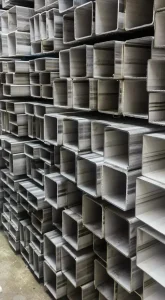
  • Hastelloy Pipe
  • Inconel Pipe
  • Monel Pipe
  • Incoloy Pipe
  • Nickel Pipe
  • Duplex Pipe

Applications of Stainless Steel Pipes For Urea

  • HP Scrubber Coils
  • Carbamate Recycle Lines
  • HP Carbamate Condenser Tubes
  • Stripper Heat Exchanger Tubes
  • Urea Reactor Internals
  • AdBlue/DEF
  • Granulation/Prilling Feed Lines
  • Vent Scrubber Piping
  • Evaporator Tube Bundles
  • Let-down Lines

Main Application Specifications and Materials

CategoryGradesStandardsSize Range
Austenitic Urea Grade316L Mod / 316L UG (1.4435)GB/T 37578, ASME SA312, EN 10216-5Outside Diameter (OD):
Φ6 – Φ426
High-Alloy Urea Grade022Cr25Ni22Mo2N (1.4466), 31050 / 310MoLN / 725LN
Special Urea SteelsS31792, S31752, S31053

Manufacturing Processes Of Stainless Steel Pipes For Urea

The quality of stainless steel pipes for urea applications begins with strict control of chemical composition, particularly ultra-low carbon,low silicon,low phosphorus,and low sulfur content.
Use a vacuum oxygen decarburization (VOD) or argon oxygen decarburization (AOD) converter to reduce the carbon content to below 0.02%.
Precisely control the ratio of chromium to nickel to ensure that the ferrite content in the microstructure approaches 0%,and add nitrogen to enhance strength.
The refined molten steel is cast into round tube blanks. To eliminate segregation,high-end urea steel pipes typically undergo multiple forging processes.
Hot extrusion is the preferred method for manufacturing seamless tubes for urea applications.Compared to hot piercing,the extrusion process applies forces more uniformly,effectively reducing internal defects and ensuring consistent grain size.
To achieve extremely high dimensional accuracy—such as a small outer diameter of 6 mm and a smooth inner surface—multiple passes of cold drawing or cold rolling are required.Urea-grade pipes require extremely high inner wall flatness to prevent the accumulation of media and the resulting localized corrosion.
Temperature Control:
Solution treatment is typically performed at 1050°C–1150°C.
Rapid Cooling:
Rapid water quenching is essential to prevent carbide precipitation at grain boundaries,thereby ensuring the material exhibits optimal resistance to intergranular corrosion.This is a prerequisite for the Huey test.
The pipes must undergo a thorough acid wash to remove scale resulting from heat treatment and to form a clean,dense,chromium-rich passivation layer on the stainless steel surface.
For certain high-demand applications,internal electropolishing of the pipes is required to further enhance erosion resistance.
Huey Test:
Samples from each batch must be boiled continuously in 65% nitric acid for 240 hours,and the weight loss rate must be below the industry’s extremely stringent limits.
Metallographic Examination:
Ferritic content is examined in accordance with ASTM E562 to ensure the microstructure is pure austenite.
Non-Destructive Testing (NDT):
100% of the samples undergo ultrasonic testing (UT) and eddy current testing (ET);even the slightest cracks or porosity are strictly prohibited.

Why can’t standard 316L stainless steel be used directly in the high-pressure section of a urea synthesis plant?

Although 316L is also a corrosion-resistant steel,it contains approximately 2–8% ferrite.In the ammonium hydroxide solutions used in urea production,ferrite undergoes “selective corrosion,” dissolving preferentially in a thread-by-thread manner,which leads to rapid perforation of the piping.Urea-grade 316L Mod reduces ferrite content to near 0% by increasing the nickel content and strictly limiting impurities such as silicon (Si),enabling it to withstand high-pressure conditions.

What is the “Huey Test,” and why is it indispensable?

In accordance with ASTM A262 Practice C,this is the ultimate test for urea-grade materials.
The method involves continuously boiling the sample in 65% nitric acid for approximately 240 hours.
The purpose is to simulate the highly oxidative corrosion conditions found in urea environments.
Urea-grade materials must meet extremely low average corrosion rates (e.g., 316L Mod typically requires < 1.5 μm/48 h);otherwise,they are not permitted for use.

What are the specific welding requirements when installing pipes for urea?

Welding is the most critical step in the production of urea pipes.
First,the welding area must be thoroughly cleaned to prevent contamination by iron ions.
Second,full argon back-shielding must be used to prevent oxidation of the weld on the back side.
Finally,the interpass temperature must be strictly controlled (typically below 150°C) to prevent overheating,which can lead to ferrite re-precipitation or hot cracks.

write to us

Have a Question?
Contact Us!

Should you have any questions regarding stainless steel pipes, including manufacturing processes, chemical composition or other unfamiliar matters, our staff will be happy to assist you.
Similar Posts

Leave a Reply

Your email address will not be published. Required fields are marked *