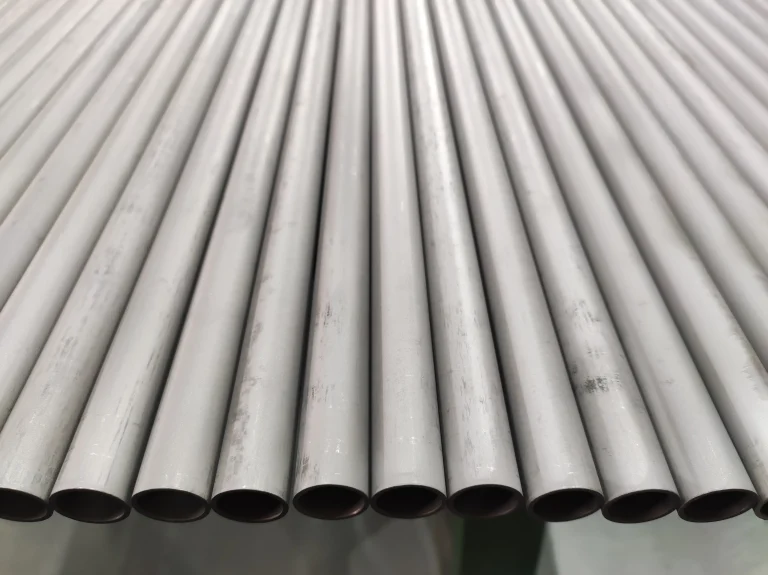
253 MA (UNS S30815 / 1.4835) is a high-performance,lean austenitic heat-resistant stainless steel designed for structural applications at temperatures up to 1150°C (2100°F).Originally developed by Outokumpu,it blends excellent oxidation resistance, exceptional creep rupture strength,and high thermal stability,often matching or outperforming more expensive high-nickel alloys at a lower cost.
Primary Advantages of 253 MA
Chemical Composition of 253 MA Stainless Steel
| Cr | Ni | Si | Mn | N |
| 20.0 – 22.0 | 10.0 -12.0 | 1.4 – 2.0 | ≤ 0.8 | 0.14 – 0.20 |
| C | Ce | P | S | Fe |
| 0.05 – 0.10 | 0.03 – 0.08 | ≤ 0.040 | ≤ 0.030 | Balance |
Metallurgical Impact of Key Elements
Facing the challenge of temperatures as high as 1100°C,the 253 MA heat-resistant steel pipe,with its low-nickel composition of 11%,not only completely avoids sulfidation corrosion in high-sulfur environments but also has raw material costs far lower than those of 310S and high-nickel alloys.Its unique microalloying technology,which incorporates the rare earth element cerium and nitrogen,endows the pipe with top-tier resistance to oxidation flaking and high-temperature creep strength,completely overcoming the common issue of pipeline sagging and deformation at high temperatures.Furthermore,this steel pipe offers excellent cold-bending performance and is extremely easy to weld.It also supports thin-walled,weight-reducing designs,significantly reducing structural loads and procurement costs.As the “king of value” among alternatives to high-nickel alloys,it is the smart choice for your modern high-temperature pipeline networks!
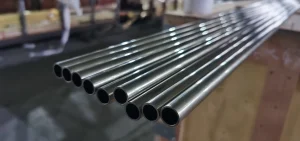
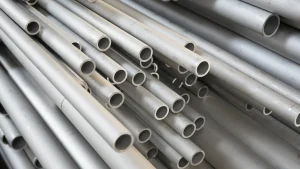
Stainless Tubings Supplier in china
Mechanical Properties of 253 MA Stainless Steel
The mechanical properties of 253 MA stainless steel are optimized to retain high structural strength,elasticity,and creep deformation resistance at extreme temperatures.Micro-alloying additions of nitrogen and carbon give this grade significantly higher tensile and yield strength than traditional high-temperature stainless steels.
| Property | Value |
| Tensile Strength | 600 – 850 MPa 87,000 – 123,000 psi |
| 0.2% Yield Strength | ≥ 310 MPa ≥ 45,000 psi |
| Elongation | ≥ 40% |
| Hardness | ≤ 95 HRB ≤ 217 HBW |
| Modulus of Elasticity | 200 GPa 29 x 106 psi |
Metallurgical Impact of Key Elements
As an alloy heats up, it naturally loses ambient tensile strength.However,the interstitial nitrogen in 253 MA prevents premature structural collapse.Short-term hot tensile tests yield the following typical strengths:
- 500°C (932°F):
Tensile Strength drops to ~495 MPa;
Yield Strength settles at ~150 MPa. - 600°C (1112°F):
Tensile Strength drops to ~445 MPa;
Yield Strength settles at ~140 MPa. - 700°C (1292°F):
Tensile Strength drops to ~360 MPa;
Yield Strength settles at ~130 MPa.
Creep and Rupture Performance
Creep performance is the most critical mechanical metric for continuous operation above 500°C (932°F). While regular steels slowly stretch and crack under constant stress at high temperatures,253 MA is ASME Section VIII approved for pressure vessels up to 899°C (1650°F)—surpassing Grade 310’s threshold of 815°C (1500°F).
- Stress to Rupture
(10,000 Hours at 800°C / 1472°F):
Requires a constant load of roughly 40 MPa to induce structural failure. - Stress to Rupture
(10,000 Hours at 900°C / 1652°F):
Requires a constant load of roughly 18 MPa to induce structural failure.
Toughness and Fabrication Limits
Impact Toughness
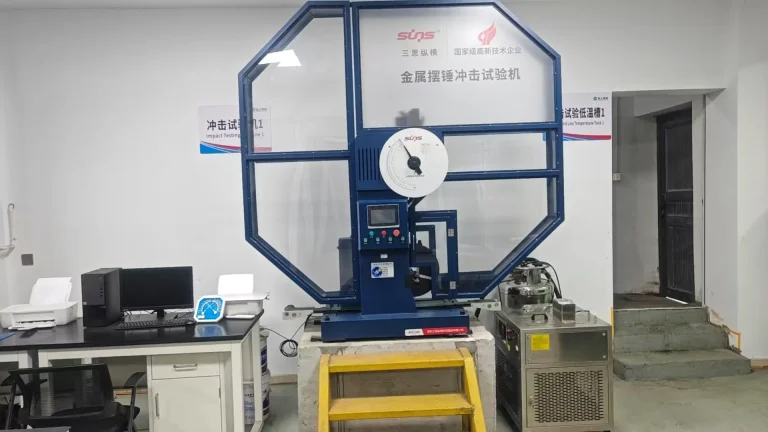
Retains a robust austenitic matrix, granting it highly reliable Charpy V-notch impact toughness (approx. 120 J at room temperature) and protecting it from brittle fracture.
Forming Restraint
Although highly ductile at room temperature (40%+ elongation),it should never be warm-formed or manipulated between 650°C and 870°C (1200°F – 1600°F).Exposure to this specific hot zone induces temporary low-ductility behavior,increasing the risk of structural cracking
Common Piping Standards of 253 MA
| Product Category | Standard Code / Specification |
| Seamless Pipes (High-Temp / Pressure) | ASTM A312 / ASME SA312 |
| Welded & Heavily Cold-Worked Pipes | ASTM A312 / ASTM A358 |
| Seamless Boiler, Superheater & Heat Exchanger Tubes | ASTM A213 / ASME SA213 |
| Welded Boiler & Heat Exchanger Tubes | ASTM A249 / ASME SA249 |
| Seamless Stainless Steel Tubes for Pressure Purposes | EN 10216-5 |
| Seamless Tubes for Mechanical & Engineering Purposes | EN 10297-2 |
| General Heat-Resistant Steels & Specifications | EN 10095 |
Applications of 253 MA Stainless Steel
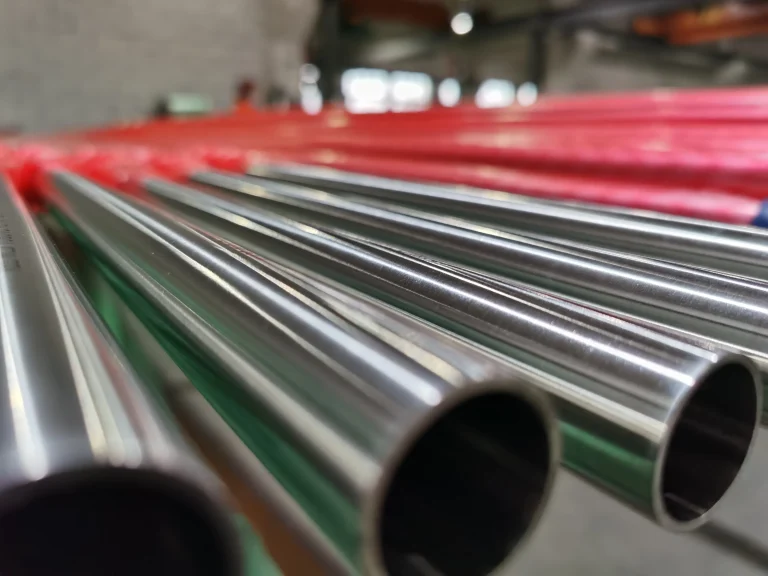
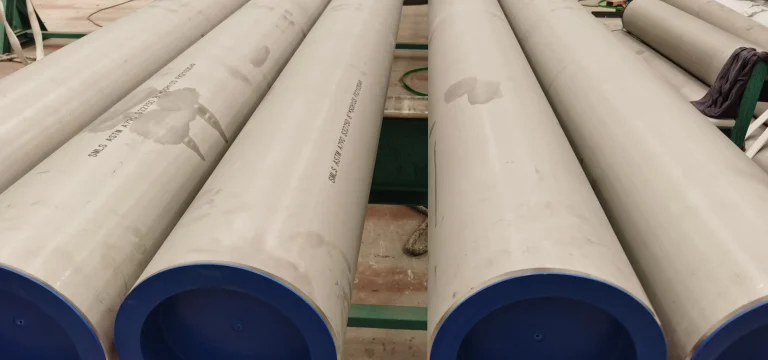
As a professional and reliable manufacturer of 253 MA stainless steel pipes in China,we rely on advanced manufacturing equipment to produce high-quality stainless steel pipes.Our company operates 20 seamless steel pipe production lines,20 high-speed steel rolling production lines,3 punching production lines,and 5 welded steel pipe production lines,with an annual production capacity of approximately 35,000 metric tons.We accept orders for both standard and custom-made stainless steel pipes.Please feel free to contact us for a free and prompt quote.
Why is the 253 MA considered better value for money than the 310S?
310S steel has a nickel content of 20%,while 253 MA steel has a nickel content of only 11%,which significantly reduces raw material costs.Compared to 310S,253 MA exhibits superior creep rupture strength at temperatures above 850°C.The higher allowable design stress allows for the use of thinner-walled tubing,thereby reducing weight and cost.
How do 253 MA tubes perform in high-sulfur or reducing atmospheres?
Excellently,and much better than high-nickel alloys.In reducing gas environments containing sulfur compounds,high-nickel alternatives like 310S or Inconel form low-melting-point nickel-sulfide eutectics,leading to rapid catastrophic corrosion.The lean 11% nickel chemistry of 253 MA prevents this specific attack mechanism,making it highly stable.
Can 253 MA pipes be welded easily? Do they require preheating?
Yes,253 MA is fully austenitic and exhibits excellent weldability using standard fusion methods (TIG/GTAW, MIG/GMAW, SMAW).
No Preheating Required:
It does not require preheating or PWHT under normal circumstances.
Matching Consumables:
To ensure the weld joint maintains the same high-temperature properties as the pipe body,it must be welded with matching consumables such as Avesta 253 MA or Alloy 22.12.HT filler wires/electrodes.
How does the rare-earth addition (Cerium) prevent oxide scaling?
In standard stainless steels subjected to cyclic heating,the protective chromium oxide layer cracks and flakes off due to mismatched thermal expansion.In 253 MA,the micro-addition of Cerium acts like a metallurgical “glue.” It dramatically alters the oxide growth mechanism, anchoring the oxide scale tightly to the underlying metal and protecting the pipe during repetitive heat-cool cycles.
write to us
Have a Question?
Contact Us!
Should you have any questions regarding stainless steel pipes, including manufacturing processes, chemical composition or other unfamiliar matters, our staff will be happy to assist you.