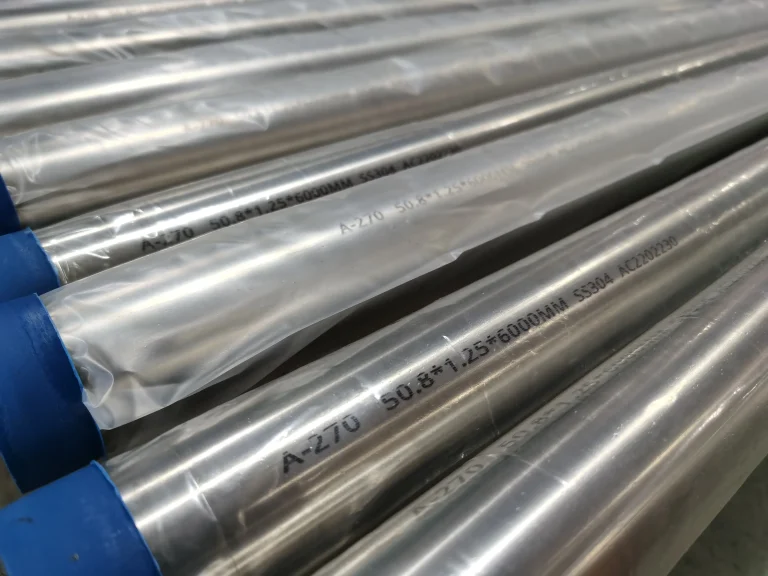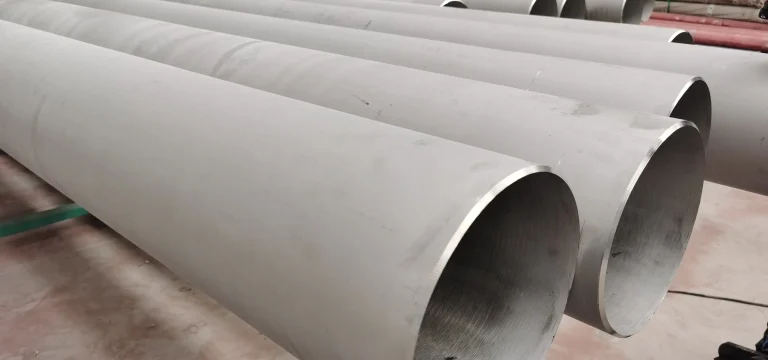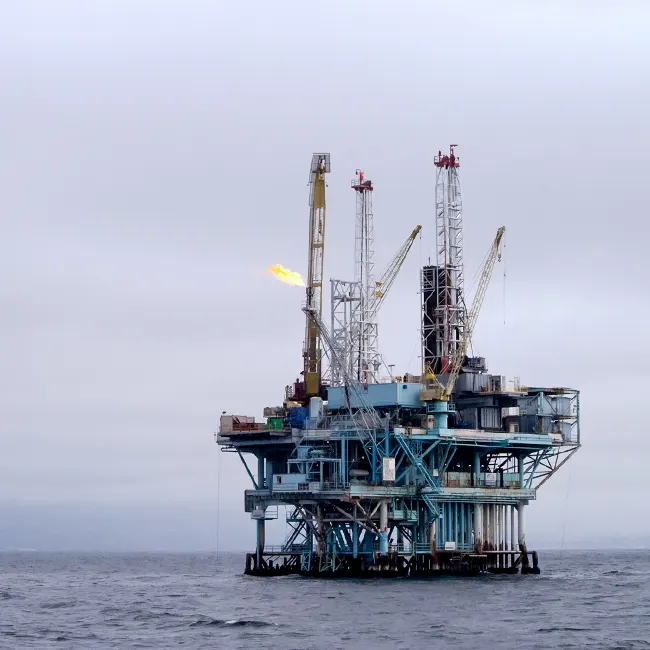
What are Pipes For Petrochemical High-Pressure Hydrogenation Units
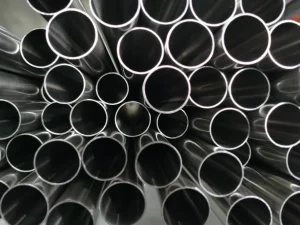
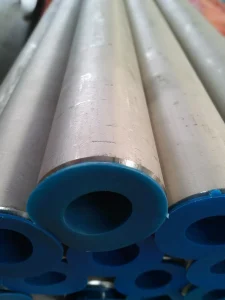
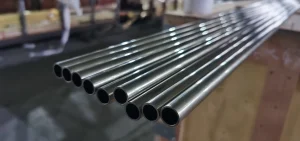
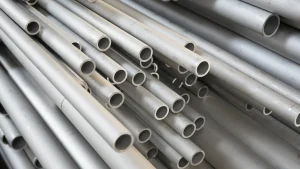
Stainless steel pipes for petrochemical high-pressure hydrogenation units are large-diameter,heavy-wall seamless pipes manufactured primarily from stabilized austenitic stainless steel grades.
Unlike general-purpose industrial piping,these components are engineered specifically to transport fluids saturated with high-pressure hydrogen,hydrogen sulfide,and other aggressive chemical mediums at elevated reaction temperatures without losing structural integrity.
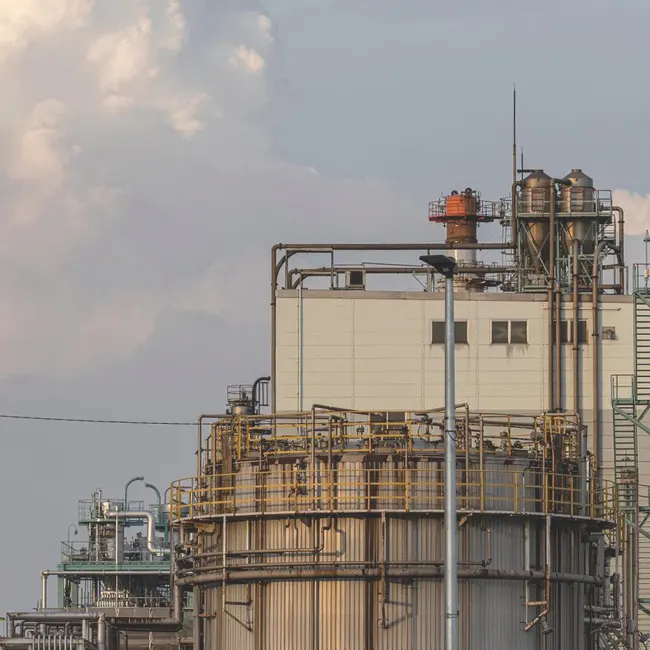
Strengths of Pipes For Petrochemical High-Pressure Hydrogenation Units
Standards of Pipes For Petrochemical High-Pressure Hydrogenation Units
| Critical Standards | Description/Usage |
| ASME SA-312 / ASTM A312 | Specifies chemistry,grain size,and mechanics for seamless austenitic pipes (TP347H/TP321H) in high-temperature,corrosive service. |
| ASME B31.12 | Governs design,thickness calculations,and safety rules specifically for high-pressure gaseous hydrogen piping and pipelines. |
| ASME B31.3 | Defines overarching engineering and safety rules for process piping design within petroleum refineries and chemical plants. |
| NACE MR0175 / ISO 15156 | Sets material and hardness limits (≤ 22 HRC) to prevent cracking in high-pressure hydrogen sulfide sour environments. |
| API RP 941 | Contains “Nelson Curves” defining safe temperature and pressure limits to prevent High-Temperature Hydrogen Attack (HTHA). |
| ASTM A262 | Mandates testing practices to ensure stabilized stainless steel pipes resist intergranular corrosion and grain boundary precipitation. |
| GB/T 9948 | Chinese standard governing seamless steel tubes for high-pressure petroleum cracking and hydrogenation unit applications. |
| EN 10216-5 | European technical delivery conditions,testing tolerances,and non-destructive examination rules for pressure-purpose stainless steel tubes. |
Hydrogen-exposed pipes are primarily used in high-pressure hydrogenation units such as hydrocracking and hydroprocessing plants.Their main characteristics are large diameter and thick walls.When selecting materials for hydrogen-exposed applications,TP321/H,TP347/H,and similar grades are typically chosen for high-pressure hydrogen-exposed pipes due to the high-temperature,high-pressure operating conditions.The addition of stabilizing elements such as Ti and Nb confers superior high-temperature corrosion resistance and mechanical properties.
Stainless Tubings Supplier in china
Applications of Pipes For Petrochemical High-Pressure Hydrogenation
Main Application Specifications and Materials
| Category | Grades | Standards | Size Range |
| Austenitic Stainless Steel | 304, 304L, 316, 316L, 317L | GB/T 9948, ASTM A312, EN 10216-5 | Outside Diameter (OD): Φ6 – Φ762 |
| Stabilized Stainless Steel | 321, 321H, 347, 347H | GB/T 47029, TSSEA 0045, ASME SA-312 | Outside Diameter (OD): Φ10 – Φ630 |
| High-Nickel Alloys | H08810 (Alloy 800H), H08811 (Alloy 800HT), H08825 (Alloy 825) | SB-407, SB-423, GB/T 150.2 | Outside Diameter (OD): Φ12 – Φ426 |
Manufacturing Pipes For Petrochemical High-Pressure Hydrogenation
Core Manufacturing Processes
Critical Heat Treatment Protocols
Solution Annealing:
The pipe is heated to a precise temperature range to fully dissolve chromium carbides back into the austenitic matrix,followed by rapid water quenching to lock in the microstructure.
Stabilization Heat Treatment:
For stabilized grades such as TP347H and TP321H,a secondary heating cycle is required.This forces titanium or niobium to combine with carbon,preventing further chromium depletion during high-temperature operation.
Stringent Inspection & Quality Control
To comply with standards such as ASME SA-312 and GB/T 9948,all products in a production batch must undergo rigorous testing.
Why is Niobium or Titanium added to these specific pipe grades?
Niobium and Titanium act as stabilizing elements.They have a stronger chemical affinity for carbon than chromium does.They bind with carbon to form stable carbides,ensuring the chromium remains evenly distributed to maintain the pipe’s corrosion-resistant passive layer.
How do these pipes prevent High-Temperature Hydrogen Attack (HTHA)?
HTHA occurs when hydrogen reacts with carbon in steel to form methane gas,causing internal cracking.Because the carbon in stabilized stainless steels is securely locked up by Niobium or Titanium,no methane reaction can take place,making the alloy immune to HTHA.
Why are only seamless pipes allowed instead of welded pipes?
Welded pipes have a heat-affected zone (HAZ) along the seam which is highly vulnerable to micro-structural defects,residual stress,and localized corrosion.Seamless pipes provide a completely uniform wall structure,removing the risk of weld-line tracking by high-pressure hydrogen atoms.
What are the strict hardness limits required by NACE MR0175 / ISO 15156?
For units handling sour crude containing dissolved H₂S,the hardness of austenitic stainless steel pipes must be strictly maintained below 22 HRC (or 192 HBW).Maintaining the steel’s ductility helps prevent sulfide stress cracking (SSC) and hydrogen-induced brittle failure.
write to us
Have a Question?
Contact Us!
Should you have any questions regarding stainless steel pipes, including manufacturing processes, chemical composition or other unfamiliar matters, our staff will be happy to assist you.